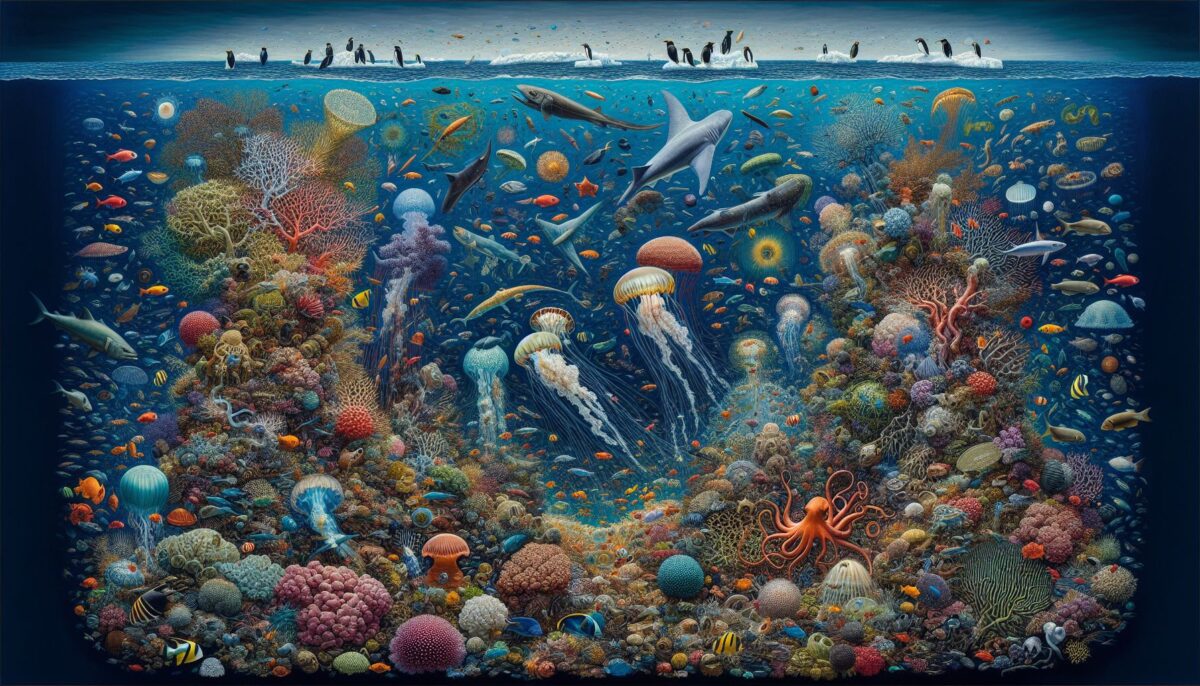
Unveiling the Richness of Marine Biodiversity and Its Role in Sustaining the Planet’s Health
The world’s oceans pulse with an astounding array of creatures, from the microscopic, such as phytoplankton, to the gargantuan, like the blue whale. A vital component of the earth’s biosphere, it forms an intricate tapestry of life, collectively known as marine biodiversity. [
According to the United Nations’ Convention on Biological Diversity](https://www.cbd.int/convention/), biodiversity refers to the “variability among living organisms from all sources, inter alia, terrestrial, marine and other aquatic ecosystems and the ecological complexes of which they are part”. Indeed, the expanses of our seas and oceans contain roughly half of our world’s biodiversity, a testament to an extensive and diverse marine life that contributes significantly to the planet’s health and sustainability.
Without the rich biodiversity in our oceans, the majority of the oxygen we breathe would cease to exist, climate regulation would be affected, and vital sources of food and income for millions worldwide would be at risk.
The Foundation of Marine Life: Phytoplankton to Coral Reefs
At the base of marine biodiversity lie the microscopic organisms known as phytoplankton. These tiny, photosynthesizing organisms float in the sunlit surface of the sea and are responsible for generating about half of the world’s oxygen. They also form the basis of the oceanic food chain, providing nourishment to small marine animals like krill, which are in turn consumed by larger species.
Coral reefs, though they cover less than one percent of the ocean floor, are another vital contributor to marine biodiversity. They offer shelter to approximately 25% of marine species, providing the necessary habitats and hiding spaces for several species of fish, crustaceans, mollusks, and more.
The Challenges Facing Marine Biodiversity
While it’s evident that marine biodiversity plays a pivotal role in supporting life on Earth and maintaining the health of our oceans, it is under amplified threat due to human activities. Overfishing, climate change, and pollution are among the major challenges that our marine ecosystems and its inhabitants face. These threats are causing profound changes, from coral bleaching events due to rising ocean temperatures, to the collapse of fish populations because of overfishing.
Overfishing is depleting stocks of fish populations at an unsustainable rate, disrupting the balance of marine ecosystems and threatening the livelihoods of people that depend on fisheries. Meanwhile, increased CO2 emissions continue to cause ocean acidification, jeopardizing calcifying organisms like shellfish, coral reefs, and certain types of plankton.
The Conservation and Management of Marine Biodiversity
Given the challenges, the conservation and sustainable management of marine biodiversity is becoming increasingly critical. An array of tactics is employed for the protection of marine ecosystems, among them marine protected areas, sustainable fishing practices, and pollution control.
Marine protected areas (MPAs) are regions in the ocean where human activity is more regulated to guard species and their habitats. MPAs help replenish fish populations, protect endangered species, save habitats, and much more. They are a critical tool in the bid to preserve our marine biodiversity.
Conclusion
Marine biodiversity is the lifeblood of our oceans, underpinning critical ecological processes as well as providing countless benefits to humans. As its importance becomes increasingly evident amid escalating environmental threats, preserving this diversity becomes more important than ever before. It’s not just about saving the whales; it’s about protecting a complex network of life that’s vital for the health of our planet and future generations.
