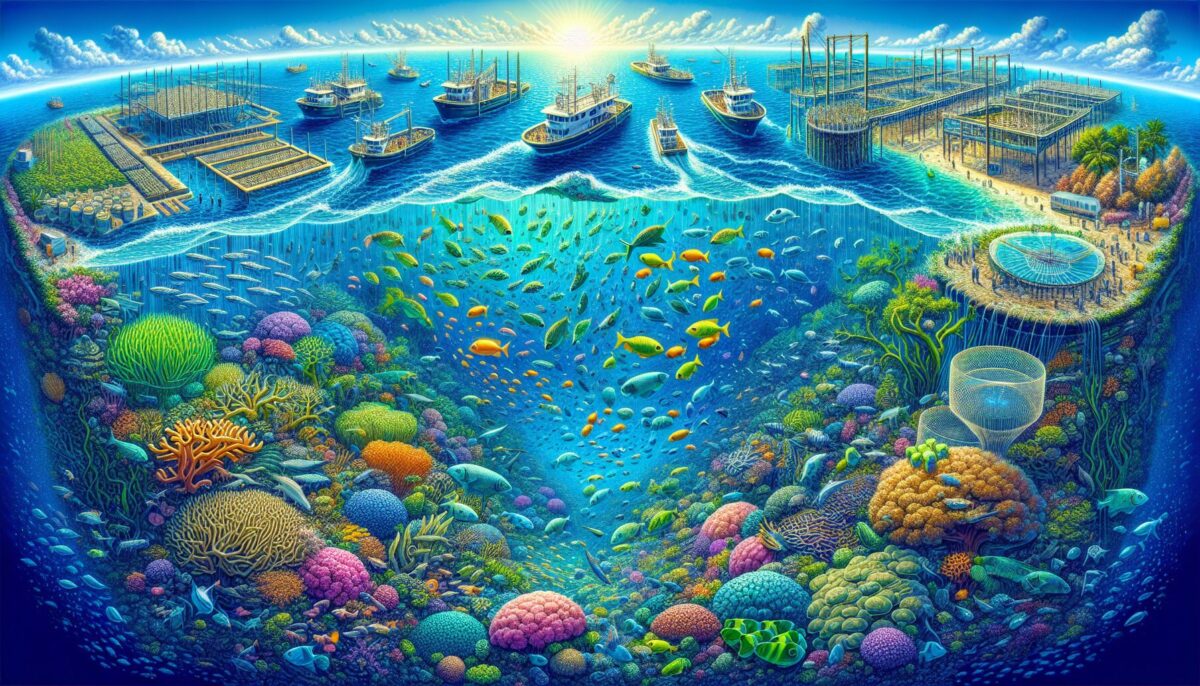
The ocean is a vast and vital component of our planet, covering over 70% of the Earth’s surface and serving as a source of food, livelihood, and recreation for billions of people. It is also central to global systems that make the Earth habitable for humans, playing a key role in climate regulation, carbon storage, and supporting a rich diversity of life. Among the economic paradigms that have emerged to ensure the sustainable use of ocean resources is the “Blue Economy” concept. This framework encompasses various economic activities related to the ocean, seas, and coasts, providing potential for enhancing income generation and jobs while ensuring the health of ocean ecosystems.
What is the Blue Economy?
The term “Blue Economy” was first used by Gunter Pauli to describe a business model that shifts society from scarcity to abundance “with what is locally available,” but it has since evolved to refer to sustainable utilization of ocean resources for economic growth, improved livelihoods, and jobs while preserving the health of ocean ecosystems.
Key Sectors within the Blue Economy
- Sustainable Fisheries and Aquaculture: These practices aim to meet the growing demand for seafood without compromising the health of marine populations and ecosystems.
- Marine Renewable Energy: Exploitation of wind, tidal, and wave energy as sustainable alternatives to fossil fuels.
- Maritime Trade and Transportation: Ensuring that shipping and port activities have minimal environmental impacts.
- Tourism and Recreation: Developing coastal tourism opportunities that do not harm ecosystems or the local community.
- Biotechnology: Harnessing marine resources for medicinal, industrial, and scientific purposes while ensuring biodiversity conservation.
Economic Opportunities and Sustainability
The Blue Economy represents a significant portion of the global economy. According to the World Bank, the “gross marine product” – the ocean’s equivalent of a country’s gross domestic product – is estimated at USD 3 trillion. Fisheries and aquaculture provide livelihoods for up to 12% of the world’s population. When managed sustainably, these sectors can provide lasting economic benefits without depleting the resources they depend on.
The Challenges Facing the Blue Economy
Despite the potential of the Blue Economy, several challenges must be addressed to ensure its sustainable development:
- Overfishing: This practice depletes fish stocks, disrupts marine food webs, and can lead to the collapse of fisheries.
- Pollution: Land-based activities result in significant waste entering the ocean, including plastics, chemicals, and untreated sewage.
- Habitat Destruction: Coastal development, pollution, and destructive fishing methods harm critical habitats like coral reefs, mangroves, and seagrasses.
- Climate Change: Rising sea levels, warming waters, and ocean acidification all pose a threat to marine ecosystems and, by extension, the economies that rely on them.
- Illegal, Unreported, and Unregulated (IUU) Fishing: IUU fishing undermines efforts to manage fisheries sustainably and can lead to the exploitation of vulnerable marine populations.
The Importance of Sustainable Ocean Management
To harness the full potential of the Blue Economy, it is crucial to adopt practices and policies that align with sustainable ocean management principles:
- Conservation of Biodiversity: Establishing Marine Protected Areas (MPAs) to safeguard critical habitats and biodiversity.
- Ecosystem-Based Management: Approaching management with an understanding of ecological relationships and processes.
- Integrated Coastal Zone Management: Coordinating the development and conservation activities along coastlines to minimize conflicts between different uses and maintain ecosystem health.
- Marine Spatial Planning: Distributing marine activities spatially and temporally to reduce conflicts and environmental impacts.
- Climate Resilience: Strengthening the capacity of marine and coastal ecosystems to withstand climate-related impacts.
Pioneering Steps Towards a Sustainable Blue Economy
Countries and organizations around the globe are making strides to develop the Blue Economy sustainably:
- The European Union has launched a Blue Growth Strategy to support sustainable growth in the marine and maritime sectors as a whole.
- Small Island Developing States (SIDS): Many of these nations are investing in renewable marine energy resources and sustainable tourism to create jobs and protect their marine resources.
- Innovation in Aquaculture: Techniques like integrated multi-trophic aquaculture, which combines the farming of fish, shellfish, and algae, help to maintain water quality and ecosystem health.
The Way Forward
For the Blue Economy to reach its potential, several steps need to be taken by international governments, businesses, and society:
- Implement Strong Governance: Clear legal frameworks and effective enforcement are required to manage ocean resources responsibly.
- Invest in Science and Innovation: Supporting research in marine sciences, technology, and sustainable practices is essential for innovation in ocean industries.
- Effectively Manage Resources: Ensuring that the use of marine resources is responsible and sustainable.
- Promote Public-Private Partnerships: Collaboration between governments and businesses can drive investment and innovation in sustainable ocean use.
- Raise Awareness: Educating the public about the importance of the oceans and the need for sustainable management can foster greater stewardship.
Conclusion
The Blue Economy is a beacon of hope for balance between economic development and the sustainability of our oceans. However, to transform potential into practice, there is a need for concerted and collaborative effort across nations, industries, and communities. By placing sustainability at the forefront, we can ensure that future generations will inherit a healthy and thriving ocean, providing for their economic, social, and environmental needs.
Sources
-
World Bank Group. (2017). The Potential of the Blue Economy: Increasing Long-term Benefits of the Sustainable Use of Marine Resources for Small Island Developing States and Coastal Least Developed Countries. https://www.worldbank.org/en/news/infographic/2017/06/06/blue-economy
-
European Commission. Blue Growth. https://ec.europa.eu/maritimeaffairs/policy/blue_growth_en
-
United Nations Conference on Trade and Development (UNCTAD). (2014). The Oceans Economy: Opportunities and Challenges for Small Island Developing States. https://unctad.org/system/files/official-document/dtlstict2014d3_en.pdf
It’s important to remember that as we move forward with the Blue Economy, we should do so with an awareness of the intimate connection we have with the ocean and its resources. It is not just an economic space; it is the cradle of life on our planet and deserves our utmost respect and protection. With careful management and sustainable innovation, the Blue Economy can provide a harmonious path for economic development and the preservation of the Earth’s most precious natural resource – our oceans.
