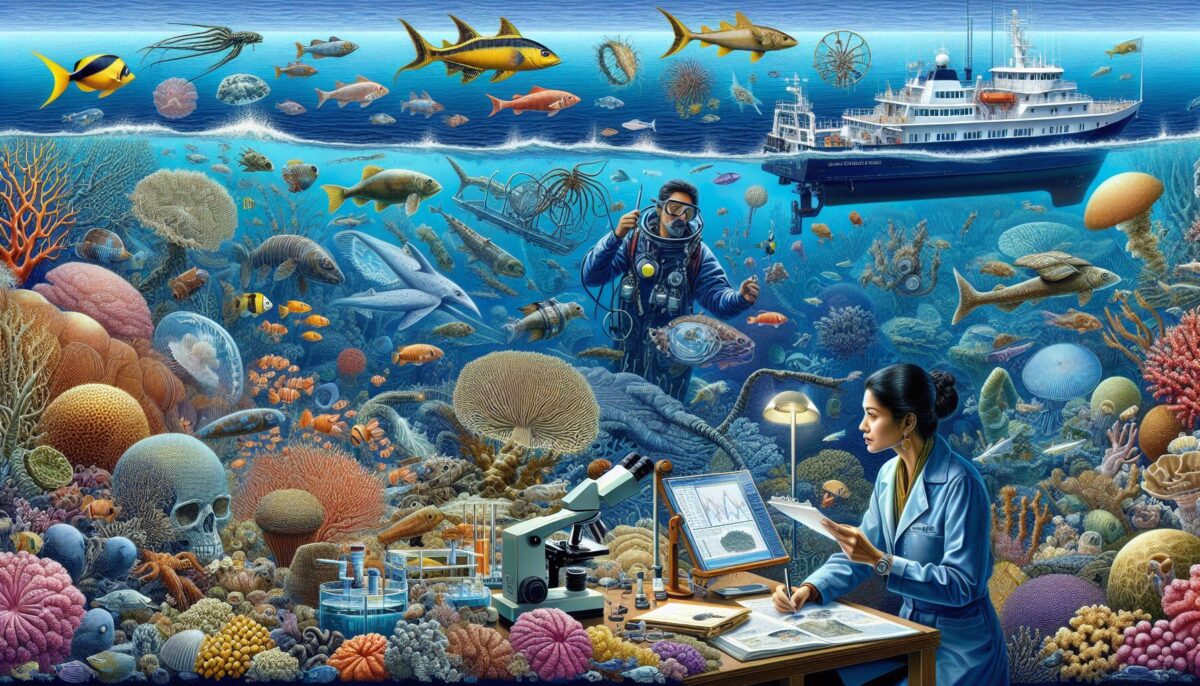
From the azure expanse stretching beyond the horizon to the intricate ecosystems beneath the waves, the world’s oceans are a cornerstone of life on Earth. Oceanography, the scientific study of the oceans, delves into the mysterious depths of these vast bodies of water. In this article, we will embark on a journey to discover the many facets of oceanography and the vital role it plays in climate regulation, marine biodiversity, and the global economy.
What is Oceanography?
Oceanography is the interdisciplinary study of the physical, chemical, geological, and biological aspects of the world’s oceans and seas. It encompasses a broad range of topics, including the movement of water (currents, tides, and waves), the ocean floor (seafloor, continental shelf, and hydrothermal vents), marine life, as well as human interactions with the marine environment, such as maritime trade, fishing, and coastal management (Smithsonian Ocean, National Oceanic and Atmospheric Administration (NOAA)).
The Vast Scope of Oceanographic Research
Oceanography is divided into several subdisciplines:
- Physical Oceanography: This field studies ocean physical characteristics such as temperature, salinity, waves, and currents. Researchers in this area work to understand how the ocean affects weather patterns and climate change.
- Chemical Oceanography: Examines the chemical composition and properties of seawater, including nutrient cycles and ocean acidification.
- Geological Oceanography: Focuses on the structure and development of the seafloor, exploring features like underwater mountains, trenches, and the theory of plate tectonics.
- Biological Oceanography: Investigates the wide array of marine organisms and their ecological interactions in the oceanic environment.
- Marine Geology: Studies the structure, processes, and history of ocean basins and coastal margins.
The Importance of Oceanography
The oceans cover more than 70% of the Earth’s surface and serve as a key driver of the planet’s climate and weather systems. They provide vital ecosystem services, including oxygen production, carbon dioxide absorption, and food resources. Oceans are also critical to the global economy, supporting industries such as fishing, tourism, and shipping (The Ocean Foundation).
Climate Regulation and Weather Patterns
Oceans absorb vast amounts of solar radiation and redistribute heat around the globe through currents, such as the Gulf Stream, influencing climate and weather. Ocean temperatures and salinity levels help drive thermohaline circulation, which is essential for nutrient distribution and marine life sustainability.
Biodiversity and Marine Ecosystems
Marine ecosystems, from the sunlit surface waters to the dark abyssal plains, host an incredible diversity of life. Coral reefs, often called the rainforests of the sea, provide habitats for a quarter of all marine species. Estuaries, where freshwater meets the sea, serve as nurseries for many fish and shellfish species critical to commercial fisheries.
Economic Impact and Human Livelihoods
The ocean economy, or “blue economy,” includes activities such as fisheries, aquaculture, maritime transportation, and offshore drilling. Coastal and marine resources directly influence the livelihoods of billions of people worldwide. Sustainable ocean management is crucial for ensuring that these resources can support future generations.
Contemporary Challenges in Oceanography
The oceans face numerous challenges that necessitate rigorous research and effective management strategies.
Pollution and Marine Debris
Marine pollution, including oil spills, chemicals, and plastics, poses a severe threat to marine ecosystems and human health. Oceanographers study the sources, distribution, and impact of pollutants to develop mitigation strategies (National Geographic).
Climate Change and Ocean Acidification
Increasing levels of atmospheric CO2 are leading to warmer ocean temperatures and causing ocean acidification, which impacts coral reefs and shell-forming organisms. Understanding these changes is vital for biodiversity conservation and the maintenance of marine food webs.
Overfishing and Unsustainable Practices
Overfishing and illegal fishing have led to the decline of numerous fish stocks, threatening food security and marine biodiversity. Oceanographers contribute to the development of sustainable fishing practices and marine protected areas to preserve ocean health.
Advancements in Oceanographic Research
Modern technological advancements have revolutionized oceanographic research, providing scientists with new tools and methods to explore previously unreachable depths.
Remote Sensing and Satellites
Satellites equipped with sensors offer large-scale observation of the oceans, monitoring surface temperatures, sea level rise, and chlorophyll concentrations – a proxy for phytoplankton abundance and ocean productivity.
Autonomous Underwater Vehicles (AUVs)
AUVs, including gliders and underwater drones, allow scientists to gather data from the deep ocean. These vehicles can operate in harsh conditions and inaccessible areas, collecting information on ocean currents, seafloor topography, and marine life.
Deep-Sea Exploration Submersibles
Manned and unmanned submersibles open up the opportunity to directly observe the most remote ocean environments, such as hydrothermal vents and deep-sea trenches. These missions have led to the discovery of new species and a better understanding of deep-sea ecology.
The Future of Oceanography
As our knowledge of the oceans deepens, the importance of oceanography in addressing global challenges becomes ever more apparent. Future research will likely focus on:
- Improving Climate Models: By incorporating oceanographic data, we can enhance climate change predictions and develop better strategies for adaptation and mitigation.
- Conserving Marine Biodiversity: Identifying and protecting critical marine habitats will be essential for conserving the rich biodiversity of our oceans.
- Advancing Renewable Energy: Tidal and wave energy research offers the potential for clean, renewable energy sources that could help reduce our reliance on fossil fuels.
In conclusion, oceanography is not merely the study of the oceans; it is a crucial lens through which we can view and address many of the pressing environmental, economic, and social issues facing our world today. By continuing to support and advance oceanographic research, we can ensure the sustainability of our oceans for generations to come.
Exploring the oceans is a vast, interconnected endeavor, and as we look to the future, it’s clear that the health and understanding of our oceans are both deeply consequential and endlessly fascinating.
