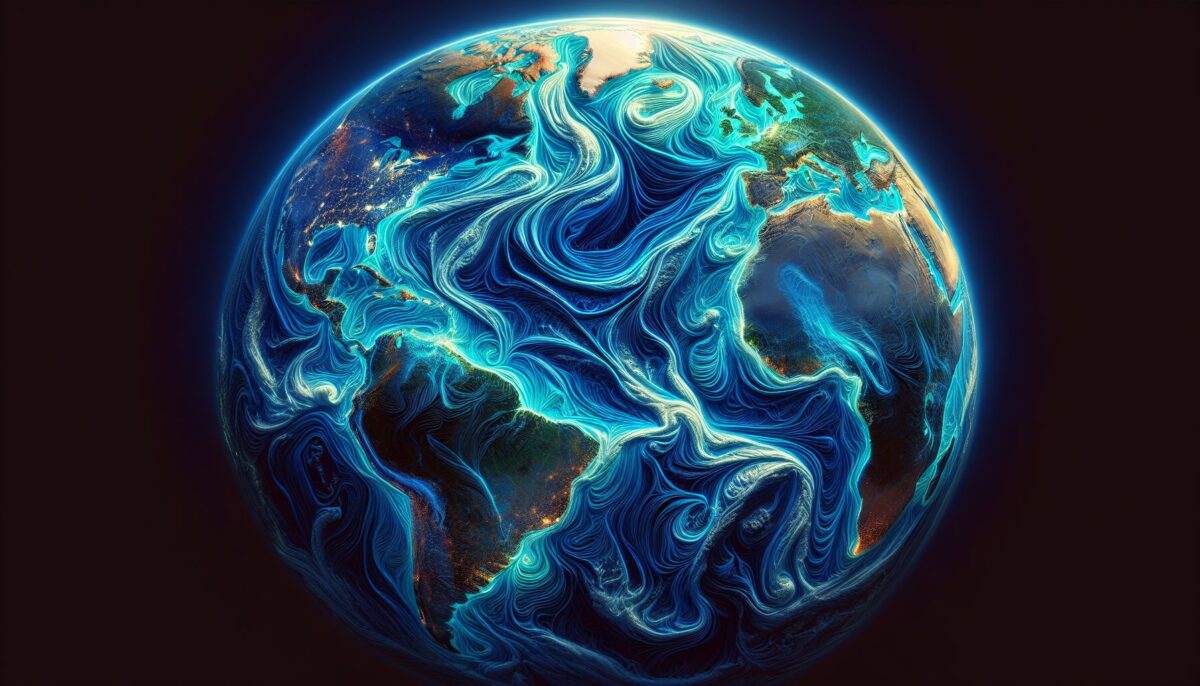
The world’s oceans are not a homogeneous mass of water but are rather defined by a complex network of currents that circulate water across vast distances. These currents are driven by various factors, including wind, the rotation of the Earth, changes in water temperature and salinity, and the shape of the ocean basins. Just as the circulatory system in the human body distributes vital nutrients, ocean currents play a critical role in regulating the Earth’s climate, distributing heat, and supporting marine life. In this deep dive, we’re going to explore the power and influence of ocean currents, and why they matter more than you might think.
Introduction to Ocean Currents
Ocean currents are continuous, directed movements of seawater generated by forces acting upon the water, such as the Earth’s rotation, wind, the Sun’s heat, and water density differences.
Sources of Ocean Currents
– Wind: Surface currents, comprising about 10% of all the water in the ocean, are primarily driven by wind. The wind drags on the surface of the water, creating friction and setting it into motion.
– Thermohaline Circulation: Deep-ocean currents are driven by differences in the water’s density, which are caused by variations in temperature and salinity, hence the term ‘thermohaline’. These currents make up the other 90% of the ocean.
– Coriolis Effect: The rotation of the Earth changes the course of currents through the Coriolis effect, causing them to veer to the right in the Northern Hemisphere and to the left in the Southern Hemisphere.
– Topography: The shape of ocean basins and nearby landforms can influence the direction and speed of currents.
The Importance of Ocean Currents
Climate Regulation
Currents play a crucial role in regulating the world’s climate by transporting warm water and precipitation from the equator toward the poles and cold water from the poles back to the tropics. Without currents, regional temperatures would be more extreme—super hot at the equator and freezing near the poles—making much of our planet uninhabitable.
Nutrient Transport
Currents carry nutrients from the deep waters to the surface. These nutrients support the growth of phytoplankton, which in turn, is the primary food source for a plethora of marine life, forming the base of the marine food web.
Navigation
For centuries, mariners have used ocean currents to aid in navigation and speed up travel. Today, understanding currents continue to be essential for shipping and navigation, influencing the routes taken by ocean-going vessels.
Major Ocean Currents
Surface Currents
- The Gulf Stream: Located in the North Atlantic, it is one of the strongest ocean currents and is essential for transporting heat from the Gulf of Mexico toward Northern Europe.
- The Kuroshio Current: The Pacific equivalent of the Gulf Stream, it runs along the east coast of Japan and is responsible for the relatively mild climates observed there.
- The East Australian Current: Made famous by the movie “Finding Nemo”, it is a warm ocean current that moves water down the east coast of Australia.
Deep Ocean Currents
- Antarctic Circumpolar Current: The largest ocean current, it moves water around Antarctica and connects the Atlantic, Pacific, and Indian oceans.
- Global Conveyor Belt: An interconnected system of deep and surface currents circling the globe, which can take a thousand years to make one complete cycle, redistributing heat and nutrients throughout the oceans.
The Impact of Climate Change on Ocean Currents
The ongoing climate changes can disrupt and alter ocean currents. As global temperatures rise, so does the temperature of the ocean’s surface. This can lead to increased melting of polar ice, which not only adds more freshwater into the ocean but also disrupts the salinity and density-driven components of thermohaline circulation. Scientists are particularly concerned about the potential slowing down or even shutdown of the Gulf Stream due to climate change, which could lead to drastic climate shifts, especially in Europe.
Today’s Use of Ocean Current Data
Marine Navigation
Understanding ocean currents is essential for plotting the fastest and most fuel-efficient routes for ships, especially for international shipping and naval operations.
Fisheries and Aquaculture
Ocean currents affect the health and location of fisheries. The knowledge of currents is used to manage sustainable fishing practices and aquaculture sites.
Disaster Response
In the unfortunate event of oil spills or other marine pollution incidents, understanding the patterns of currents can be crucial for the cleanup and containment efforts.
Renewable Energy
Tidal and ocean current energy represents a massive, untapped source of renewable energy. By harnessing the kinetic energy of currents, we have the potential to power millions of homes without emitting greenhouse gases.
The Study of Ocean Currents
Oceanography, specifically physical oceanography, is the study of ocean currents and related processes. It’s an interdisciplinary field that uses biology, chemistry, geology, and physics to understand how ocean currents function and affect global ecosystems.
Recent Research and Technological Advances
Scientists rely on a variety of tools and technology to study ocean currents:
- Satellites: They measure the height of the sea surface to infer the speed and direction of currents.
- Buoys and Floats: Deployed in the ocean, they directly measure the movement of water.
- Oceanographic Vessels: These specialized ships allow scientists to conduct research and collect data out at sea.
- Autonomous Underwater Vehicles (AUVs) and Gliders: These devices can travel through the ocean, collecting data on currents, temperature, and salinity.
Resources for Further Research
To delve deeper into the world of ocean currents, here are some valuable resources:
- National Oceanic and Atmospheric Administration (NOAA) – NOAA offers extensive information on ocean currents and how they are monitored.
- Intergovernmental Oceanographic Commission (IOC) – The IOC is part of UNESCO and provides information on global ocean currents and their effects.
- Ocean Motion – This online resource provides educational tools for understanding ocean surface currents.
Conclusion
By examining ocean currents, we’ve uncovered just how powerful and essential these rivers within the sea are to life on our planet. From moderating the world’s climate to providing the routes for marine navigation, currents shape the Earth’s ecosystems and human livelihoods in profound ways. It is imperative that we continue to study and respect these life-sustaining features of our blue planet, as they are susceptible to the impacts of climate change.
Understanding and preserving ocean currents is not just about protecting the marine environment; it’s about ensuring the future health of our entire planet’s climate system. Whether you’re a scientist, a policymaker, or simply someone who is captivated by the wonders of the sea, there’s always more to learn and explore when it comes to the dynamic lifelines of our oceans.
