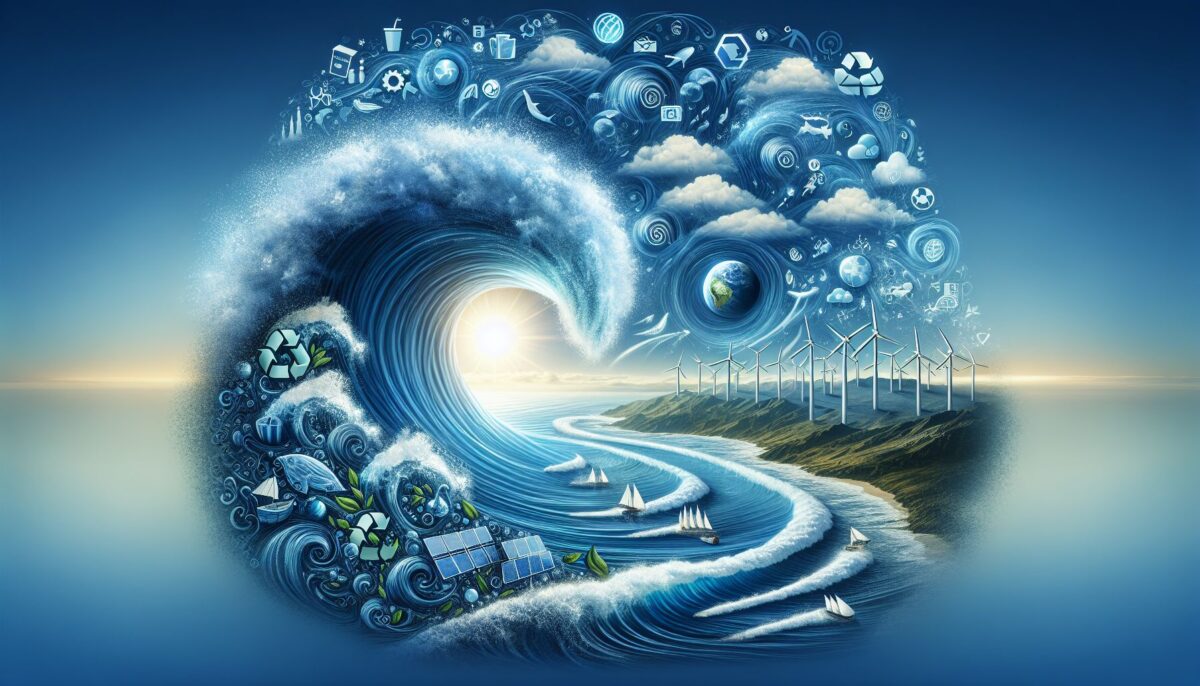
In an era of profound environmental turmoil and economic transition, the term “blue economy” has emerged as a beacon of balance between economic development and ecological preservation. The blue economy encompasses a vast spectrum of marine and coastal assets, activities, and resources that together hold the potential to contribute to sustainable development, particularly in coastal and island countries. This article delves into the essence of the blue economy, its significance in today’s society, and the challenges and opportunities that lie within.
Understanding the Blue Economy
The concept of the “blue economy” has surged in policy, academic, and business circles, proposing a framework to foster economic growth derived from the sea and its resources, while simultaneously protecting ocean health. The term extends beyond the marine environment, fostering innovation and efficiency across various sectors that are either directly or indirectly linked to the oceans, seas, and coasts.
Pillars of the Blue Economy
The blue economy includes traditional maritime sectors such as fisheries, tourism, and maritime transport, but it also incorporates emerging industries like offshore renewable energy, aquaculture, seabed mining, and biotechnology. Central to its mission is not merely exploiting these resources, but doing so in a manner that is sustainable and equitable. The blue economy aims to improve human wellbeing and social equity while significantly reducing environmental risks and ecological scarcities.
The Role of Marine Resources
Marine resources play a pivotal role in the blue economy, offering a plethora of services:
-
Food provision: Fisheries and aquaculture supply a significant portion of the global protein intake, particularly in developing countries.
-
Energy: The oceans offer renewable energy sources, such as tidal and wave energy, that can help wean the world off fossil fuels.
-
Transportation: Shipping lanes are the lifeblood of global trade, with ports serving as crucial hubs for the exchange of goods.
-
Recreation: Coastal and marine tourism enrich local economies and foster cultural exchange.
Key Challenges in the Blue Economy
Despite its potential, the blue economy also faces challenges that must be addressed:
-
Overfishing: Unsustainable fishing practices deplete fish stocks and disrupt marine ecosystems.
-
Marine pollution: From plastic debris to chemical runoff, pollution is a dire threat to marine biodiversity and human health.
-
Ocean acidification and coral bleaching: Climate change-related phenomena that impair the health of coral reefs, vital to marine life and coastal protection.
-
Habitat destruction: Coastal development and certain fishing methods, such as bottom trawling, devastate crucial marine habitats.
-
Equitable access: Ensuring that the benefits derived from the blue economy are shared fairly among nations and communities.
-
Climate change: Rising sea levels, increasing storm severity, and temperature fluctuations pose risks to the blue economy’s sustainability.
Strategies for Sustainable Blue Economy
To realize a truly sustainable blue economy, several strategies must be considered:
-
Sustainable fisheries management: Adopting practices like setting catch limits, protecting nursery grounds, and enforcing no-fishing zones can help restore fish populations.
-
Pollution control: Implementing stricter regulations on land-based pollution, improving waste management, and enhancing marine litter clean-up efforts can preserve ocean health.
-
Renewable marine energy: Investment in tidal, wave, and offshore wind energy can reduce dependence on non-renewable sources.
-
Eco-tourism: Promoting tourism that respects the marine environment and supports local communities can foster sustainable growth.
-
Marine protected areas (MPAs): Establishing MPAs helps preserve biodiversity, protect endangered species, and regenerate over-exploited areas.
-
Climate change mitigation: Reducing carbon emissions, investing in carbon sequestration, and employing coastal adaptation measures are vital.
Advancing Research and Innovation
Continued research and technological innovation are crucial cornerstones of a resilient blue economy. Insights from oceanography, marine biology, and marine geology inform sustainable practices, while advancements in areas like seabed mapping, aquaculture technology, and bioprospecting (the search for plant and animal species from which medicinal drugs and other commercially valuable compounds can be obtained) open new economic frontiers.
International Cooperation
The interconnected nature of the world’s oceans necessitates international collaboration. Agreements like the United Nations Convention on the Law of the Sea (UNCLOS) and the Sustainable Development Goals (SDGs), particularly SDG 14, which calls for the conservation and sustainable use of the oceans, seas, and marine resources, serve as frameworks for nations to cooperate on marine issues.
Regional Success Stories
Examples of blue economy success can be found around the globe:
-
The Caribbean: Known for its sandy beaches and coral reefs, the Caribbean has prioritized marine biodiversity conservation and sustainable tourism.
-
The Pacific Islands: With vast ocean territories, Pacific Island nations are investing in sustainable fisheries and marine spatial planning.
-
Norway: A leader in maritime technology and offshore renewable energy, Norway exemplifies integrating economic growth with ocean conservation.
The Road Ahead
The sustainable management of our ocean resources through the blue economy represents a crucial pathway towards a more equitable and environmentally friendly future. Balancing economic aspirations with the imperative of conservation demands creativity, collaboration, and commitment to stewardship.
As we look forward, the blue economy holds the promise of sustainable wealth creation that can support millions of people worldwide. Yet, it also presents significant challenges that require interdisciplinary solutions. A collective, informed effort by governments, private enterprises, civil society, and individuals is critical in steering the global community towards a sustainable and inclusive blue economy.
Sources
- Silver, J. J., Gray, N. J., Campbell, L. M., Fairbanks, L. W., & Gruby, R. L. (2015). Blue Economy and Competing Discourses in International Oceans Governance. The Journal of Environment & Development, 24(2), 135–160.
- The World Bank. (2017). What is the Blue Economy? Retrieved from The World Bank website: https://www.worldbank.org/en/news/infographic/2017/06/06/blue-economy
- United Nations. (2017). Sustainable Development Goal 14. Retrieved from United Nations website: https://sdgs.un.org/goals/goal14
Utilizing these strategies and insights, there is a path forward to harness the blue economy’s potential without sacrificing the very environment it depends on. Through innovation, responsible governance, and ethical practices, the future of the blue economy shines as a beacon of hope for sustainable development across the globe.
