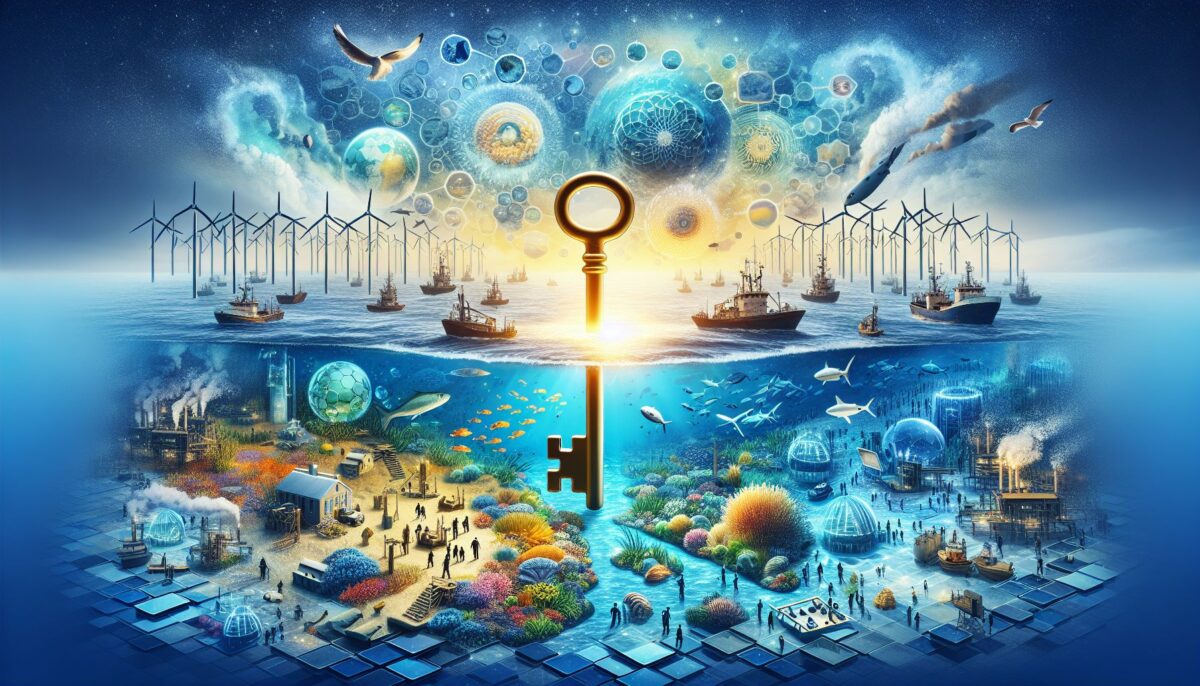
The world’s oceans cover more than 70% of our planet’s surface and hold the key to sustainable economic prosperity, the blue economy. Amidst the vast and mysterious expanse of water lies an intricate web of life and resources that, if harnessed responsibly, can lead to transformative changes to our global economic landscape while ensuring the conservation of our marine environment.
Understanding the Blue Economy
The term “blue economy” refers to the sustainable use of ocean resources for economic growth, improved livelihoods, and jobs while preserving the health of ocean ecosystems. It encompasses a wide array of sectors and activities, including marine transportation, fishing, renewable energy, tourism, climate change mitigation, and marine biotechnology.
Sectors Contributing to the Blue Economy
- Marine Renewable Energy: Utilizing tides and waves as sustainable energy sources to reduce carbon emissions.
- Sustainable Fisheries and Aquaculture: Harvesting and farming seafood without depleting stocks or harming ecosystems.
- Maritime Transport and Trade: Efficiently moving goods and people across the seas in an environmentally friendly way.
- Coastal Tourism: Creating economic opportunities in a way that preserves cultural heritage and the environment.
- Marine Bioprospecting: Exploring the oceans for new drugs and materials, ethically and sustainably.
Marine Renewable Energy
The oceans are a treasure trove of energy potential. Tidal and wave energy represents huge untapped renewable energy sources that can significantly contribute to the world’s energy mix.
Tidal Energy
The gravitational pull of the moon generates tides, creating a predictable source of kinetic energy. Tidal energy can be harnessed through the use of tidal turbines, barrage systems, or tidal lagoons. This form of energy is highly dependable and produces minimal emissions.
Wave Energy
Wave energy devices capture the energy contained in ocean waves. The power produced by wave energy converters can be integrated into the electrical grid or used for desalination processes. The technology is still in its nascent stages but holds great promise.
Sustainable Fisheries and Aquaculture
Overfishing threatens the sustainability of fish stocks. Sustainable fisheries aim to maintain fish populations and marine habitats while taking into consideration the livelihoods of fishermen. Similarly, responsible aquaculture practices work to raise fish and marine plants in controlled environments to alleviate the pressure on wild fish populations.
Maritime Transport and Trade
The shipping industry is crucial to the global economy, moving over 90% of the world’s goods by volume. Maritime transport must evolve to address its environmental impact; this includes optimizing shipping routes, improving fuel efficiency, and exploring the use of alternative fuels like hydrogen or ammonia.
Coastal Tourism
Coastal regions are hubs of tourism activity. However, the industry often comes with environmental and socio-cultural impacts. Sustainable coastal tourism looks to balance economic development with the preservation of ecosystems and local cultures.
Marine Bioprospecting
The biodiversity of marine ecosystems holds immense potential for the development of new pharmaceuticals and materials. Marine organisms have adapted unique compounds and structures for survival, which can be replicated in medicine, industry, and environmental solutions.
Challenges and Solutions for a Sustainable Blue Economy
A thriving blue economy must navigate numerous challenges, such as environmental degradation, climate change impacts, and equitable access. Let’s explore some of these challenges and potential solutions.
Environmental Sustainability
Continued exploitation of the oceans without consideration for ecosystems can lead to catastrophic results, including the loss of biodiversity and the degradation of marine habitats. Marine protected areas (MPAs) are crucial in maintaining biodiversity and reproductive stocks. Additionally, implementing stringent environmental regulations for activities like fishing, mining, and shipping can help protect marine resources.
Climate Change Impacts
The oceans are at the frontline of climate change impacts, experiencing rising temperatures, acidification, and sea level rise. Adapting to these changes requires a concerted global effort. Renewable marine energy can mitigate climate change by reducing reliance on fossil fuels. Furthermore, coastal management strategies can protect against the effects of sea level rise and extreme weather events.
Equitable Access and Inclusion
Ensuring that the benefits of the blue economy are shared equitably demands policies that protect small-scale fishers, coastal communities, and developing nations. These stakeholders must have a say in the decision-making processes that affect their livelihoods and environments. It also means providing access to resources, education, and technology transfer to enable participation in the blue economy.
Technology and Innovation
Advances in technology can make marine industries more sustainable. Innovations in satellite monitoring, for example, can help track illegal fishing, and improvements in aquaculture can reduce the need for antibiotics and other pollutants. Investment in research and development is essential for sustainable practices to become widespread.
Building a Sustainable Future with the Blue Economy
For the blue economy to be truly transformative, it must adopt a holistic approach. This involves:
- Integrating Stakeholders: Involving all parties, including local communities, governments, and businesses in decision-making processes.
- Implementing SDGs: Aligning with the United Nations Sustainable Development Goals (SDGs), especially SDG 14, which calls for the conservation and sustainable use of the oceans.
- Investing in Education and Research: Supporting the development of expertise in marine and maritime disciplines.
- Promoting Responsible Consumption: Encouraging consumers to choose sustainably sourced seafood and eco-friendly marine products.
Conclusion
The blue economy offers a vision of a future where economic growth happens alongside the preservation of our oceans. By tapping into the oceans’ vast resources judiciously, we can support millions of jobs, feed billions of people, and protect the marine environment for future generations. It is a delicate balance, but with conscientious effort, it can lead to a prosperous and sustainable relationship with our planet’s blue spaces.
References
- World Bank Group. (2017). What is the Blue Economy? The World Bank. https://www.worldbank.org/en/news/infographic/2017/06/06/blue-economy
- United Nations. (n.d.). Sustainable Development Goals. UN. https://www.un.org/sustainabledevelopment/sustainable-development-goals/
- Ocean Energy Systems. (n.d.). Tidal Energy. OES. https://www.ocean-energy-systems.org/technologies/tidal-energy/
Note: The above article is an example and meant for educational purposes only. Data and statistics should be validated by the reader for accuracy as of the current date.
