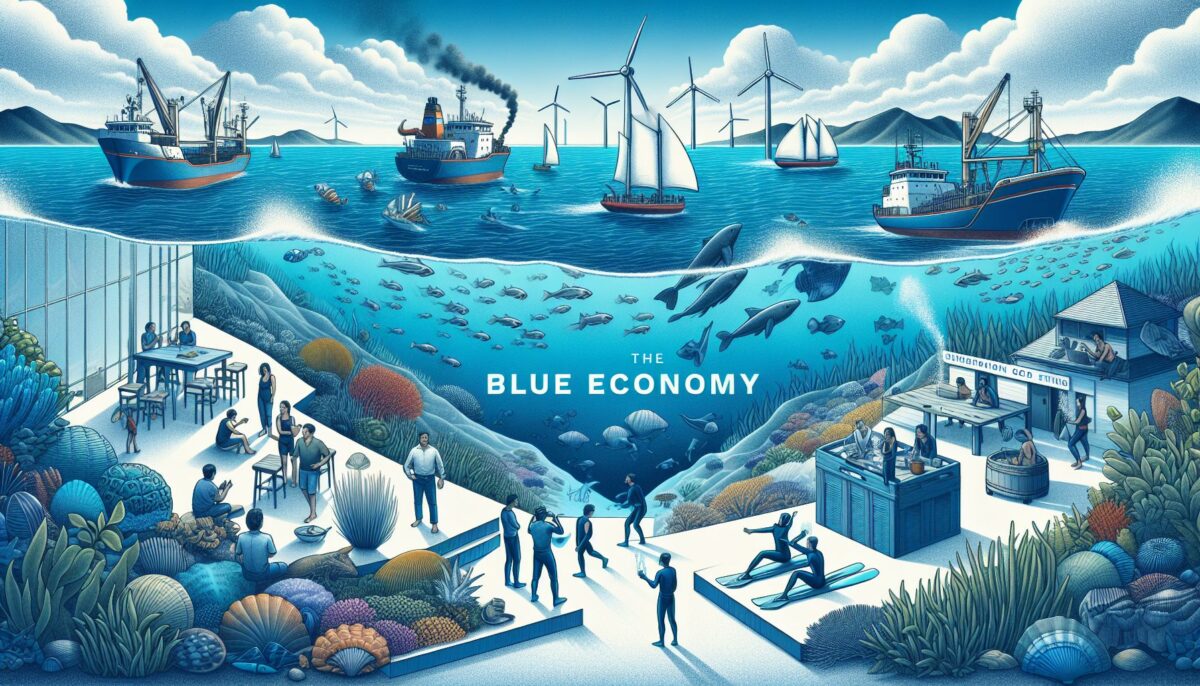
Oceans cover more than 70% of the Earth’s surface and are pivotal to life on our planet. They shape the climate, feed billions of people, and provide a livelihood for millions more. However, as vital as these bodies of water are, they face significant risks from overfishing, climate change, and pollution. The concept of the Blue Economy has emerged as a comprehensive approach to sustainably harness the economic potential of our seas and coastlines while protecting against environmental degradation. In this article, we delve into what the Blue Economy encompasses, its significance, the challenges it aims to tackle, and the strategic steps involved in fostering it.
Understanding the Blue Economy
The Blue Economy refers to the sustainable use of ocean resources for economic growth, improved livelihoods, and jobs, while preserving the health of ocean ecosystems. It’s a term that has gained momentum in recent years as governments, businesses, and conservationists look for ways to balance economic development with ecological preservation.
The concept is broad, encompassing a variety of sectors including:
- Sustainable fisheries and aquaculture
- Renewable marine energy (such as wave and tidal power)
- Maritime transport, ports, and shipping
- Coastal tourism
- Waste management and desalination
But beyond these industries, the Blue Economy also includes less tangible aspects, like carbon sequestration by coastal and marine ecosystems, which plays a critical role in climate regulation.
The Significance of the Blue Economy
Economic Benefits
The ocean is a massive driver of global trade and economy. According to the OECD, the ocean’s economy contributes over USD 1.5 trillion annually to the overall economy. By tapping into marine resources thoughtfully and innovatively, the Blue Economy has the potential to expand even further, offering new jobs, technologies, and revenue streams.
Food Security and Nutrition
Seafood is a primary source of protein for billions worldwide, particularly in developing countries. Sustainable fisheries and aquaculture are central to the Blue Economy, ensuring food security without depleting marine stocks or damaging habitats.
Environmental Stewardship
The Blue Economy framework advocates for the protection of the marine environment. Healthy oceans are more productive and resilient to changes, maintaining biodiversity and ecosystems services such as carbon storage, which are crucial in mitigating climate change.
Socioeconomic Inclusiveness
In developing nations especially, the Blue Economy can provide avenues for poverty reduction and social equity. By engaging local communities in sustainable practices, there’s an opportunity to ensure equitable access to resources and benefits derived from the oceans.
The Challenges in Pursuing the Blue Economy
Despite its potential, the pursuit of the Blue Economy is not without challenges. Some substantial hurdles include:
- Overfishing and poor fisheries management
- Marine pollution and debris
- Climate change impacts, and associated ocean acidification and coral bleaching
- Coastal erosion and habitat destruction
- Oil spills from shipping and offshore drilling accidents
- Lack of comprehensive legal and regulatory frameworks
These challenges require global collaboration and governance to ensure that economic development does not come at the cost of marine health.
Pathways to a Sustainable Blue Economy
To overcome these challenges and realize the promise of the Blue Economy, several strategies need to be considered:
Sustainable Fisheries and Aquaculture Practices
Sustainable fishing practices and responsible aquaculture are key pillars of the Blue Economy. Efforts must include:
- Reducing overfishing and illegal fishing activities
- Implementing science-based fisheries management
- Encouraging aquaculture operations that minimize environmental footprint
Investing in Marine Renewable Energy
Wave and tidal energy are promising renewable resources with the potential to contribute significantly to global energy needs while reducing carbon emissions. Developing technology and infrastructure to harness these sources is crucial for the Blue Economy.
Protecting Marine Biodiversity
Marine Protected Areas (MPAs) play a significant role in preserving biodiversity under the Blue Economy. MPAs provide sanctuaries for marine life to flourish, which supports sustainable fishing and tourism industries.
Promoting Eco-Friendly Maritime Transport
Maritime transportation, responsible for about 90% of global trade, must become more sustainable. This entails investing in cleaner engines, better fuel options, and optimizing logistics to reduce environmental impacts.
Coastal Zone Management
Coastal zones require integrated management practices that combine development needs with conservation priorities. These practices include restoring coastal habitats like mangroves and wetlands, which protect against erosion and offer breeding grounds for marine life.
Engaging in International Cooperation and Governance
Establishing global standards and regulations in maritime activities ensures a level playing field and protects shared resources. International cooperation facilitates the sharing of best practices and technology, which is essential for a globally viable Blue Economy.
Encouraging Research and Development
Investment in oceanographic research and innovation is essential to uncover new sustainable methods of using marine resources. Areas such as marine biotechnology harbor potential for breakthroughs in medicine, energy, and materials.
Utilizing Integrated Economic Approaches
Implementation of tools like natural capital accounting, which includes the value of natural resources in economic planning, can ensure that the Blue Economy is integrated into national and regional economic strategies.
Conclusion
The Blue Economy represents a sustainable future where economic progress coexists with the conservation of the very ecosystems that support that growth. It’s a systemic shift in how we value, use, and invest in our ocean resources. The transition will not be easy, but it’s necessary for the health of our planet and the prosperity of future generations.
Embracing the Blue Economy will require collaboration across borders, industries, and communities. By fostering this connection between human activities and ocean health, we can safeguard our oceans while also unlocking new economic potential.
The potential of the Blue Economy is as vast as the oceans themselves—it beckons with a promise of sustainability and abundance.
Sources
- “The Ocean Economy in 2030” – OECD. OECD iLibrary
- “What is the Blue Economy?” – World Bank. World Bank
- “A Sustainable Ocean Economy, Innovation, and Growth: A G20 Initiative for the 7th Largest Economy in the World” – WRI Ocean. World Resources Institute
