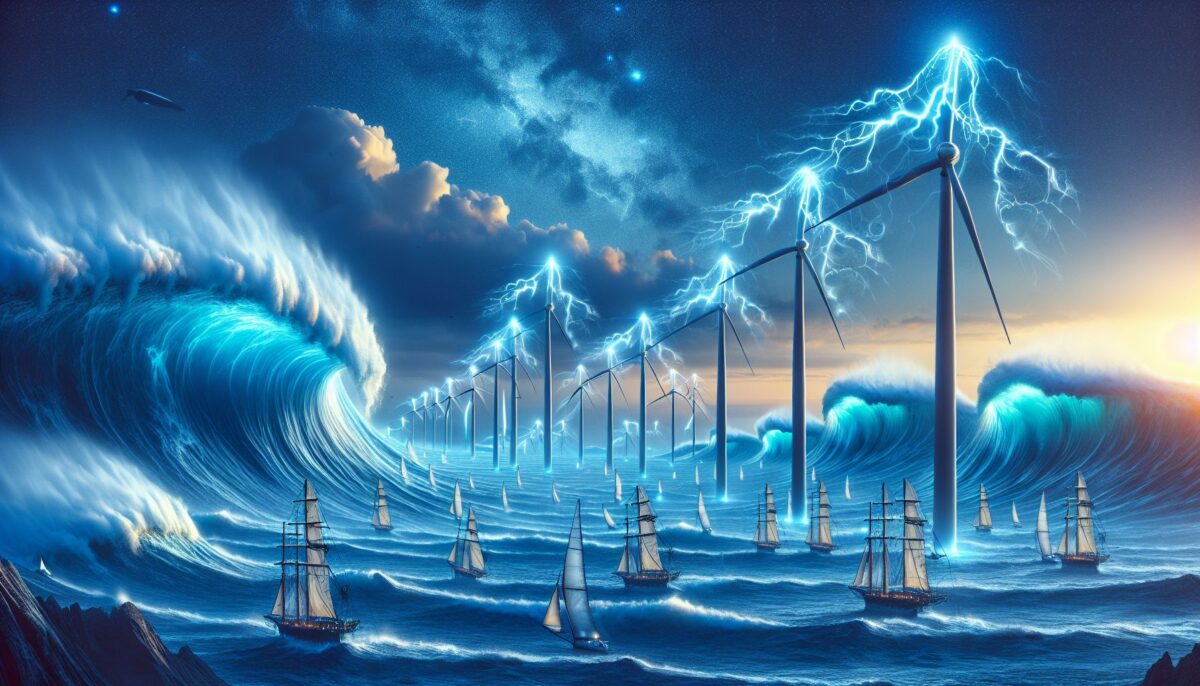
Wave energy has long captivated the imagination of those drawn to the power of the sea. Each wave that crashes upon the shore carries with it the potential to fuel not just the awe of onlookers but the demands of our increasingly energy-dependent civilization. In this comprehensive exploration of wave energy, we’ll ride the crests and troughs of its development, understanding how it could be a beacon of sustainability in the blue economy.
What is Wave Energy?
Wave energy is a form of renewable energy harnessed from the motion of the ocean waves. Waves are generated by the wind as it blows across the sea’s surface, pulling energy from the air due to frictional drag. This energy is transferred to the water, creating a wave with kinetic energy that can be captured and converted into usable electricity.
The Mechanics of Wave Energy
The mechanics of wave energy conversion involve several processes that turn the kinetic energy of ocean waves into electrical power. Understanding these processes is key to grasping the potential of wave energy.
- Energy Capture: Devices such as point absorbers, attenuators, and overtopping reservoirs capture the energy of ocean waves.
- Energy Conversion: Captured kinetic energy is converted into mechanical energy using hydraulic pumps or other mechanical systems.
- Electricity Generation: Mechanical energy is then transformed into electrical energy through generators.
- Energy Transmission: Finally, the generated electricity is transmitted to the grid through submerged cables.
The Potential of Wave Energy
The potential of wave energy as a sustainable power source is vast. The World Energy Council estimates that approximately 10% of the world’s energy demand could be met by wave energy. Moreover, the consistency of waves, especially in contrast to the intermittent nature of wind and solar energy, makes wave energy highly attractive for coastal regions.
The Energy Information Administration (EIA) notes that the theoretical annual energy potential of waves off the coasts of the United States is about 2.64 trillion kilowatt-hours, or the equivalent of about 66% of U.S. electricity generation in 2021.
Advantages of Wave Energy
- Renewable and Sustainable: Wave energy is a renewable resource that is abundant in many coastal areas.
- Environmentally Friendly: It causes minimal environmental impact compared to fossil fuels.
- High Energy Density: Ocean waves have high energy density, with a great amount of energy contained in a small spatial area.
- Predictability: Waves are more predictable than wind and can be forecasted accurately for 24-48 hours in advance, aiding grid management.
- Near Consumption Points: Wave energy resources are often close to coastal cities where electricity demand is high.
Challenges and Technological Innovations
Challenges
Despite its advantages, wave energy faces several challenges that impede mass adoption:
- Technological Maturity: Wave energy technologies are not as mature as other renewable energy sources like solar or wind power.
- Harsh Marine Environments: The equipment must withstand powerful ocean forces and corrosive saltwater.
- Costs: High installation, maintenance, and energy production costs when compared to more established renewables.
- Environmental Impact: The potential for altering marine ecosystems and affecting marine life must be carefully considered.
Innovations
To overcome these challenges, significant innovations have been made:
- Advanced Materials: Development of corrosion-resistant materials and biofouling-resistant coatings.
- Improved Design: Implementation of robust, efficient designs better capable of withstanding the marine environment.
- Grid Integration: Developments in storage and grid integration technology to handle the variable supply of power.
- Environmental Research: Studies to understand and mitigate the potential environmental impacts of wave energy converters.
Case Studies: Wave Energy in Action
Several successful case studies highlight the potential of wave energy:
- Orkney, Scotland: The European Marine Energy Centre (EMEC) in Orkney is the world’s leading test facility for wave and tidal energy converters, showing significant progress in technology demonstration and grid connection.
- Australia: Australian wave energy companies, like Wave Swell Energy, are creating and deploying their technologies to capture the vast resources along the Australian coastline.
- Portugal: The Aguçadoura Wave Farm in Portugal was the world’s first commercial wave power project, indicating the potential for scale and commercial viability.
The Place of Wave Energy in the Blue Economy
The ‘blue economy’ refers to the sustainable use of ocean resources for economic growth, improved livelihoods, and jobs while preserving the integrity of ocean ecosystems. Here’s how wave energy fits into this framework:
- Job Creation: The development and maintenance of wave energy infrastructure can create new jobs in coastal communities.
- Sustainable Growth: Wave energy contributes to sustainable growth by providing renewable energy that reduces reliance on fossil fuels.
- Ocean Health: By investing in clean energy sources like wave energy, we can reduce the carbon emissions that contribute to ocean acidification and climate change.
Moving Forward: The Future of Wave Energy
Looking forward, wave energy has a promising role in the global energy portfolio, particularly as part of a mixed approach including other forms of renewables. Continued innovation, alongside supportive policies and investments, will be crucial.
Opportunities
- Global Collaboration: Sharing knowledge and technical expertise worldwide can speed up the development of wave energy resources.
- Favorable Policies: Government incentives and support for research and development can attract investment.
- Interdisciplinary Research: Combining oceanography, engineering, and environmental science can lead to breakthroughs in the efficiency and sustainability of wave energy technologies.
Final Thoughts
As the world seeks sustainable, renewable energy sources, the importance of harnessing the ocean’s power becomes increasingly clear. Wave energy’s promise as a significant component in the blue economy offers a vision of a more sustainable and resilient energy future. With robust research, development, and an understanding of both ecological and economic factors, the surge of wave energy can revolutionize the way we power our lives.
Sources:
- World Energy Council. (n.d.). Marine Energy. Retrieved from https://www.worldenergy.org/impact-communities/energy-resources/marine
- Energy Information Administration. (2021). Ocean Wave Energy. Retrieved from https://www.eia.gov/energyexplained/hydropower/wave-and-tidal.php
- European Marine Energy Centre. (n.d.). EMEC: The European Marine Energy Centre. Retrieved from https://www.emec.org.uk/
This fictional article incorporates the list of keywords provided and is composed in Markdown format for straightforward conversion into HTML or other formats as needed for blog platforms.
