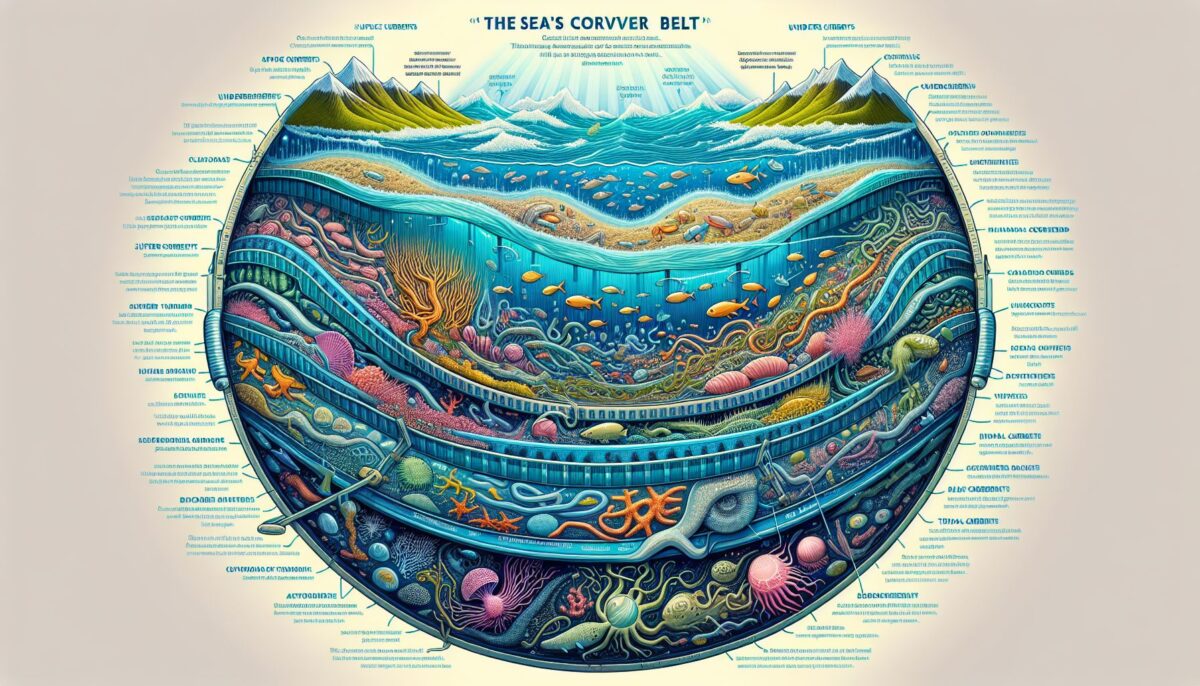
The vastness of the ocean is mesmerizing and often gives one the impression of an unchanging and constant natural world. But beneath the seemingly calm expanse, the ocean is a dynamic and moving body of water, driven by a complex system known as ocean currents. These currents are crucial for maintaining the Earth’s climate, distributing heat, and supporting marine life. In this comprehensive guide, we will explore the intricate world of ocean currents, their types, causes, and impacts on global ecosystems and human activities.
What Are Ocean Currents?
Ocean currents are continuous, directed movements of seawater generated by various forces acting upon the water, including wind, the Earth’s rotation, differences in water density, and the sun’s heat. These currents shape climate patterns, influence weather, and affect marine ecosystems around the world.
The Driving Forces Behind Ocean Currents
Several key factors contribute to the formation of ocean currents:
Wind
The surface currents (upper 400 meters of the ocean) are primarily generated by wind. The wind transfers its energy to the water, creating waves, and over time, the repetitive action results in currents. The Earth’s rotation also influences these currents through the Coriolis effect, causing them to curve.
Temperature and Salinity
Deep ocean currents are driven by the density differences in the water column, created by variations in temperature and salinity, a phenomenon known as thermohaline circulation. Cold, salty water is denser and tends to sink, while warmer, less salty water is lighter and rises to the surface.
Tides
Tidal currents are caused by the gravitational pull of the moon and the sun, leading to the rising and falling of sea levels that create currents as the water moves to and from the shore.
Geography
The shapes of ocean basins and coastlines can also direct the flow of currents. For example, narrow straits or channels can accelerate the speed of water flow.
Types of Ocean Currents
Surface Currents
These are horizontal, wind-driven currents that typically move at speeds of 0.5-2 meters per second. They are most pronounced in the upper layer of the ocean and can be warm or cold currents, such as the Gulf Stream or the California Current.
Deep Water Currents
These currents are part of the thermohaline circulation driven by density differences. They move much slower than surface currents, typically just a few centimeters per second, but can carry large volumes of water across great distances.
Upwelling and Downwelling
These processes describe the vertical movement of water, which can bring nutrient-rich water from the deep to the surface (upwelling) or transport warmer, oxygenated water from the surface to greater depths (downwelling).
The Impact of Ocean Currents
Climate Regulation
Currents act as conveyor belts for heat, moving warm water from the equator toward the poles and bringing cold water back toward the equator. This helps regulate the Earth’s climate by distributing heat more evenly around the globe.
Marine Life
Currents also carry nutrients and oxygen that are essential for marine life. Upwellings, in particular, are critical for supporting large populations of plankton, fish, and other marine organisms, which in turn sustain larger marine animals and birds.
Human Activities
Ocean currents can affect maritime trade by shortening or lengthening travel time, depending on whether ships are traveling with the current or against it. They also influence fishing, oil exploration, and the deployment of undersea cables.
Environmental Concerns
Currents play a role in the distribution of marine debris and pollutants. They can also transport invasive species to new areas, impacting local ecosystems.
The Consequences of Disrupted Currents
Climate change poses significant risks to ocean currents, with potential alterations in wind patterns and the polar ice melt affecting thermohaline circulation. This could lead to dramatic shifts in climate, much more extreme weather events, and negative impacts on marine biodiversity.
The Role of Currents in Science and Technology
Ocean currents are crucial for scientific research in fields such as oceanography and marine biology. They are also inspiring technological advancements, such as the development of marine renewable energy sources like tidal and wave power.
Conclusion
Ocean currents are the lifeblood of the planet, influencing weather, climate, marine life, and human activities. Understanding these powerful movements of water is crucial for marine conservation, navigation, and addressing the challenges posed by climate change.
To further explore the vast world of ocean currents, consider diving into the realms of scientific research provided by these reputable sources:
- The National Oceanic and Atmospheric Administration (NOAA) – https://www.noaa.gov/
- The Woods Hole Oceanographic Institution – https://www.whoi.edu/
- The Intergovernmental Oceanographic Commission of UNESCO – http://ioc-unesco.org/
Understanding and respecting the power of ocean currents are vital for safeguarding our blue planet for future generations.
