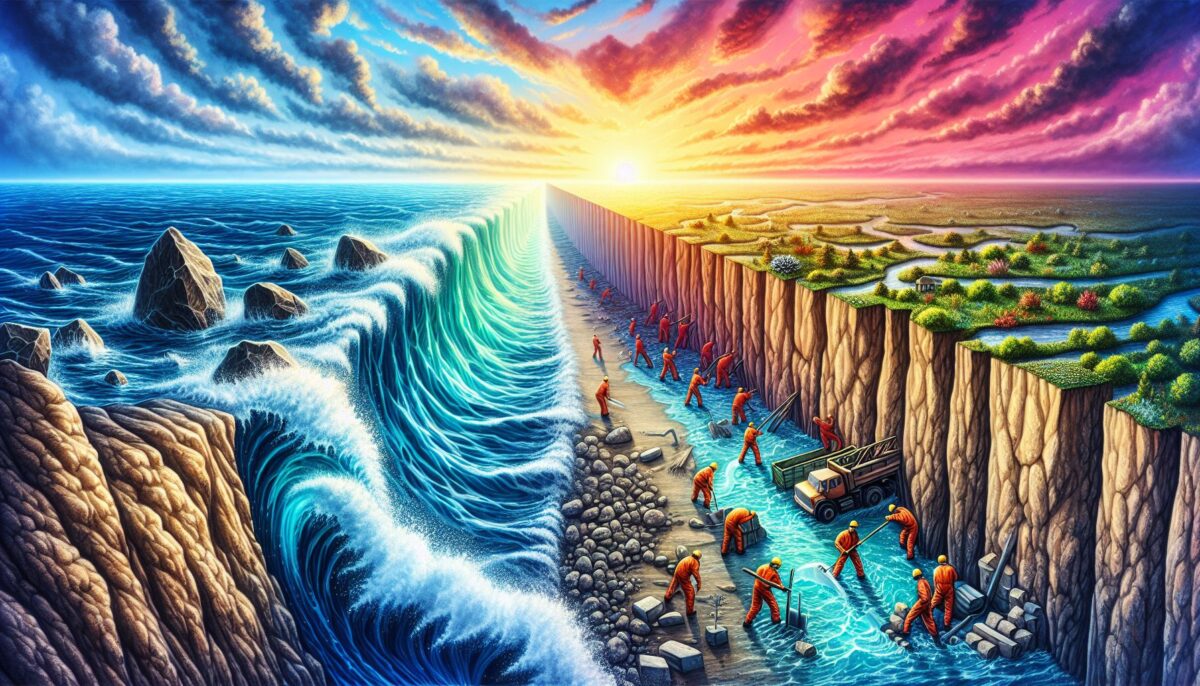
When it comes to coastal landscapes, there’s an inherent beauty and tranquility to where land meets sea. However, beneath this serene facade lies a tumultuous battle between the forces of nature and the presence of human activity. Coastal erosion, a natural process exacerbated by both climactic events and human interference, poses a critical threat to ecosystems, infrastructure, and communities. This article delves into the causes, impacts, and mitigation strategies surrounding coastal erosion, highlighting the tightrope walk of preserving our shorelines for future generations.
Understanding Coastal Erosion
Coastal erosion is the gradual removal of land along the shoreline due to the action of waves, tides, and currents. It can be influenced by a variety of factors including the:
- Geology of the coast: Some rock types are more resistant to erosion than others.
- Wave energy: Stronger waves, often found in storm conditions, can accelerate erosion.
- Sea level rise: Higher sea levels can lead to more powerful waves reaching further inland.
- Human activity: Coastal development, dredging, and the construction of sea defenses can change natural sediment movement and contribute to erosion.
Recent research underscores the increasing rate of coastal erosion. According to a study published by the European Commission’s Joint Research Centre, nearly 50% of the world’s sandy beaches could be significantly eroded by the end of this century (European Commission.
The Impacts of Coastal Erosion
Environmental Implications
- Loss of Habitat: Coastal erosion can destroy habitats crucial for wildlife, particularly birds and marine species.
- Changes in Ecosystems: The removal of coastal land can lead to the loss of wetlands, which are vital for water purification, flood protection, and biodiversity.
Socio-Economic Consequences
- Infrastructure Damage: Homes, roads, and communities near the shoreline may be at risk.
- Economic Loss: Coastal areas often rely on tourism and fisheries, both of which can be negatively affected by erosion.
Cultural Effects
- Heritage Sites at Risk: Erosion can threaten historical sites and culturally significant landscapes.
The Causes Behind the Erosion
Natural Causes
- Storms and Weather Events: Hurricanes and storms produce strong waves that can strip away the shoreline.
- Sea Level Rise: As oceans absorb more heat, sea levels rise, exacerbating erosion issues (NOAA).
Human-Induced Causes
- Coastal Development: Construction along coasts can remove natural barriers and change sediment dynamics.
- Armoring: Seawalls and jetties may protect one area while accelerating erosion in another.
- Dredging: Alters natural sediment flow, potentially leading to erosion downstream or along the coast.
Mitigation and Adaptation Strategies
Hard Engineering Solutions
- Sea Walls
- Pros: Protect property from wave action.
-
Cons: Can enhance erosion elsewhere and alter natural processes.
-
Groynes
- Pros: Trap sand from being moved down the beach by longshore drift.
- Cons: Can starve downstream beaches and disrupt ecosystems.
Soft Engineering Approaches
- Beach Nourishment
- Pros: Adds sand to the beach, preserving its natural appearance.
-
Cons: Temporary and can be expensive over time.
-
Dune Regeneration
- Pros: Enhances natural coastal defenses.
- Cons: Relies on sufficient space and can be slow to establish.
Managed Retreat
- Allowing Controlled Erosion
- Pros: Lets nature take its course and can restore natural habitats.
- Cons: Requires relocating infrastructure and potentially communities.
Innovative Solutions
- Living Shorelines
- Use of natural materials and plants to stabilize the coast.
-
Can create habitats and help absorb wave energy.
-
Reef Creation
- Artificial reefs can help break waves and provide marine habitats.
- Require careful planning to ensure ecological compatibility.
Navigating Complexities
The solutions to coastal erosion are rarely clear-cut. Decision-makers must balance economic costs, environmental impact, and social consequences. Engaging local communities in the planning process is crucial for sustainable coastal management. Additionally, integrated coastal zone management (ICZM) approaches that consider the entire watershed and its connected ecosystems can result in more holistic and effective strategies.
The Ongoing Challenge
As climate change accelerates and sea levels continue to rise, the challenge of coastal erosion will only become more pressing. Proactive measures that combine both hard and soft engineering, together with community engagement and ecological consideration, are key. Research into new materials and methods, such as the utilization of biodegradable structures that encourage sediment accumulation without harming the environment, may offer innovative pathways forward.
Policies and the Way Forward
Efforts to curb coastal erosion must also be supported by strong policies and global cooperation. The protection of marine protected areas (MPAs), implementation of environmental impact assessments for coastal projects, and adherence to international climate agreements are vital components of the fight against coastal erosion.
Moreover, funding for research into coastal erosion and its mitigation should be prioritized. Supporting interdisciplinary studies in oceanography, marine geology, and environmental science can yield insights into better management practices that align human development with the preservation of our coastal environments.
Conclusion
The health of our shorelines is representative of a complex interplay between natural dynamics and human influences. It’s a delicate balance that requires understanding, ingenuity, and a deep respect for the natural processes that shape our coasts. With concerted efforts, innovation, and global collaboration, it’s possible to develop sustainable solutions that protect our coastlines and the myriad of life that depends on them.
Whether through the construction of living shorelines or the restoration of natural habitats, each strategy contributes to a collective effort to safeguard not just the land, but the vitality of ocean ecosystems and the well-being of coastal communities. The enduring beauty and utility of the world’s shorelines depend on our actions today and our commitment to a more resilient and thoughtful coexistence with the dynamic forces of our planet.
- European Commission, Projecting global mean sea-level rise and its impacts on coastal change. Retrieved from: https://ec.europa.eu/jrc/en/publication/eur-scientific-and-technical-research-reports/projecting-global-mean-sea-level-rise-and-its-impact-coastal-change
- NOAA, Sea Level Rise. Retrieved from: https://oceanservice.noaa.gov/facts/sealevel.html
- World Wildlife Fund (WWF), Living Shorelines. Retrieved from: https://www.worldwildlife.org/initiatives/living-shorelines
