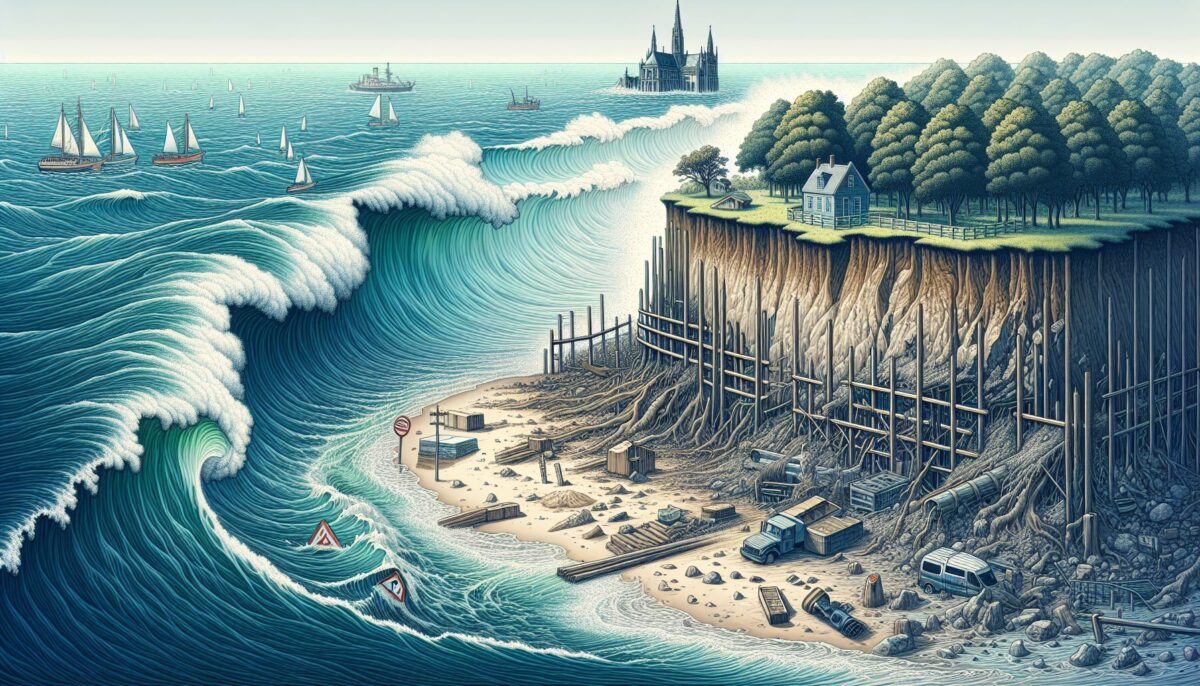
The ocean, a vast and mysterious expanse that covers more than 70% of the Earth’s surface, is crucial to life on our planet. It regulates the climate, supports an abundance of marine life, and provides food and resources to billions of people worldwide. However, our shorelines and coastal communities are facing unprecedented challenges as a result of human activity and natural processes. Two of the most pressing issues are coastal erosion and sea level rise, which demand immediate and effective coastal management strategies to mitigate their impacts. In this article, we will dive deep into the causes of coastal erosion and sea level rise, explore their consequences, and examine the measures that can help us adapt to and prevent further damage.
Coastal Erosion: A Growing Concern
Coastal erosion is the process by which beaches, dunes, and cliffs are worn away by the action of waves, tides, and currents. It is a natural part of coastal dynamics but has been exacerbated by human activities.
Causes of Coastal Erosion
- Natural Factors: Storm surges, tsunamis, and the constant battering of waves contribute to the natural erosion of coastlines.
- Human Activities: Seawalls, groins, and other coastal structures can disrupt the natural sediment flow, leading to erosion down-drift. Sand mining and dredging can also remove the natural barriers protecting the shore.
- Climate Change: Rising sea levels and increased storm intensity can lead to more aggressive coastal erosion.
The Impacts of Coastal Erosion
- Loss of Land: Coastal erosion can lead to the loss of valuable land and property.
- Habitat Destruction: Erosion can destroy habitats for various forms of marine and terrestrial life.
- Economic Impact: Damage to infrastructure, tourism, and property values can have significant economic consequences for coastal communities.
Sea Level Rise: A Silent Threat
Sea level rise is often a slow process, but it represents one of the most critical concerns for coastal areas worldwide.
Causes of Sea Level Rise
- Thermal Expansion: As global temperatures increase, seawater expands, contributing to sea level rise.
- Melting Ice Caps and Glaciers: Warming temperatures lead to the melting of polar ice caps and glaciers, adding more water to the oceans.
- Land Ice Loss: The loss of ice from Greenland and Antarctica due to warming contributes significantly to sea level rise.
The Impacts of Sea Level Rise
- Flooding: Increased sea levels can lead to more frequent and severe flooding events.
- Coastal Habitat Alteration: Rising waters can alter coastal ecosystems, affecting marine biodiversity.
- Economic Costs: The costs of adapting to sea level rise, through the construction of sea defenses and relocation of communities, can be enormous.
The Crucial Role of Coastal Management
Coastal management involves the protection and preservation of coastlines against erosion and sea level rise while balancing environmental, economic, and social objectives.
Strategies for Managing Coastal Erosion
- Beach Nourishment: Replenishing sand on eroding beaches to restore their size and protective function.
- Construction of Protective Structures: Building seawalls, groins, and breakwaters to protect coastlines from wave action—although these can sometimes exacerbate erosion elsewhere.
- Vegetation Planting: Using native plants to stabilize dunes and protect against wind and wave erosion.
Adapting to Sea Level Rise
- Elevation of Structures: Raising buildings and infrastructure above projected flood levels.
- Managed Retreat: In some cases, moving back from the coastline can be the most sustainable long-term solution.
- Flood Defenses: Constructing levees, barriers, and floodgates to manage flood risks.
The Importance of Integrated Coastal Zone Management (ICZM)
Integrated Coastal Zone Management is a process that uses an ecosystem-based framework to balance competing demands and uses of coastal areas while ensuring the protection of coastal ecosystems and promoting sustainable development. ICZM involves multiple stakeholders, including government, community members, industry, and scientists, to address complex coastal challenges collectively.
Case Studies in Effective Coastal Management
- The Netherlands: With much of the country below sea level, the Dutch have become pioneers in coastal management, utilizing an extensive system of dikes, storm surge barriers, and ‘Room for the River’ projects to cope with sea level rise and flooding.
- Maldives: As one of the most vulnerable countries to sea level rise, the Maldives has engaged in island elevation, building seawalls, and promoting coral reef restoration to combat erosion and protect its islands.
Conclusion
As the impact of climate change accelerates, the need for effective coastal management becomes more urgent. Coastal erosion and sea level rise will continue to pose significant risks to our environment, economy, and way of life if we fail to act. By implementing adaptive and integrated coastal management strategies, we can safeguard our shorelines and ensure the resilience of coastal communities for generations to come.
Sources
- Cooper, J.A.G., & Pilkey, O.H. (2004). Sea-level rise and shoreline retreat: time to abandon the Bruun Rule. Global and Planetary Change, 43(1-2), 157-171. http://dx.doi.org/10.1016/j.gloplacha.2004.07.001
- Nicholls, R.J., & Cazenave, A. (2010). Sea-Level Rise and Its Impact on Coastal Zones. Science, 328(5985), 1517-1520. http://dx.doi.org/10.1126/science.1185782
- The World Bank. (2021). Integrated Coastal Zone Management. Retrieved from https://www.worldbank.org/en/topic/environmental-and-natural-resources-management/brief/integrated-coastal-zone-management
