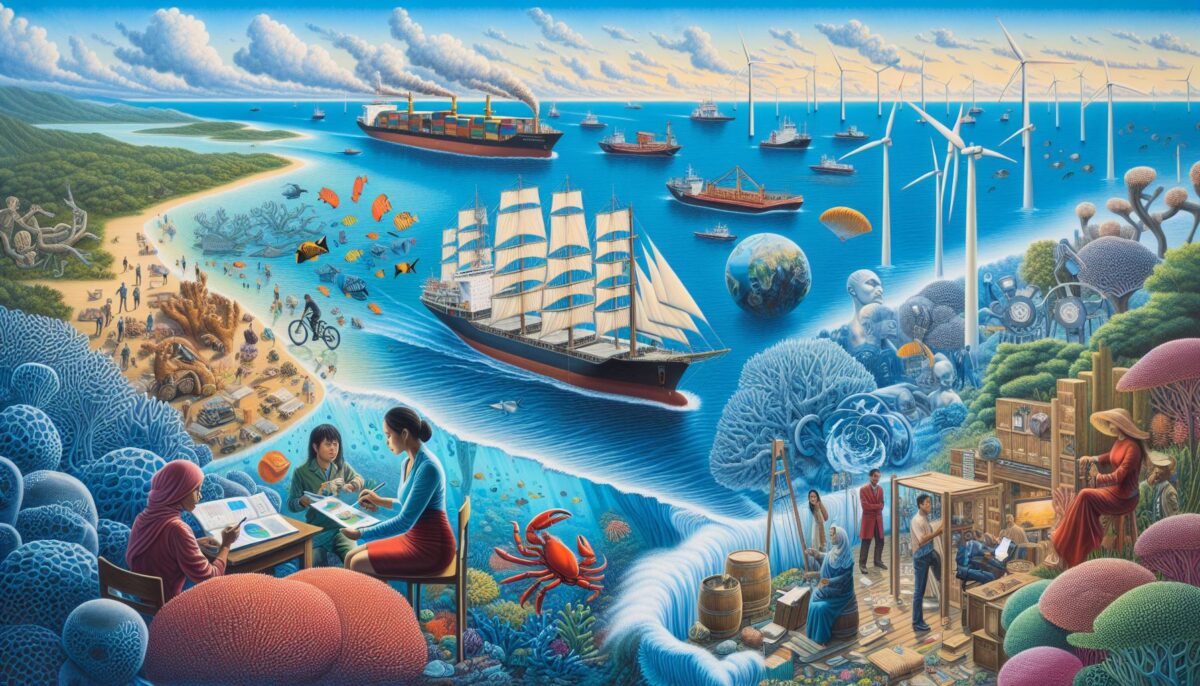
The concept of “Blue Economy” is gaining growing attention in global economic and environmental discussions. It represents the sustainable use of ocean resources for economic growth, improved livelihoods, and jobs while preserving the health of ocean ecosystems. But what exactly is the “Blue Economy,” and why is it so critical for our future? In this comprehensive article, we will dive deep into the vast potential of our oceans and uncover the importance of balancing economic growth with the need for conservation.
Understanding the Blue Economy
The term “Blue Economy” encompasses a broad range of economic activities related to the ocean, seas, and coasts. It includes established sectors such as fisheries, tourism, and maritime transport, as well as emerging industries like offshore renewable energy, aquaculture, desalination, and seabed mining. The World Bank defines the Blue Economy as “the sustainable use of ocean resources for economic growth, improved livelihoods, and jobs, and ocean ecosystem health.”
Importance of the Blue Economy
The Blue Economy is crucial for several reasons:
– Economic significance: Oceans are the lifelines of the global economy, supporting key sectors that contribute to the livelihoods of millions of people.
– Food security: Sustainable fisheries and aquaculture provide essential nutrition to billions and are vital for food security.
– Energy production: Oceans offer renewable energy resources like wind, wave, and tidal energy, poised to contribute significantly to the global energy mix.
– Maritime transport: Over 90% of world trade is carried by sea, highlighting the importance of shipping and ports in the Blue Economy.
– Ecosystem services: Healthy marine ecosystems provide services such as carbon sequestration, coastal protection, and biodiversity, which are indispensable for our survival.
Pillars of the Blue Economy
The Blue Economy rests on two main pillars: sustainable economic development and environmental stewardship.
Sustainable Economic Development
The aspiration to boost economic growth through oceanic resources must consider long-term sustainability. Here are some sectors contributing to sustainable economic development:
Fisheries and Aquaculture
Fisheries are a significant source of food and income worldwide. Sustainable fishing practices ensure fish populations remain healthy and productive for future generations. Aquaculture, the farming of aquatic organisms, is expanding to meet the growing demand for seafood without putting additional pressure on wild fish stocks.
Shipping and Ports
Shipping is the backbone of global trade, and ports are its hubs. Advancements in shipping efficiency, green port initiatives, and better maritime navigation can reduce the industrial footprint, promoting sustainable development.
Renewable Marine Energy
Tidal, wave, and offshore wind energies are clean alternatives to fossil fuels. The development of these renewable resources can provide sustainable energy and reduce greenhouse gas emissions.
Environmental Stewardship
Preserving ocean health is crucial for the Blue Economy. Key areas include:
Marine Pollution and Cleanup
Reducing marine pollution involves managing land-based sources of pollution, improving waste management practices, and investing in technologies for cleaning up existing marine debris and plastic pollution.
Marine Protected Areas
Establishing and effectively managing Marine Protected Areas (MPAs) safeguard marine biodiversity and preserve critical habitats, contributing to the health of our oceans.
Sustainable Coastal Management
Coastal zones are often densely populated and subject to development pressure. Sustainable coastal management practices help to minimize environmental impacts and protect coastal ecosystems.
Challenges Facing the Blue Economy
The path to a sustainable Blue Economy is fraught with challenges:
Overfishing and Resource Depletion
Overfishing is a major issue that threatens fish stocks, marine biodiversity, and the livelihoods of communities relying on fishing. Creating and enforcing regulations to prevent overfishing is essential for sustainability.
Climate Change Impacts
Climate change poses significant risks to ocean-based economies, including rising sea levels, ocean acidification, and coral bleaching. Adaptation and mitigation efforts are needed to address these challenges.
Economic Inequality
While the Blue Economy holds potential for economic growth, there is also a risk that benefits may not be equitably distributed. Ensuring inclusive development policies are critical to prevent marginalization of vulnerable communities.
Technology and Innovation
The development of sustainable technologies for maritime activities is necessary for the growth of the Blue Economy. Innovation in areas such as sustainable fishing, renewable energy, and biotechnology can drive forward sustainable practices.
The Way Forward
To realize the full potential of the Blue Economy, an integrated approach that includes policy reform, investment in sustainable technologies, and international collaboration is essential.
Policy Reform
Governments need to implement policies that encourage sustainable practices and investments in the Blue Economy. This includes regulatory frameworks that ensure responsible usage of marine resources and protect marine habitats.
Investment and Financing
Investments in research and development of sustainable marine technologies are needed. Financial mechanisms can be established to support green maritime entrepreneurship and sustainable ocean-based industries.
International Collaboration
Oceans are transboundary; therefore, global cooperation in managing marine resources, sharing best practices, and conducting joint research is critical for the success of the Blue Economy.
Conclusion
The Blue Economy presents an opportunity to harness the wealth of the earth’s oceans while ensuring sustainability and equity. By addressing the challenges and focusing on long-term, inclusive strategies, the Blue Economy can be a catalyst for economic development, job creation, and environmental conservation.
Employing the principles of the Blue Economy can steer humanity towards a future where economic growth and ocean conservation go hand in hand, ensuring the prosperity and health of our planet for generations to come.
Sources
- World Bank Group. (2020). The Blue Economy. Retrieved from https://www.worldbank.org/en/topic/environment/brief/the-blue-economy
- United Nations. (2017). The Potential of the Blue Economy. Retrieved from https://www.un.org/press/en/2017/sgsm18545.doc.htm
- European Commission. (2020). The blue economy report. Retrieved from https://ec.europa.eu/maritimeaffairs/policy/blue_growth_en
