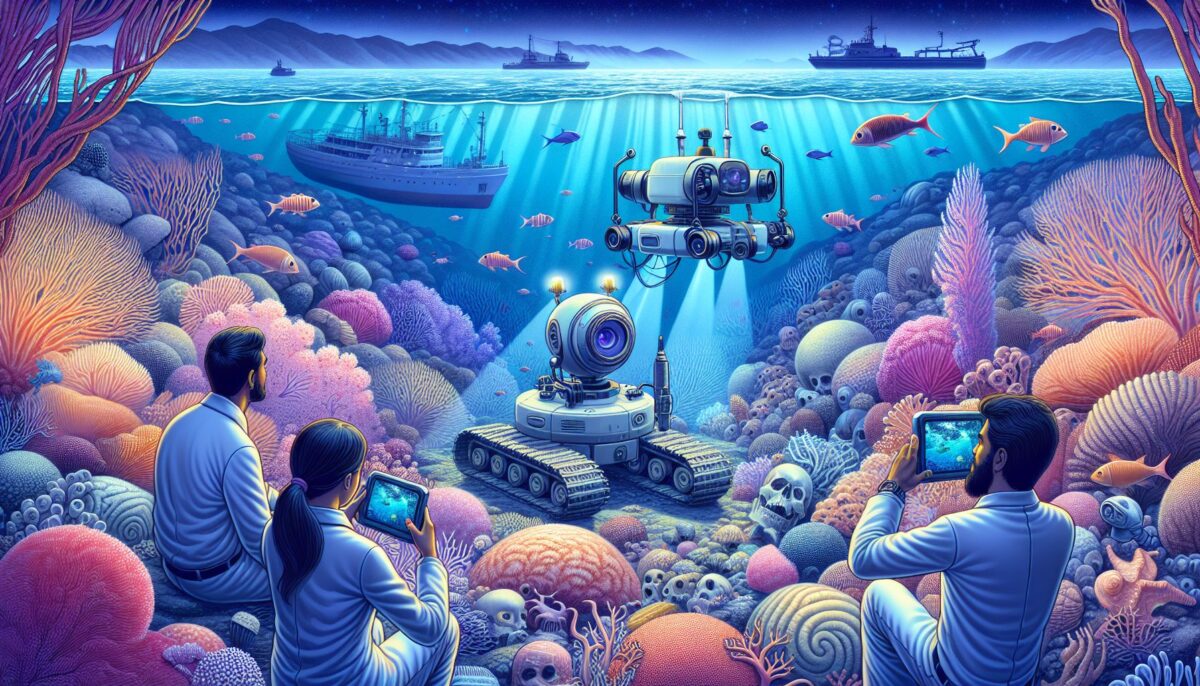
The ocean, covering more than 70% of our planet’s surface, is an enigmatic place that captures our collective imagination with both its beauty and mystery. The seafloor, in particular, is a vast, largely unexplored expanse that hides treasures and tales beyond our wildest dreams. In this exploration into the depths, we will uncover the secrets that lie beneath the waves, the importance of this realm, and how its future may hold the key to humanity’s sustainability.
The Seafloor: Nature’s Undiscovered Country
Imagine a terrain so diverse and expansive that it would eclipse the variety of all the Earth’s continents combined. The seafloor is this domain, revealing spectacular underwater volcanoes, towering mountain ranges, deep trenches, and sprawling flat plains.
Mapping the Unknown
To navigate and understand this hidden landscape, scientists engage in the science of bathymetry – the measurement of the depth of water bodies, particularly the ocean. Although satellite technology has helped us map the entirety of the Moon and Mars, less than 20% of the Earth’s seafloor has been mapped to a high resolution^1^. This highlights the seafloor’s mystery and the potential scientific discoveries lying in wait.
Formation and Geology
The seafloor forms through a process called seafloor spreading, where tectonic plates spread apart, and magma rises to create new oceanic crust. This continual process pushes older crust away from mid-ocean ridges towards subduction zones, where it’s recycled back into the Earth’s mantle. This dynamic environment creates unique geological features such as hydrothermal vents which support exotic forms of life unfeasible elsewhere on Earth^2^.
Marine Biodiversity Below Waves
Marine biodiversity at the seafloor is as rich as it is unfamiliar. Species have adapted to the total darkness, immense pressure, and scarce food sources with remarkable physiological and behavioral traits. These include bioluminescence, specialized feeding mechanisms, and symbiotic relationships with other species or even bacteria.
Mining and Resource Exploitation
The seafloor is also a treasure trove of resources. It contains vast deposits of minerals like manganese nodules, cobalt crusts, and polymetallic sulphides. This has led to rising interest in deep-sea mining, though the environmental consequences of such activities are still not completely understood and could be profound.
Habitats of the Deep
The structures that punctuate the seafloor – be it coral reefs, seagrass beds, or sponge fields – are critical habitats. They offer food, shelter, and nursery grounds for a plethora of marine species. Their health is a keystone for the health of the wider ocean.
The Seafloor and the Blue Economy
The concept of the ‘Blue Economy’ encompasses the sustainable use of ocean resources for economic growth, improved livelihoods, and jobs while preserving the health of ocean ecosystems. In this context, the seafloor plays an indispensable role.
Sustainable Fisheries
Fisheries that depend on the sea’s biodiversity directly impact the blue economy. By utilizing the spawning and breeding grounds on the seafloor carefully, we ensure the replenishment of fish populations essential for both local sustenance and global seafood markets.
Offshore Energy
Renewable energy sources, such as tidal and wave energy, harness the power of the ocean and seafloor landscapes to generate electricity. Offshore wind farms, anchored to the seafloor, are an increasingly common sight in many parts of the world^3^.
Submarine Cables and Navigation
The seafloor is also crucial for global communication. Submarine cables, which carry the internet across oceans, rest on it. Navigation for shipping, upon which much of our global trade depends, relies on detailed knowledge of the seafloor to avoid underwater hazards and optimize routes.
Environmental Challenges and Protection of the Seafloor
As human activity extends further into the ocean, the seafloor faces numerous environmental challenges.
Deep-Sea Mining Impact
The push for extracting seafloor minerals has generated concern about potential destruction of fragile deep-sea ecosystems before they’re fully understood.
Pollution and Marine Debris
Pollution from plastics, chemicals, and other waste accumulating on the seafloor can have lasting effects on marine life and ocean health. Efforts to mitigate this are crucial for preserving this delicate environment.
Climate Change and Acidification
Increased CO2 levels reduce pH levels in the ocean, causing ocean acidification. This change in seawater chemistry can lead to coral bleaching and disrupt calcium carbonate-based life forms that are fundamental to seafloor ecosystems.
Conservation Initiatives
Recognizing these risks, conservation initiatives and marine protected areas aim to safeguard the biodiversity and integrity of the seafloor. Science-based management and international cooperation play key roles in these efforts.
Exploring and Monitoring with Cutting-Edge Technology
The advancement of diving technology, remotely operated vehicles (ROVs), and autonomous underwater vehicles (AUVs), along with innovative research methods, have opened the doors to greater understanding and monitoring of the seafloor.
The Future of Seafloor Research
Continued exploration and research of the seafloor will not only expand our scientific knowledge but also refine our approaches to conserving and sustainably using oceanic resources. With initiatives like the Seabed 2030 project, which aims to map the entire seafloor by the year 2030, we’re at the brink of uncovering even more secrets hidden beneath the waves.
As we peer into the depths of our planet’s final frontier, the seafloor’s significance to our world comes into sharper focus. It’s a place of untapped potential, harboring solutions to some of our most pressing environmental and economic challenges. With careful stewardship and continued curiosity, we can ensure that the seafloor remains a source of wonder and prosperity for generations to come.
Sources
- Seabed 2030 Project, “Global Ocean Mapping.” Link to the site with maps and data
- National Oceanic and Atmospheric Administration, “Hydrothermal Vents.” Link to NOAA’s resource on hydrothermal vents
- International Renewable Energy Agency, “Offshore Wind Energy.” Link to IRENA’s resource on offshore wind energy
This article has harnessed the vastness of the ocean to delve into the lesser-known but incredibly vital world of the seafloor. A place of immense natural resource, critical biodiversity, and compelling mystery, the seafloor’s exploration and protection are crucial for the future of our Blue Planet.
