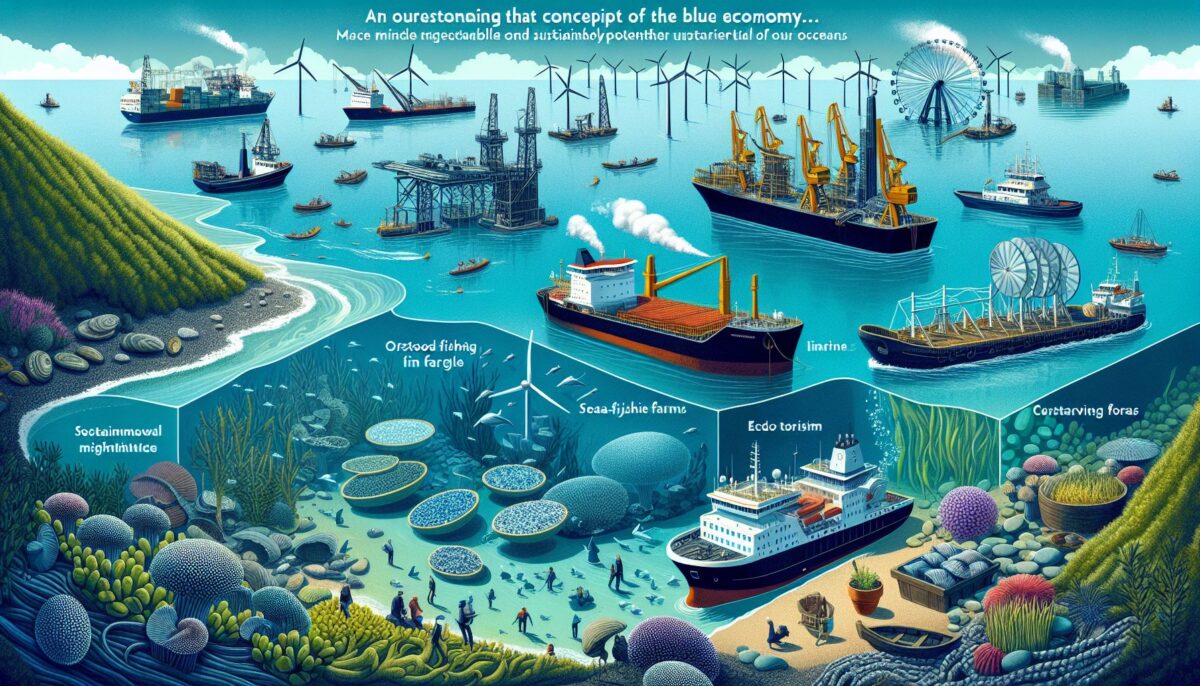
The ocean, covering over 70% of Earth’s surface, is a vast and dynamic system that plays a critical role in supporting life and shaping weather patterns. Within this expanse lies an extraordinary potential for economic development and innovation. The concept of the “Blue Economy” encapsulates the sustainable use of ocean resources for economic growth, improved livelihoods, and jobs while preserving the health of ocean ecosystems.
Understanding the Blue Economy
The Blue Economy encompasses a wide range of activities, including fisheries, aquaculture, shipping, tourism, and renewable energy. It is about realizing the untapped potential of the ocean in a way that is environmentally sustainable and socially inclusive.
Fisheries and Aquaculture
Fisheries and aquaculture are integral to the global economy, with millions of people relying on them for sustenance and employment (FAO, 2020). Sustainable practices within these industries are essential to prevent overfishing and ensure food security for future generations.
Maritime Trade and Shipping
Maritime trade is the backbone of globalization, with approximately 90% of the world’s goods being transported by sea (UNCTAD, 2020). The shipping industry must balance efficiency and environmental considerations, such as reducing emissions and preventing oil spills.
Coastal Tourism
Coastal tourism draws people to the beauty and recreational opportunities offered by beaches, bays, and other marine environments. Responsible management of these areas is crucial for balancing economic benefits with conservation efforts.
Renewable Energy
Ocean-based renewable energy from technologies harnessing tidal and wave energy presents an avenue for clean power generation. With proper investment and development, the ocean can significantly contribute to the global energy mix.
Marine Biotechnology
The ocean’s biodiversity is a source of new pharmaceuticals, biofuels, and other products. Bioprospecting must be regulated to protect marine life while enabling innovation.
Protecting Marine Ecosystems
Any economic activity linked to the ocean needs to consider the protection of marine ecosystems to be genuinely sustainable.
Marine Protected Areas
Establishing marine protected areas (MPAs) is a tool for conserving marine biodiversity. MPAs can help sustain fisheries, protect habitats, and preserve species at risk (IUCN, World Commission on Protected Areas).
Addressing Climate Change
The ocean absorbs a significant portion of the carbon dioxide from the atmosphere and heat from global warming. Strategies to mitigate climate change must involve maintaining the health of the ocean and its capacity to act as a carbon sink.
Preventing Pollution
Marine pollution from plastic debris, oil spills, and chemicals are significant threats to the ocean. Policies and practices are needed to reduce waste and improve response to incidents that pose a risk to marine life.
Challenges and Opportunities
The Blue Economy faces various challenges, from geopolitical tensions over maritime borders to the impacts of climate change. However, it also offers opportunities for innovation and collaboration.
Sustainable Resource Management
The shift to a Blue Economy requires sustainable management of marine resources. This involves embracing best practices in fisheries management, aquaculture, and other ocean-based industries.
Technological Advancements
Advancements in tech, such as improved renewable energy devices, biodegradable materials, and efficient shipping designs, will drive the Blue Economy forward.
International Cooperation
International cooperation is vital in addressing issues like illegal fishing, overexploitation of resources, and environmental degradation. The ocean knows no borders, making global governance and agreements essential (United Nations Convention on the Law of the Sea).
Capacity Building
For developing nations, capacity building is crucial to participate in and benefit from the Blue Economy. This includes investment in infrastructure, education, and governance.
Moving Forward
To harness the ocean’s full potential, a balance must be found between economic use and conservation. The Blue Economy is not just a sector of the economy; it’s a comprehensive approach to understanding and managing the ocean’s resources for the benefit of current and future generations.
With proper management and a focus on sustainability, the Blue Economy can contribute significantly to poverty eradication, food security, energy generation, and the combating of climate change—all while safeguarding the vibrant ecosystems below the waves.
The Blue Economy stands as a beacon of potential for how humanity can sustainably interact with the planet’s most abundant natural resource. It foreshadows an era where economic growth moves in harmony with environmental stewardship, a direction not only desirable but essential, for the longevity of the very planet we call home.
