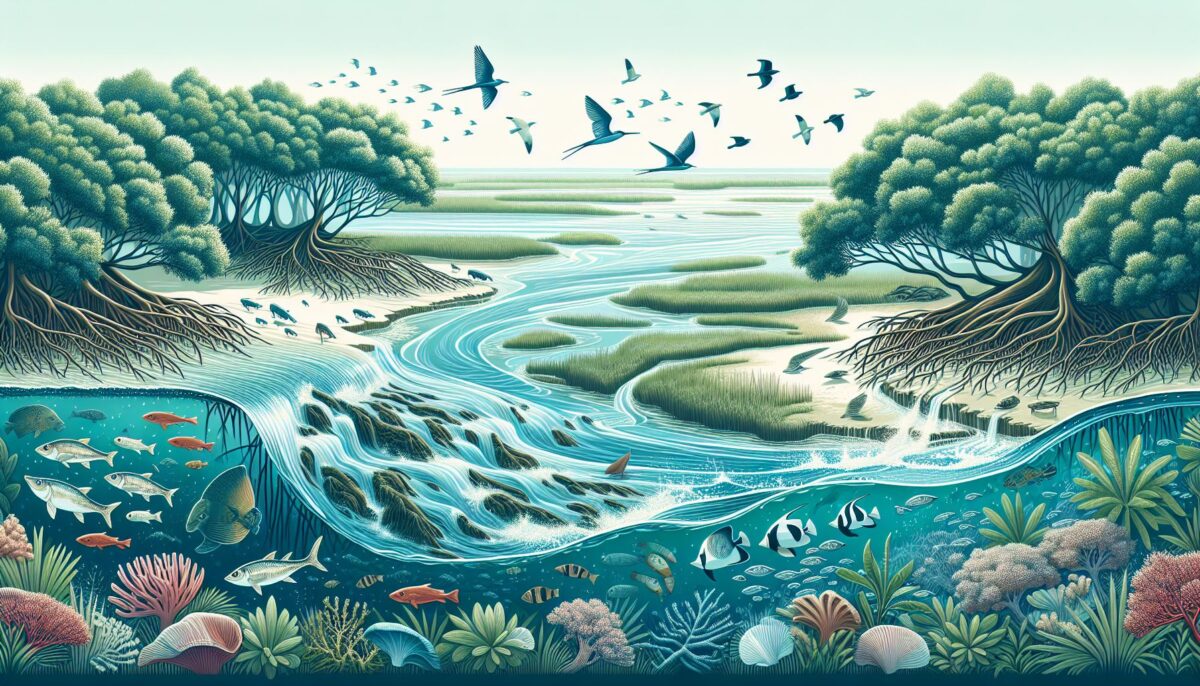
Estuaries are fascinating yet often overlooked ecosystems. Nestling where rivers meet the sea, estuaries are a sublime mixture of fresh and saltwater habitats that host a dizzying array of wildlife. This unique environment creates an incredibly biodiverse ecosystem, supporting various species from fish and birds to plants and mammals, many of which are found nowhere else.
Estuaries are far more than a haven for wildlife, though, playing a vital role in maintaining the health of our planet. They act as natural filters, absorbing pollutants such as heavy metals and harmful chemicals from land runoff, thus playing a critical role in ensuring the quality of our water resources.
But these harbors of life and purifiers of water are under threat worldwide due to climate change, pollution, invasive species, and unsustainable development. Understanding, valuing, and protecting them is essential to preserving our planet’s health and the life it holds. Let’s take a dive into the world of estuaries, their importance, challenges they face, and what’s being done to protect them.
The Magic of Estuaries
At their simplest, estuaries are transition zones between river environments and maritime environments. But while this makes them sound common and perhaps unexciting,[estuaries are anything but](https://www.nature.org/en-us/about-us/where-we-work/united-states/estuaries/). They are among the most productive ecosystems globally and considered ‘nurseries of the sea’ due to the significant number of fish and shellfish that spend their developmental stages within these sheltered waters.
Estuaries provide abundant food and shelter for marine life, offering a habitat to a wide range of species, each uniquely adapted to the changing salinity and many other conditions. Estuaries also serve as essential breeding and nesting sites for numerous bird species, making them a paradise for both wildlife and bird watchers.
Furthermore, estuaries offer a buffer against coastal storms and floods, absorbing rising seawater during high tides and rain and slowly releasing it back. This buffer helps protect inland areas from flooding and the destructive power of storms. As climate change accelerates and sea levels rise, this protective role of estuaries will become even more critical.
Threats Facing Estuaries
Unfortunately, many threats are currently jeopardizing estuaries globally. Climate change is the most significant challenge, leading to sea level rise, increased storm intensity, and ultimately, threatening the very existence of estuaries. Rising temperatures also contribute to the increased incidence of harmful algal blooms, which can decimate marine life and poison water supplies.
Land use changes and reckless real estate development are other significant threats, with estuaries often filled in and paved over to create more land for development. This habitat loss is hugely destructive to the numerous species that depend on estuaries; it also amplifies vulnerability to climate change impacts.
Pollution from agricultural runoff, industrial waste and untreated sewage is a significant threat that harms estuaries. These pollutants can harm the delicate water balance and reduce biodiversity, with far-reaching impacts on the broader marine ecosystem.
Protecting Our Estuaries
Given the pivotal role played by estuaries, protecting them is of utmost importance. Multiple initiatives worldwide aim to safeguard these crucial ecosystems from the plethora of threats they face.
Leading the march are organizations like the Estuary Conservation Association, which promotes awareness and conservation of estuaries and their surrounding environments. Similarly, The Nature Conservancy is working to protect and restore vital estuaries across the world.
Governments are also playing their part. In the U.S. for instance, the National Estuarine Research Reserve System is a network of protected areas that works to improve stewardship of estuaries by providing the research needed to inform management decisions.
On the global stage, the Ramsar Convention on Wetlands recognizes the ecological, cultural, scientific, and recreational value of wetlands, including estuaries, promoting their wise use and conservation.
Conclusion
Estuaries are beautiful, complex, and irreplaceable. They are the lifeblood of our coasts, a testament to the resilience and adaptability of nature, and a key player in our planet’s wellbeing. Protecting them is not just an environmental mandate; it’s also a societal and economic necessity. Only by understanding and appreciating these unique ecosystems can we hope to protect them from the diverse threats they face.
