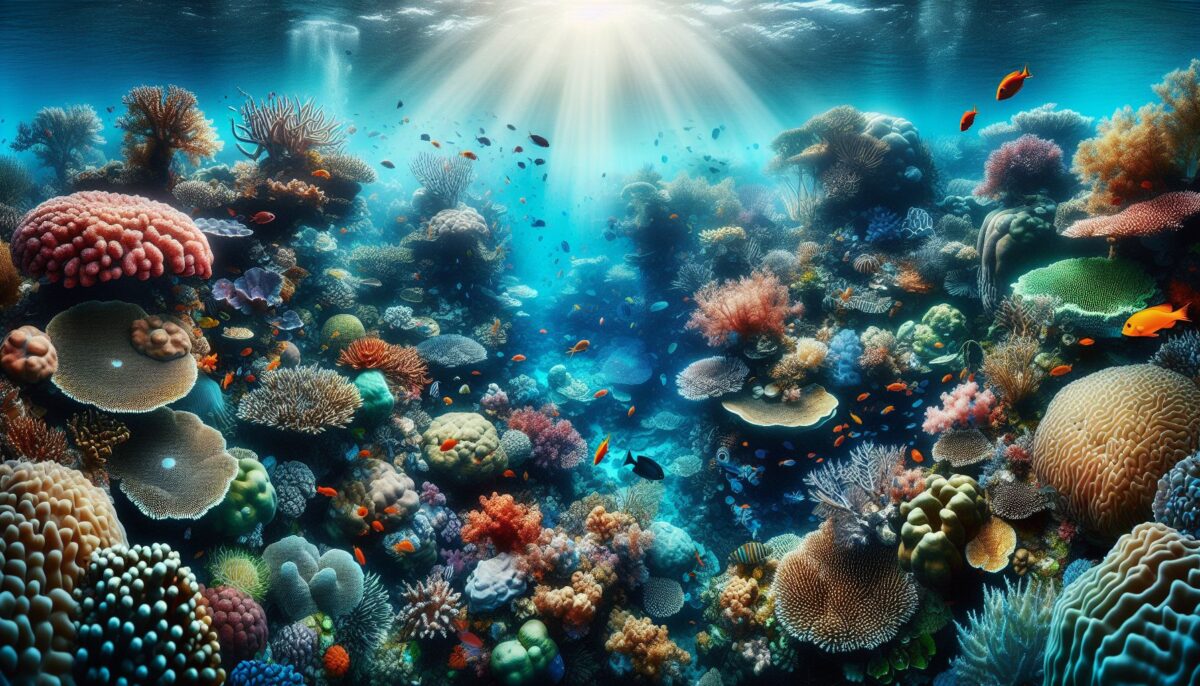
The magnificent grandeur of our oceans often leaves us in awe, specifically when we delve into the bewitching beauty of coral reefs, considered underwater rainforests due to their extraordinarily high levels of biodiversity and productivity. Coral reefs, home to 25% of marine life even though they inhabit less than 1% of the marine environment, are found in over 100 countries around the globe.
What are Coral Reefs?
Coral reefs are complex, underwater ecosystems flushed with thousands of unique species – fishes, sponges, mollusks, and the critical coral polyps. Corals, contrary to common belief, are not plants but animals. They are colonies of individual animals, called polyps, related to jellyfish and anemones. Host to millions of diverse species, they create, transform, and embellish their surroundings in an endless array of shapes, colors, and sizes.
The Creation of Coral Reefs
Corals acquire their energy and vibrant hues from microscopic algae, zooxanthellae, that live in their tissues. The process of photosynthesis enables the coral to grow and reproduce, thus forming a coral reef. The symbiotic relationship between the coral and the algae are responsible for constructing the largest biological structures on earth.
Types of Coral Reefs
Coral reefs mainly come in three forms: fringing reefs, barrier reefs, and atolls. Fringing reefs are the most common and are located close to the coastline, separated by shallow lagoons. Barrier reefs, like the Great Barrier Reef, are farther from the shore with deep lagoons. Atolls are reefs shaped like rings with a central lagoon and are typically found in the South Pacific and Indian Oceans.
Importance of Coral Reefs
The significance of coral reefs goes beyond their picturesque beauty; they act as nurseries and protection for a plethora of marine organisms. Moreover, they are indispensable for coastal protection, food procurement, and tourism, contributing around $30 Billion annually. Coral reefs are equally critical in medical research for the development of new medicines.
Threats to Coral Reefs
Unfortunately, the wellbeing of these underwater rainforests is under grave risk due to human-induced climate change and destructive fishing practices. These threats lead to two major coral diseases: coral bleaching and ocean acidification.
Coral Bleaching occurs when the water temperature becomes excessively high, causing corals to expel their life-sustaining algae, which results in their pallid, “bleached” appearance. Ocean acidification, on the other hand, refers to the decrease in the pH of the ocean over an extended period, predominantly caused by the uptake of carbon dioxide (CO2) from the atmosphere. If we don’t mitigate these threats, it is estimated that we might lose 90% of coral reefs by 2050.
Conservation Efforts
Several organizations and governments worldwide, recognizing the decline and the importance of coral reefs, have intensified conservation efforts. They have created marine protected areas and implemented sustainable fishing practices. Initiatives like the Global Coral Reef Monitoring Network collect and disseminate information about the state of coral reefs globally.
The Future of Coral Reefs
The future lies in our hands. The path we tread will determine the fate of these underwater jungles. By reducing carbon emissions, adopting sustainable practices, and supporting reef-friendly businesses, we can significantly contribute in preserving these vital ecosystems.
While the immediate future seems bleak, the indomitable resilience of the coral reefs gives hope. With concerted efforts, we can ensure that these magnificent structures continue to thrive, astonishing us with their breathtaking tableau of life.
Ocean conservation is a vast and urgent mission, and preserving our coral reefs is an imperative chapter in this story. As part of human society, it is our responsibility to nurture and protect these underwater rainforests, not only for their intrinsic value but also for the numerous benefits they provide for our planet and our livelihoods.
Coral reefs, with their bewitching beauty and remarkable resilience, incessantly remind us of how interconnected we are with our environment. It is time to match their resilience with our dedication, ensuring that these underwater rainforests thrive, fostering life beneath the waves and safeguarding our futures.
