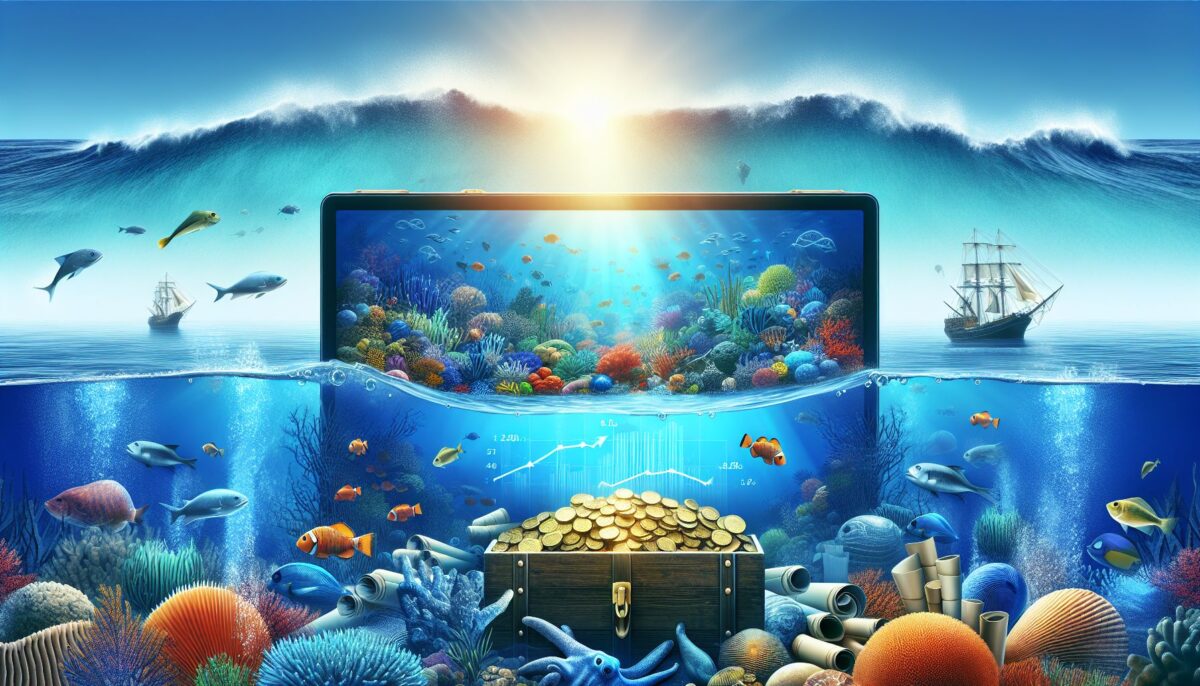
The term “Blue Economy” conjures images of a vibrant marketplace teeming with innovation and commerce, all underpinned by the vast expanses of our planet’s oceans and seas. Indeed, the blue economy encapsulates the sustainable use of ocean resources for economic growth, improved livelihoods, jobs, and ocean ecosystem health [^1^].
Understanding the blue economy’s broad scope requires a dive into its various elements, their importance, and their interplay. This article ventures into the realms of ocean resources, their sustainable use, and the potential they hold for boosting economies, creating jobs, and preserving our critical marine ecosystems.
Opportunities in the Blue Economy
Among infinite other things, the ocean provides food, regulates our climate, and is a conduit for 90% of the world’s trade [^2^]. The blue economy sectors, therefore, are as broad-ranging as the ocean itself, each offering unique opportunities in sustainable development:
Fisheries and Aquaculture
Fisheries and aquaculture form vital components of the blue economy. With the global demand for seafood on the up, the prospects in aquatic farming – or aquaculture – are burgeoning. Yet, with one-third of global fish stocks over-fished, there’s an obvious need to exploit this resource sustainably [^3^].
Marine Renewable Energy
Ocean-based renewable energy, such as wave and tidal energy, offers an unsung potential in our fight against climate change. Further development and deployment of these technologies could pave the way for a significant shift toward sustainability and emission reduction.
Tourism and Recreation
The magnetism of the vast azure oceans has always drawn hordes of tourists. With increased focus on responsible and sustainable tourism, the sector can help augment local economies while conserving pristine marine ecosystems.
Coastal and Maritime Protection
Protecting coastal and marine ecosystems is vital for sustaining the benefits derived from them. Investments in marine protected areas, coastal management, and policies to adapt to issues like sea-level rise can create job opportunities while preserving these ecosystems.
The Promise of a Sustainable Future
The blue economy holds promise for sustainable development – both for developing and developed countries. Current estimates suggest that the economic value of the world’s oceans is at a staggering $24 trillion [^4^]. Tapping into these resources in a sustainable manner is no doubt challenging, but it also holds the key to overcoming issues like overfishing, marine pollution, and degradation of marine ecosystems.
Challenges and the Way Forward
While the maritime sector offers a sea of opportunities, it also presents significant challenges. Threats such as marine pollution, overfishing, and climate change-induced impacts like ocean acidification continue to dominate. At the same time, governance of the seas remains a complex issue due to its transboundary nature and geopolitical considerations.
In overcoming these challenges, the global community must row in unison. International collaboration and robust regulatory frameworks can facilitate the healthy exploitation of our valuable ocean resources without compromising the ecosystem’s health.
Igniting the blue economy’s potential requires collective efforts, sustained investments, and smart, inclusive policies. If navigated prudently, the blue economy can indeed become an ocean of opportunities, significantly contributing to sustainable development and the preservation of our precious marine ecosystems.
As we go forward, the ocean’s central role in our lives and economies will only grow. Therefore, it’s critical to understanding and acting upon the opportunities and challenges presented by the blue economy. After all, a healthy ocean means a healthy planet and a prosperous future.
[^1^]: World Bank: What is the Blue Economy?
[^2^]: United Nations Conference on Trade and Development: Review of Maritime Transport
[^3^]: Food and Agriculture Organization: The State of World Fisheries and Aquaculture
