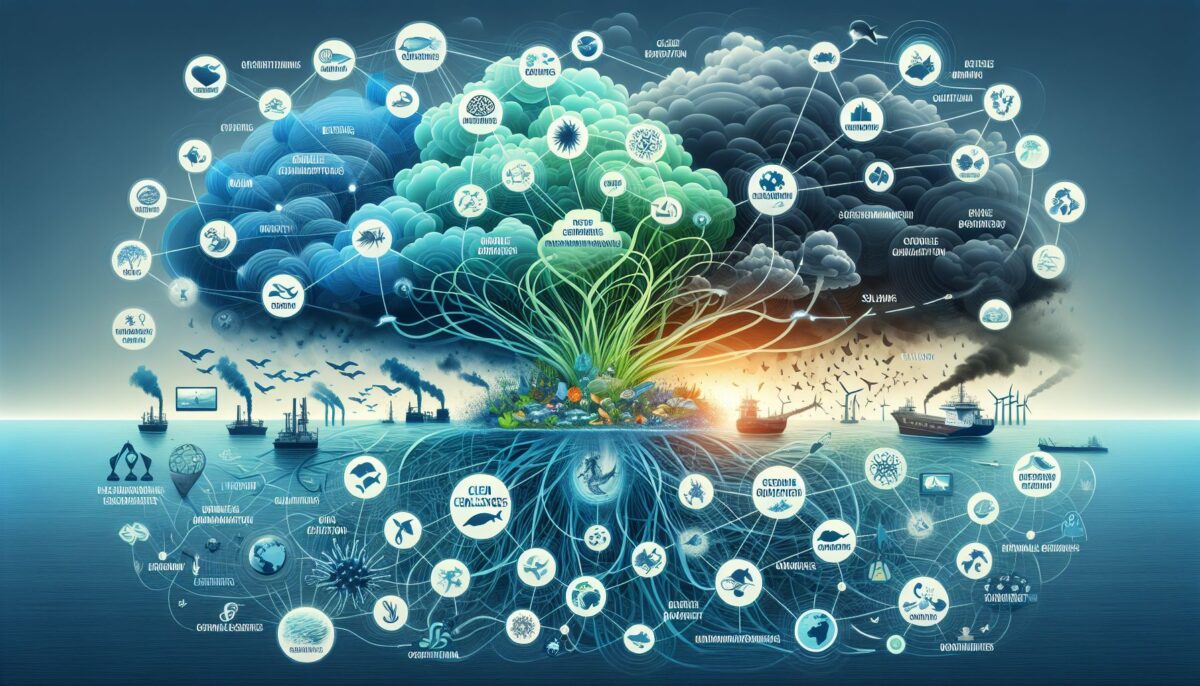
Our planet is often referred to as the “blue planet” because of the vast amount of water that covers approximately 70% of its surface. This abundant resource offers myriad possibilities for economic growth and development, leading to the birth of what is now known as the blue economy.
Today, we delve into the concept of the blue economy, considering its potential for fostering sustainable economic development, the challenges it presents, and the groundbreaking innovations bolstering its expansion. ^1^
The Blue Economy: A Comprehensive Understanding
The blue economy concept is a revolutionary approach to improving lives, creating jobs, and preserving the health of the planet by efficiently using ocean resources in a sustainable manner. It is a wide-ranging strategy that maximizes opportunities and minimizes footprints in ocean-based businesses while safeguarding the health and wellness of marine ecosystems.
This model of economy places emphasis on the circular economy, taking into consideration the undertaking of replenishing the resources we consume and employing processes that reduce waste and pollution. The primary goal – use the ocean’s resources responsibly for economic growth while preventing environmental degradation and biodiversity loss. ^2^
Potential of the Blue Economy: An Array of Economic Opportunities
Adopting the blue economy model could stimulate growth across various sectors, such as renewable energy, fisheries, maritime transport, tourism, and aquaculture. Based on a report by The World Bank, transition to the blue economy could generate up to 40 million jobs and around $3 trillion in output by 2030. Potential sectors include:
Renewable Energy
Investing in marine renewable energies like tidal energy, wave energy, and offshore wind energy can create a clean and sustainable energy source that can power millions of homes and businesses. This sector is already gaining a foothold in countries like the United Kingdom, which has the world’s largest offshore wind farm.
Fisheries and Aquaculture
Fisheries and aquaculture form a critical component of the global food supply, providing vital nutrients and income to billions. Responsible management can ensure we harvest the seas sustainably, allowing these industries to continue to thrive.
Ocean-Based Tourism
Ocean-based tourism, including hotels, marinas, and cruise ships, can be a huge job creator if managed and invested successfully.
Challenges in Implementing the Blue Economy
While the idea of a blue economy encapsulates a range of positive developments, it is not without challenges. Primarily, monitoring and governing the activities associated with ocean exploitation are challenging due to the sheer vastness of the oceans – which, in itself, raises issues pertaining to jurisdiction and cooperation among nations.
Moreover, balancing the need for economic development with environmental sustainability is always a tricky proposition. Climate change, ocean acidification, and marine pollution threaten to disrupt marine ecosystems and degrade the very resources the blue economy seeks to leverage. ^3^
Innovations Driving the Blue Economy
The blue economy’s reach is experiencing an upward trajectory, supported by revolutionary breakthroughs in marine technology and management strategies, such as:
Offshore Wind Farms
Countries are scaling up their renewable energy capacities, and offshore wind farms are at the heart of this movement. The United Kingdom and Germany are at the forefront of this innovative technology.
Sustainable Aquaculture
Aquaculture is evolving to become more sustainable, with new farming techniques reducing environmental impacts. Shellfish and seaweed farming, notably, are pollutant-free and even help improve water quality.
Marine Protection Areas (MPAs)
Establishing MPAs is a significant development that sets specific oceanic zones under protection to preserve the biodiversity within and to safeguard them from human activities.
Conclusion
The blue economy concept is a beacon of hope towards achieving a sustainable economics-environment balance. By tapping into the oceans’ boundless resources for economic development, and extraordinarily acknowledging the need for preservation, the blue economy has the potential to shape our future in an ocean of ways that we’ve just begun to realize. ^4^
Let’s strive to make our blue planet bluer!
