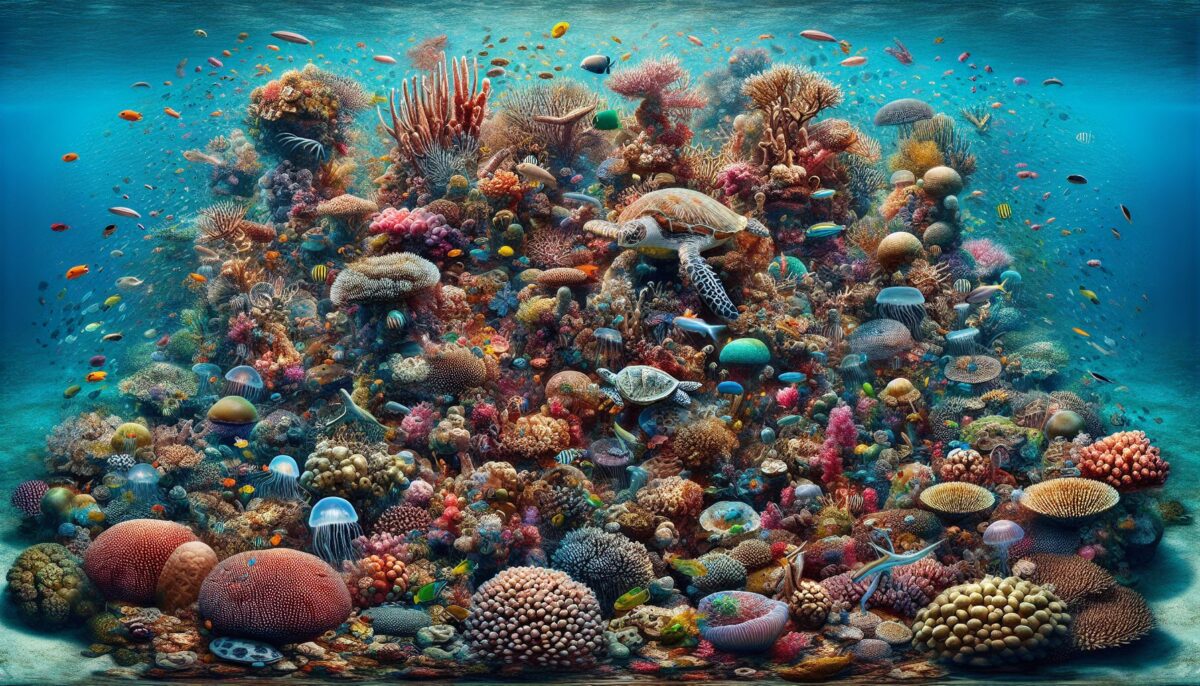
Coral reefs, often dubbed “the rainforests of the sea,” are some of the most diverse and vibrant ecosystems on Earth. This article will delve into the wonders of coral reefs, exploring their biology, importance to marine life, threats they face, and the efforts being made to protect and preserve them.
What are Coral Reefs?
Coral reefs are underwater structures made from calcium carbonate secreted by corals. Corals are marine invertebrates belonging to the class Anthozoa of the phylum Cnidaria. They typically live in compact colonies of many identical individual polyps.
The Formation of Reefs
Reefs begin when a polyp attaches itself to a rock on the sea floor, then divides, or buds, into thousands of clones. The polyp calicles connect to one another, creating a colony that acts as a single organism. As colonies grow over hundreds and thousands of years, they join with other colonies and become reefs, some of which can be seen from space.
Types of Coral Reefs
- Fringing Reefs: These reefs grow near the coastline around islands and continents. They are the most common type of reef.
- Barrier Reefs: These reefs are separated from a mainland or island shore by a deep channel or lagoon.
- Atolls: These are circular or continuous barrier reefs that extend all the way around a lagoon without a central island.
The Ecosystem of Coral Reefs
Coral reefs are some of the most diverse ecosystems on the planet. They support a wide variety of species, including fish, sea turtles, sharks, eels, crabs, shrimp, starfish, mollusks, and sponges, along with countless other creatures.
Symbiotic Relationships
Many animals in coral reefs depend on each other. Corals have a symbiotic relationship with a type of algae called zooxanthellae. The coral provides the algae with a protective environment and compounds necessary for photosynthesis. In return, the algae produce oxygen and help the coral to remove wastes.
The Importance of Coral Reefs
Economic Value
Coral reefs support fishing and tourism industries around the world. Fisheries rely on coral reefs because many fish species spawn and juvenile fish grow up among the protective structure of the reef. Eco-tourism, such as snorkeling and scuba diving, relies on the beauty and biodiversity of coral reefs.
Coastal Protection
Reefs provide barrier protection to shorelines by reducing the power of waves during storms, which helps to prevent loss of life, property damage, and erosion.
Biodiversity
Coral reefs are essential for marine life biodiversity. They provide habitats and shelter for nearly 25% of the ocean’s fish despite covering only 0.1% of the ocean’s surface.
Threats to Coral Reefs
Climate Change
Rising sea temperatures cause coral bleaching, where corals expel their symbiotic algae, leading to a white appearance and eventually, coral death if stressful conditions persist.
Ocean Acidification
The ocean absorbs about a quarter of the CO2 released into the atmosphere, which reacts with seawater to form carbonic acid, lowering the pH. This process, known as ocean acidification, can harm coral reefs and make it harder for corals to build their skeletons.
Pollution
Runoff from land, including sewage, agricultural pesticides, and heavy metals, can lead to harmful algal blooms and infect corals with diseases.
Overfishing
The removal of key reef species, such as herbivorous fish that keep algae in check, can disrupt the ecological balance of coral reef communities.
Destructive Fishing Practices
Blast fishing and cyanide fishing are extremely destructive to coral reefs. They can reduce the complex reef structure to rubble, which can take centuries to recover.
Physical Damage
Anchor damage, boat groundings, and the collection of coral for the aquarium trade also pose significant physical threats to coral reefs.
Conservation of Coral Reids
Marine Protected Areas
Establishment of marine protected areas (MPAs) can be an effective way to protect coral reef ecosystems. These areas restrict human activities such as fishing, development, and tourism that could harm the reefs.
Coral Farming
Coral aquaculture, or coral farming, is the cultivation of corals for commercial purposes or coral reef restoration. “Coral gardening” is a conservation practice where fragments of corals are cultivated and then transplanted to degraded reefs.
International Agreements
The International Coral Reef Initiative (ICRI) is a partnership among nations and organizations that strives to preserve coral reefs and related ecosystems around the world.
Public Awareness
Educating the public about the importance of coral reefs and the threats they face is critical for their preservation. Responsible tourism and sustainable fishing practices are encouraged through various educational campaigns.
Conclusion
Coral reefs are invaluable to marine life and to humans. It is critical that we continue to study, appreciate, and protect these amazing ecosystems.
Sources
- NOAA’s Coral Reef Conservation Program (CRCP) – A partnership between the NOAA Line Offices working on coral reef issues: https://www.coris.noaa.gov/
- The International Coral Reef Initiative (ICRI): https://www.icriforum.org/
- The Coral Reef Alliance (CORAL): https://coral.org/
Preserving coral reefs is not just an environmental imperative, but also a necessary step to safeguard the economic and food security of communities worldwide. Through education, conservation, and sustainable practices, we can ensure that these vibrant ecosystems continue to thrive for generations to come.
