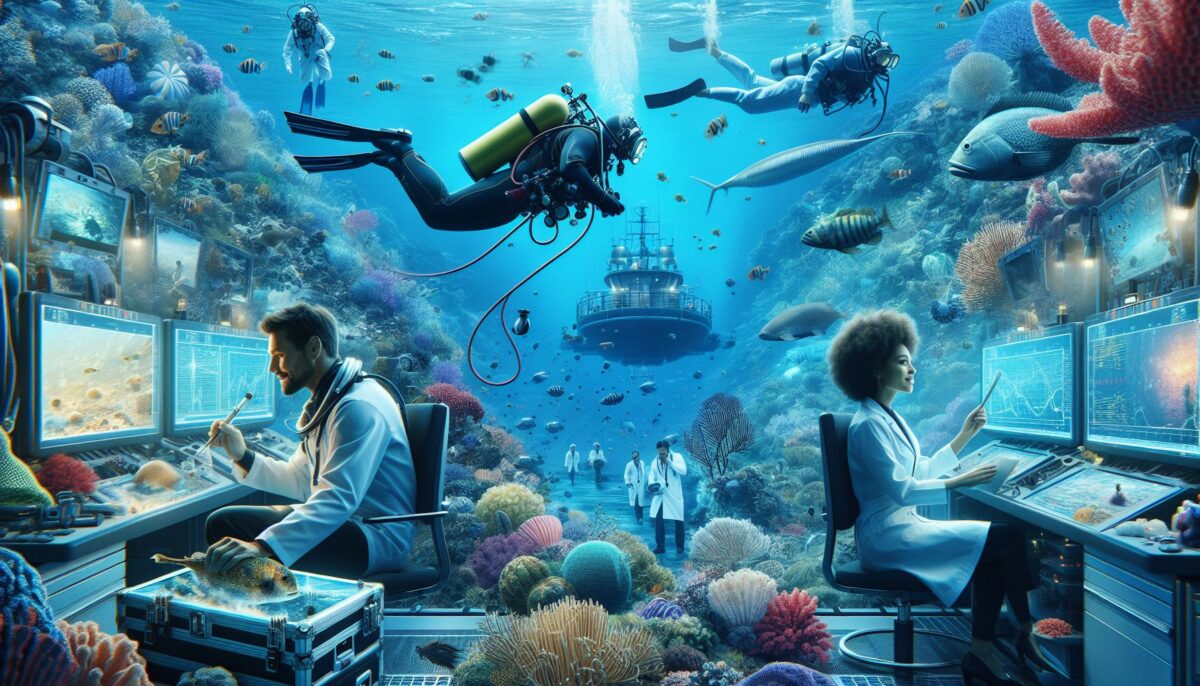
The ocean, a vast and mysterious expanse, covers over 70% of our planet’s surface and shapes the very foundation of life on Earth. Embedded within its depths are secrets that scientists, adventurers, and dreamers have sought to uncover for centuries. Its influence is pervasive, affecting global weather patterns, supporting diverse ecosystems, and serving as a critical component of the Earth’s life-support system. An integral part of understanding this immense body of water lies in the science of oceanography—a field dedicated to exploring all facets of the ocean, from its physical properties to the complex life forms it harbors. In this in-depth exploration, we immerse ourselves in the fascinating world of oceanography, a realm teeming with wonders and crucial to our survival.
The Scope of Oceanography: Understanding a Complex Ecosystem
Oceanography is an interdisciplinary field that combines various scientific disciplines, including biology, chemistry, geology, and physics, to understand the world’s oceans. It addresses everything from the microscopic plankton to the massive whales, the chemistry of the water, the movement of currents, and the contours of the seafloor.
In recent decades, oceanography has evolved dramatically due in part to technological advancements and a growing recognition of the ocean’s significance in global environmental health. Today’s oceanographers employ sophisticated tools like remote sensing satellites, autonomous underwater vehicles (AUVs), and deep-sea submersibles to probe the ocean’s depths and uncover its secrets. These technologies provide invaluable data that help to map unexplored regions, monitor marine life, and predict changes in climate and weather patterns.
Importance of Oceans: A Global Perspective
Climate Regulation and Weather Patterns
The ocean plays a pivotal role in regulating the Earth’s climate. It absorbs vast amounts of solar radiation and distributes heat around the globe through its currents. This natural thermostat effect is critical in stabilizing the global climate and influencing weather patterns. The ocean’s influence extends to the formation of clouds and precipitation, playing a significant part in the water cycle.
Biodiversity Hotspots
Home to an estimated 50-80% of all life on Earth, the ocean hosts an incredible diversity of organisms. This biodiversity ranges from the smallest microbes and plankton to the largest mammals, like the blue whale. Marine ecosystems, such as coral reefs and mangrove forests, are among the most productive and biologically diverse areas on the planet, supporting countless species and intricate food webs.
Economic and Nutritional Sustenance
For human populations, the ocean is a critical source of sustenance and economic activity. Fisheries and aquaculture provide the primary source of protein for billions of people worldwide. Additionally, the concept of the “blue economy” centers around sustainable use of ocean resources for economic growth, improved livelihoods, and jobs, all while preserving the health of ocean ecosystems.
Challenges Facing the Ocean: A Troubled Present and an Uncertain Future
Despite its significance, the ocean faces numerous threats stemming from human activities and climate change. These include marine pollution, ocean acidification, coral bleaching, and overfishing. Here appears a brief overview of several major challenges confronting oceanic health:
Marine Pollution
Pollutants ranging from plastics to chemicals enter the ocean constantly, causing devastating effects on marine life and habitats. Oil spills, such as the Deepwater Horizon disaster, pollute vast stretches of the ocean, endangering wildlife and disrupting ecosystems.
Ocean Acidification
The absorption of increased atmospheric carbon dioxide (CO2) leads to the ocean becoming more acidic. This change in pH affects the ability of organisms like coral and shellfish to form their calcium carbonate structures, threatening entire ecosystems.
Coral Bleaching
Rising ocean temperatures result in the mass bleaching of coral reefs, which occurs when corals expel the symbiotic algae living in their tissues. This not only weakens the corals but also disrupts the diverse communities that depend on reefs.
Overfishing
Unsustainable fishing practices pose a direct threat to marine biodiversity and fish stocks. The demand for seafood, if not managed responsibly, can lead to the depletion of key species and the alteration of marine food webs.
Navigating Solutions: Toward Sustainable Ocean Stewardship
To address the myriad challenges facing the ocean, scientists, policymakers, and conservationists are working together to promote ocean literacy and develop effective coastal management strategies. These efforts include establishing marine protected areas, implementing sustainable fishing practices, and reducing pollution through better waste management. Additionally, international agreements such as the United Nations’ Sustainable Development Goal 14, which aims to “conserve and sustainably use the oceans, seas, and marine resources,” underscore the global commitment to preserving our marine environments.
Exploring Deeper: Uncharted Waters and Technological Advances
Oceanographers are continually expanding our knowledge of the ocean through research and exploration. Cutting-edge technology allows us to delve into previously inaccessible depths and study phenomena like hydrothermal vents, cold seeps, and the rich biodiversity found in the hadal zone, the deepest part of the ocean.
Remote Sensing and Robotics
Advances in satellite and drone technology enable the collection of vast amounts of oceanographic data from remote or dangerous areas. Autonomous underwater vehicles and remotely operated vehicles can dive to extreme depths, transmitting real-time data and capturing images of the elusive creatures that inhabit the ocean’s darkest corners.
Education and Awareness: The Public’s Role
Public education and awareness are paramount in the quest for ocean conservation. Through various initiatives and curriculums, individuals can learn about the importance of the ocean, the risks it faces, and the actions necessary to safeguard it. Citizen science programs engage the public in data collection and monitoring efforts, fostering a sense of stewardship and connection to the marine environment.
Conclusion: An Endless Frontier
The ocean is an endless frontier, rich in resources and teeming with life. As we continue to explore and understand its complexities, the importance of preserving this vital component of our planet becomes increasingly clear. Oceanography not only unveils the marvels beneath the waves but also helps us appreciate and protect the ocean’s invaluable role in sustaining life on Earth.
Sources
- National Oceanic and Atmospheric Administration (NOAA) – https://www.noaa.gov
- United Nations – Sustainable Development Goals – https://sdgs.un.org/goals/goal14
- Intergovernmental Oceanographic Commission of UNESCO – https://ioc.unesco.org
By diving into the science of oceanography, we not only learn about the intricacies of this vital ecosystem but also come to understand our responsibility in maintaining its health for future generations to thrive.
