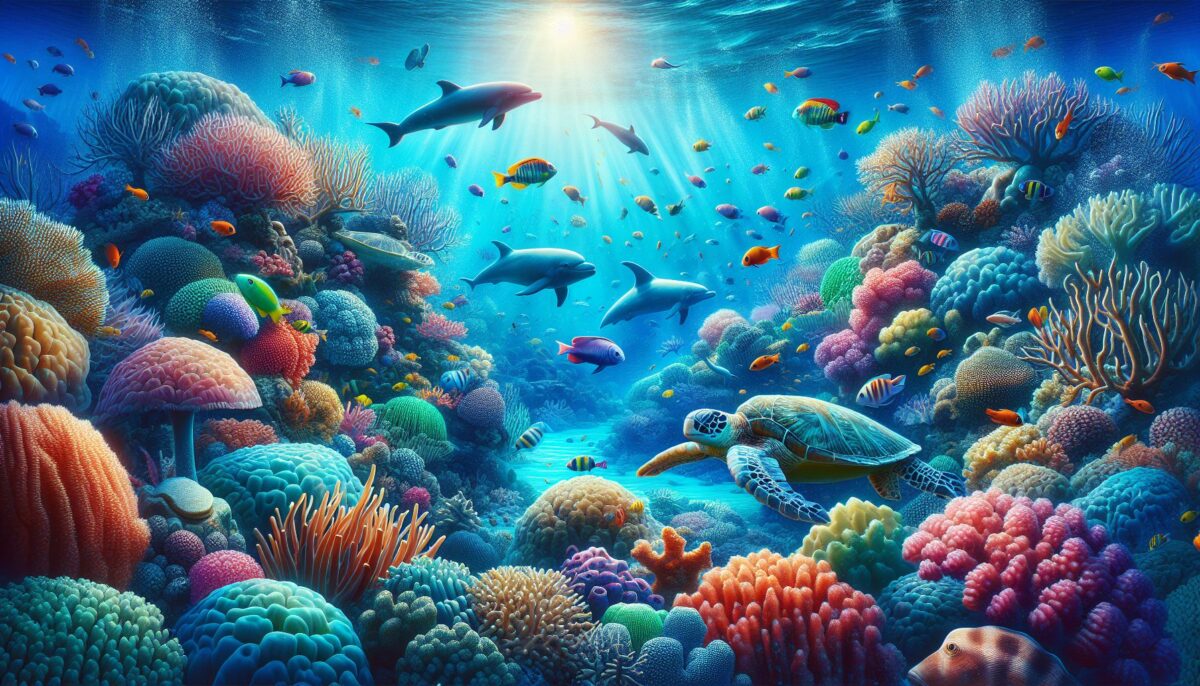
Coral reefs, often referred to as the “rainforests of the sea,” are among the most fascinating and complex ecosystems on our planet. These underwater architectural marvels are not only vital to marine life but also offer a multitude of benefits to human society, ranging from coastal protection to sources of novel medicines. Despite their importance, coral reefs face unprecedented threats due to human activities and climate change. This article delves into the world of coral reefs, exploring their biodiversity, the challenges they face, and why their conservation is crucial for our future.
What are Coral Reefs?
Coral reefs are underwater structures composed primarily of the calcium carbonate skeletons of corals, which are small marine animals from the phylum Cnidaria. These polyps live in symbiotic relationships with photosynthetic algae known as zooxanthellae. The vibrant colors of coral reefs are primarily due to these algae, which provide the coral with essential nutrients through photosynthesis, while the coral provides the algae with a protected environment and carbon dioxide needed for photosynthesis.
These ecosystems are remarkable, not only for their beauty but also for the sheer richness of marine life they support. Coral reefs are home to an estimated 25% of all marine species, despite covering less than 1% of the ocean floor [1].
The Importance of Coral Reefs
Coral reefs provide an array of ecosystem services that are invaluable to both marine life and humans:
- Biodiversity: Reefs support a high diversity of species, offering food, shelter, and breeding grounds for many forms of marine life, including fish, crustaceans, mollusks, and more.
- Economic value: The fishing industry heavily relies on coral reefs as they are critical nursery grounds for fish. Furthermore, reefs attract tourists, boosting the economy through dive tourism and recreation.
- Coastal protection: Reefs act as natural barriers, absorbing wave energy and thus protecting coastlines from erosion, storms, and even tsunamis.
- Scientific discovery: Reefs are a source of potential new medicines, as marine organisms found in reef ecosystems have been used in developing treatments for diseases including cancer, HIV, and pain relief.
The Threats Facing Coral Reefs
Despite their importance, coral reefs are under threat from various sources:
- Climate change: Rising sea temperatures can cause coral bleaching, where corals expel the symbiotic algae they rely on, leading to stress and potential death of the coral.
- Ocean acidification: Increased CO2 levels in the atmosphere lead to more acidic oceans, which can dissolve coral skeletons and impede coral growth.
- Overfishing: The removal of key species can disrupt the balance of reef ecosystems, leading to negative cascading effects on the reef structure and biodiversity.
- Pollution: From plastic debris to chemical pollutants and run-offs from agriculture, pollution can smother reefs and poison marine life.
- Destructive fishing practices: Techniques like blast fishing and cyanide fishing not only kill fish but also destroy the physical structure of coral reefs.
Coral Bleaching: A Sign of Distress
Coral bleaching events are becoming more frequent and severe due to climate change. Bleaching occurs when corals are stressed by changes in conditions, such as temperature, light, or nutrients, causing them to expel the algal partners necessary for their survival. The coral turns white or very pale, and while bleached corals are not immediately dead, they are at a higher risk if a stressor persists.
The most widespread and damaging bleaching events are typically caused by elevated sea temperatures. For instance, the global bleaching event of 2014-2017 affected 75% of the world’s coral reefs and resulted in the loss of large areas of corals globally [2].
Marine Protected Areas and Coral Conservation
Marine Protected Areas (MPAs) have been established in several regions to help conserve coral reefs and other marine ecosystems. MPAs are sections of the ocean where human activity is limited or entirely prohibited to conserve the natural environment, protect biodiversity, and maintain sustainable levels of fishing.
The establishment of MPAs has demonstrated positive effects on coral reefs, with increases in biodiversity, biomass, and ecosystem health being recorded [3]. However, only a fraction of the world’s coral reefs are currently within MPAs, and the enforcement of regulations within these areas can be challenging.
Sustainable Practices to Protect Coral Reefs
In addition to MPAs, several other conservation strategies and sustainable practices are vital for the protection of coral reefs:
- Sustainable fishing practices: Implementing quotas, size limits, and gear restrictions can help maintain fish populations and reef health.
- Reducing pollution: Limiting agricultural runoff, properly disposing of chemicals, and reducing plastic use can decrease the pollution that reaches the oceans.
- Restoration projects: Coral farming and transplantation efforts can assist in rebuilding damaged reefs.
- Raising awareness: Educating the public about the importance of coral reefs and the threats they face can inspire action and support for coral conservation.
The Future of Coral Reefs
The future of coral reefs is uncertain, as they are highly sensitive to environmental changes. However, there is still hope for these extraordinary ecosystems. If global efforts to mitigate climate change are successful and if conservation strategies and sustainable practices are implemented and enforced, we may be able to preserve these natural wonders for future generations.
Coral reefs are not only a keystone of marine biodiversity but also a critical component in the livelihoods and cultures of many coastal communities around the world. Their beauty, complexity, and importance are undeniable, and they deserve our earnest efforts in understanding, protecting, and restoring them. Through collective global action, we have the power to ensure that coral reefs continue to thrive, harboring the vast array of life within them and providing their essential services to humanity and the planet.
References
- IUCN – Coral reefs and climate change: https://www.iucn.org/resources/issues-briefs/coral-reefs-and-climate-change
- Hughes, T. P., et al. (2018). “Spatial and temporal patterns of mass bleaching of corals in the Anthropocene.” Science 359.6371 (2018): 80-83
- Conservation International – Marine Protected Areas: https://www.conservation.org/priorities/marine-protected-areas
Humanity’s relationship with coral reefs is deeply interconnected, and it is in our best interest as much as the planet’s to ensure their survival. By cultivating a deeper understanding and respect for these ecosystems, and by taking decisive action to protect them now, we are investing in the health and wealth of both current and future generations. It is through actions big and small, from personal lifestyle choices to international conservation efforts, that we can continue to marvel at the splendor of coral reefs, these underwater bastions of life.
