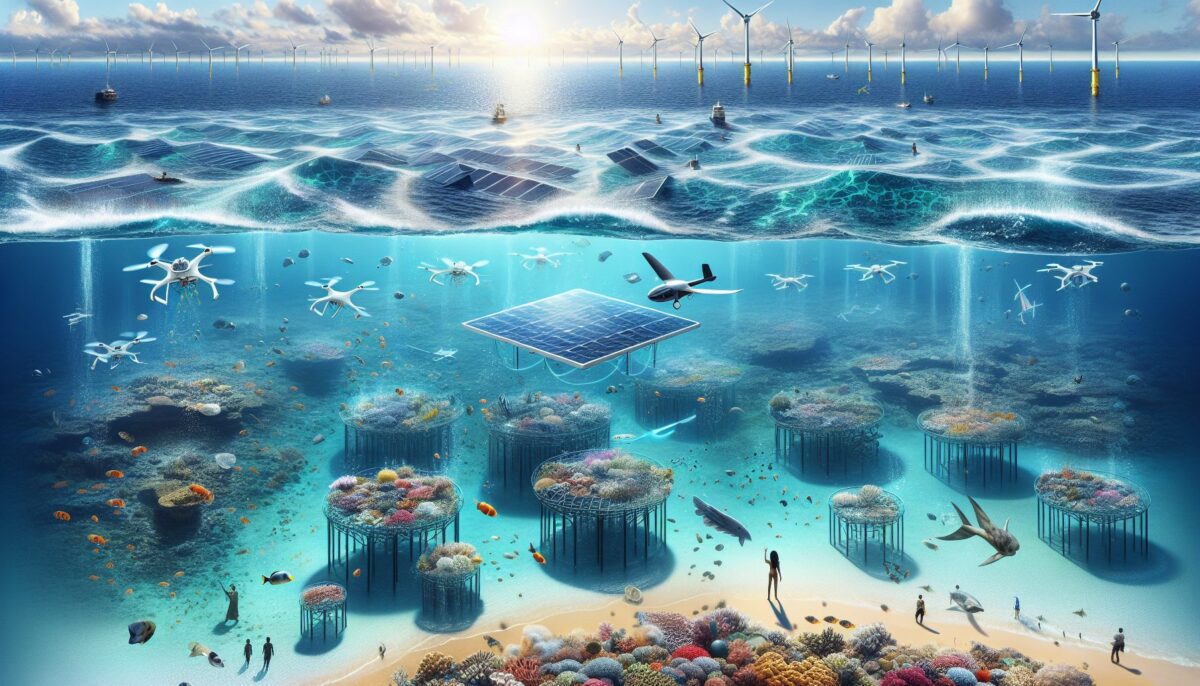
The ocean is earth’s lifeblood. It covers 71% of our planet’s surface, drives global weather systems, and supports a diversity of organisms unmatched by any other ecosystem. For centuries, the ocean has also been a vital source of sustenance, trade, and even adventure for humanity. However, as our dependence on marine resources has increased, so too has the impact on ocean health. Addressing these impacts while harnessing the ocean’s economic potential gave birth to the concept of the “Blue Economy.” This term encompasses sustainable ocean resource management and development—balancing economic growth with ocean health preservation. Let’s explore this concept in-depth.
What is the Blue Economy?
The Blue Economy refers to the sustainable use of ocean resources for economic growth, improved livelihoods, and jobs while preserving the health of ocean ecosystem services. The concept has been gaining prominence as nations increasingly recognize the need for a balance between economic development and environmental conservation.
Origins and Significance
Originating from the 2012 United Nations Conference on Sustainable Development (Rio+20), the Blue Economy concept places emphasis on the inclusion of coastal and marine sectors in the green economy, acknowledging that our oceans are a common heritage that must be protected and cherished for the good of all mankind.
Key Sectors of the Blue Economy
The Blue Economy includes a wide range of activities:
-
Sustainable Fisheries and Aquaculture: Ensuring fish stocks are managed to prevent overfishing, protect species diversity and ensure a long-term sustainable yield from the ocean.
-
Renewable Marine Energy: Harnessing the power of waves, tides, and offshore wind for cleaner energy that offsets reliance on carbon-intensive fuels.
-
Maritime Transport: Shipping and ports which are vital for global trade, making them efficient and eco-friendly.
-
Tourism and Recreation: Developing coastal tourism that respects local cultures and ecosystems, while providing economic benefits.
-
Marine Biotechnology: Researching and developing pharmaceuticals and other products derived from marine bioresources.
-
Desalination: Extracting fresh water from seawater in an energy-efficient and environmentally conscious way.
The Economic Impact of the Blue Economy
The Blue Economy has significant potential to be a major driver of the global economy. According to the Organization for Economic Co-operation and Development (OECD), the ocean economy could double in size by 2030 to over $3 trillion.
Sustainable Fisheries and Aquaculture
Fisheries and Aquaculture are cornerstone industries within the Blue Economy. Not only do they provide essential nutrition to billions of people worldwide, but they also represent livelihoods for countless coastal communities. Sustainable practices within these industries are imperative for ongoing success and environmental balance.
Challenges and Innovations in Fisheries
Overfishing has led to the decline of important fish stocks. Innovative approaches such as rights-based fishing, catch shares, and community-managed fisheries are essential to rebuild these populations. Moreover, progress in aquaculture technologies, including recirculating systems and offshore farming techniques, has helped to mitigate impacts on wild fish populations, leading to a more sustainable sector overall.
Renewable Marine Energy
Marine renewable energy presents a promising pathway for reducing carbon footprints.
Tidal and Wave Energy
Innovations in capturing tidal movements and wave energy are particularly noteworthy. Tidal energy converts the tides’ movement into electricity, typically via underwater turbines. Similarly, wave energy uses the kinetic force of waves to generate power. Such renewables are becoming cost-competitive with traditional energy sources and are critical to a Blue Economy framework.
Maritime Transport and Shipbuilding
Maritime transport is the backbone of international trade, while shipbuilding remains an economic stalwart in many countries. However, both sectors must adapt to minimize their environmental footprint by improving fuel efficiency, reducing emissions, and considering the full lifecycle of vessels from construction to decommissioning.
Marine Bioprospecting
The ocean’s vast biodiversity is a cornucopia of potential for new pharmaceuticals, nutritional supplements, and other valuable biochemical compounds. Marine bioprospecting, the search for novel compounds in marine organisms, must, however, proceed with respect for marine habitats and species.
Environmental and Conservation Perspectives
The flip side to commercial and economic interests is the environmental imperative.
Protecting Marine Biodiversity
Marine Protected Areas (MPAs) are a central tool used to protect biodiversity. By restricting human activities in these regions, MPAs help to conserve critical habitats, protect endangered species, and allow ecosystems to function and regenerate naturally.
Managing Climate Change Impacts
Oceans absorb around a quarter of the carbon dioxide humans emit, leading to ocean acidification which affects marine life. The Blue Economy seeks not only to mitigate such changes by lowering emissions and enhancing carbon sequestration but also to adapt marine resource management in the face of these challenges.
Blue Economy Policy Frameworks
Implementing the Blue Economy requires robust, comprehensive policy frameworks that integrate economic development and conservation goals.
National Strategies
Nations with coastlines are developing their Blue Economy strategies. For example, the European Union has launched its “Blue Growth” strategy to support sustainable growth in the marine and maritime sectors.
International Collaboration
Global action, such as through the United Nations’ Sustainable Development Goal 14, aims to conserve and sustainably use the oceans, seas, and marine resources.
Challenges and Controversies
The road to a fully realized Blue Economy is not without its bumps. Issues such as balancing the rights of small-scale fishers with the interests of multinational corporations, ensuring equitable access among nations to marine biotechnological developments, and managing the environmental impacts of expanding maritime industries present ongoing challenges.
Key among the Blue Economy’s critics are those who worry that the rush to develop ocean resources might prioritize economic returns over ecological sustainability. It is crucial that economic assessments include ecosystem service valuations and consider long-term environmental stewardship.
Conclusion
The Blue Economy is a beacon of how economic development and environmental sustainability can co-exist. The careful stewardship and innovative utilization of ocean resources outlined in this framework can lead to a prosperous future for both humanity and the marine environment.
As a society, we must embrace the principles of the Blue Economy to ensure our oceans continue to support life on Earth and contribute to sustainable prosperity for generations to come.
Sources
- Organization for Economic Co-operation and Development (OECD). “The Ocean Economy in 2030.” https://www.oecd.org/ocean/ocean-economy-2030.htm
- United Nations. “Sustainable Development Goals – Goal 14: Life Below Water.” https://www.un.org/sustainabledevelopment/oceans/
- European Commission. “Blue Growth.” https://ec.europa.eu/maritimeaffairs/policy/blue_growth_en
