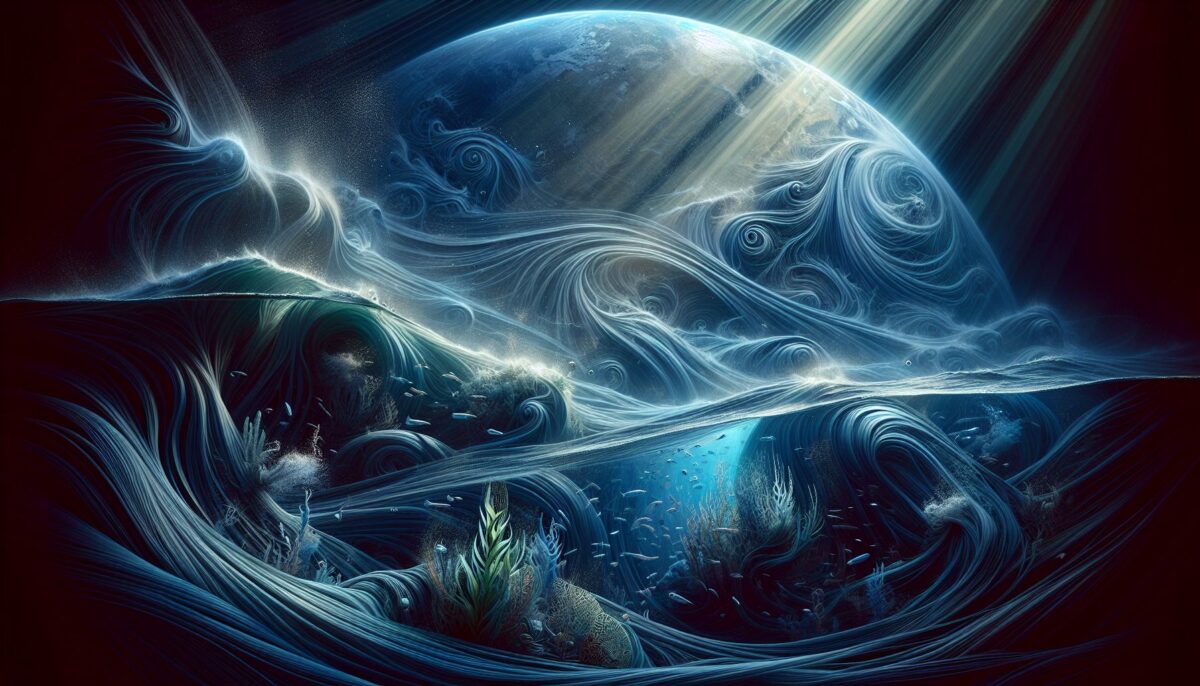
The ocean is a vast and dynamic system, playing a pivotal role in the Earth’s climate, weather patterns, and the overall health of our planet’s ecosystem. One of the most significant, yet often overlooked, components of this system is the network of ocean currents that flow beneath the surface. These currents are essential in regulating global temperatures, sustaining marine life, and even influencing human activities. In this article, we will delve into the complexity of ocean currents, explore their causes and effects, and discuss the challenges and opportunities that they present to the modern world.
The Anatomy of Ocean Currents
Ocean currents are primarily horizontal water movements, which can be either at the surface or deep within the ocean’s depths. These sizable streams of water can flow for thousands of kilometers and are driven by a combination of wind, water density differences, temperature gradients, and the rotation of the Earth.
Surface Currents
Surface currents consist of the upper 400 meters of the ocean and are mainly driven by the wind. These currents tend to follow the major wind belts of the world, such as the trade winds in the tropics and the westerlies in the middle latitudes. One of the most famous surface currents is the Gulf Stream in the North Atlantic, which warms the climate of Northwestern Europe.
Deep Water Currents
Far beneath the surface, deep water currents are generated by density differences in the ocean water, which are caused by variations in temperature and salinity. This process is known as thermohaline circulation, often referred to as the “global conveyor belt.” These slow-moving currents are crucial for transporting heat from the equator toward the poles, and cold water from the poles back toward the equator.
The Forces Behind the Flow
Several factors contribute to the occurrence and direction of ocean currents:
Wind Patterns
Wind is a primary driver of surface currents. The Earth’s rotation and the Coriolis effect induce a deflective force, which causes the currents to move in a circular pattern, clockwise in the Northern Hemisphere and counterclockwise in the Southern Hemisphere.
The Coriolis Effect
This phenomenon is the result of Earth’s rotation, influencing the direction of the flow. It causes the currents in the Northern Hemisphere to veer to the right and those in the Southern Hemisphere to veer to the left.
Differences in Water Density
Denser water sinks, which is often colder or saltier than the surrounding water, causing deep ocean currents. These differences can be due to temperature (thermal) or salinity (haline), hence the term ‘thermohaline circulation.’
The Shape of Ocean Basins
Continental configurations and bathymetry (the underwater topography of the ocean floor) can influence the flow and direction of currents. Submarine ridges and deep ocean trenches can act as barriers and guide the movement of currents.
Earth’s Climate and Ocean Currents
The ocean is often called Earth’s thermostat. Its currents play a critical role in maintaining the climate by redistributing heat around the globe. For example, the Gulf Stream carries warm water from the Gulf of Mexico across the Atlantic Ocean toward Western Europe, yielding a moderate climate for countries that would otherwise have much colder temperatures.
Marine Ecosystems and Currents
Ocean currents also serve as conveyer belts for nutrients, which are essential for the survival of marine life. Upwelling currents, where colder nutrient-rich water rises to the surface, are particularly fruitful areas for fisheries and the growth of phytoplankton, forming the base of the marine food chain.
Ocean Currents and Human Society
Human civilizations have long depended on ocean currents for navigation, fishing, and trade. Ancient mariners utilized currents and winds to explore new lands, while today’s shipping industry still relies on these natural pathways to improve fuel efficiency.
The Challenges of Changing Currents
However, ocean currents are not immune to the impacts of climate change:
Melting Polar Ice
As polar ice melts, it releases freshwater into the ocean, potentially disrupting the global conveyor belt, which relies on the sinking of dense salty water to drive deep ocean currents.
Altered Ecosystems
Changes in current patterns can shift the distribution of marine species and impact global fisheries, affecting food security for millions of people.
Impacts on Weather
A change in ocean currents can lead to more extreme weather events and alter precipitation patterns, which can have significant effects on agriculture and water resources.
Exploring and Preserving the Flow
Given their importance, the monitoring and study of ocean currents are vital:
Oceanography and Technology
Oceanographers use a variety of technologies, such as satellite measurements, buoys, and underwater drones, to study and model ocean currents.
Marine Conservation
To safeguard the oceans, Marine Protected Areas (MPAs) are established, and policies are implemented to minimize human impacts like overfishing and pollution that can alter current systems.
Renewable Energy
Interestingly, the power of ocean currents is also being harnessed through the development of tidal and wave energy technologies, contributing to the growth of the blue economy – economic activities related to the ocean and its resources, which are sustainable and protect the marine environment.
Conclusion
Ocean currents are the vital arteries of our planet’s ocean systems, influencing climate, marine biodiversity, and human livelihoods. As our understanding of these currents deepens, so does our ability to adapt to and mitigate their changes. It’s imperative that we continue researching and protecting these hidden dynamics to ensure the health of our oceans and the sustainability of our global ecosystem.
Sources
- National Oceanic and Atmospheric Administration (NOAA) – https://www.noaa.gov/
- National Geographic Society – https://www.nationalgeographic.org/
- Intergovernmental Oceanographic Commission (UNESCO) – http://ioc.unesco.org/
By understanding the intricacies of ocean currents, we gain insight into the broader complexities of Earth’s systems and underscore the interconnectedness of all life on this planet. Ongoing research, vigilant monitoring, and conscientious stewardship remain our best tools for ensuring that these currents continue to sustain life both in the water and on land.
