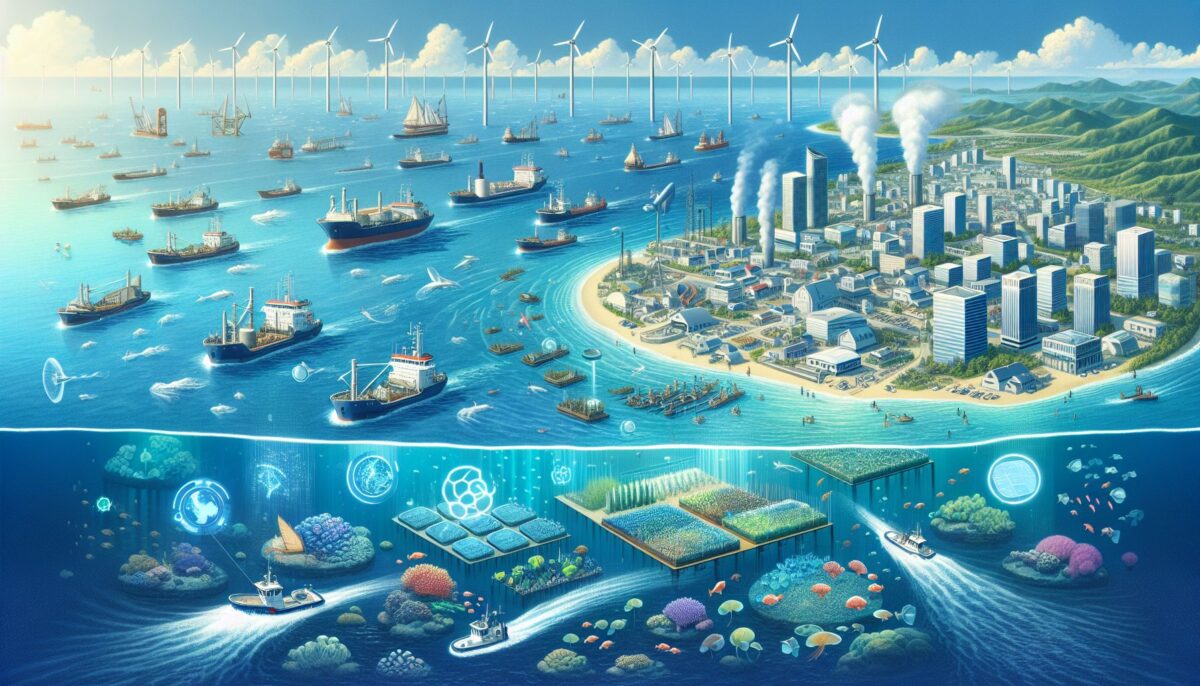
The ocean is a vast and mysterious place that has captivated the human imagination for centuries. It is also an economic powerhouse, providing resources and services that are crucial to many aspects of modern life. Underpinning these benefits is the concept of the blue economy, an emerging framework that encourages better stewardship of our ocean or “blue” resources. In this article, we explore the blue economy, its components, and its significance, while touching upon the challenges and opportunities that lie ahead.
Understanding the Blue Economy
The term “blue economy” refers to the sustainable use of ocean resources for economic growth, improved livelihoods, and jobs while preserving the health of ocean ecosystems. It encompasses a broad range of activities, including fisheries, tourism, maritime transport, renewable energy, and biotechnology.
Fisheries and Aquaculture: They are traditional sources of food and income. Sustainable practices in fishing and aquaculture ensure that the ocean continues to provide these resources without compromising ecosystem health.
Tourism: Coastal and marine tourism, a major component of the blue economy, invites people to enjoy the beauty and recreation offered by the ocean while promoting the conservation of marine environments.
Maritime Transport: Shipping is the backbone of global trade; the blue economy seeks to make it more efficient and less polluting.
Renewable Energy: Oceans hold the potential for renewable energy through wind, tidal, and wave energy, reducing dependence on fossil fuels.
Marine Biotechnology: The blue economy includes the exploration of the sea for pharmaceuticals and other uses, promoting research and development in the utilization of marine biodiversity.
The Significance of the Blue Economy
Economic Growth: The ocean economy is valued at trillions of dollars, making it a crucial component of the global economy. According to the World Bank, the ocean contributes to billions of dollars in goods and services each year and is paramount for many countries’ Gross Domestic Product (GDP).
Employment: It is estimated that the blue economy supports the livelihoods of over three billion people worldwide. It offers a wide array of jobs in different sectors such as fishing, shipping, and tourism.
Food Security: Seafood is a primary source of protein for billions of people. Sustainable ocean fisheries and aquaculture are central to feeding the growing global population.
Environmental Sustainability: The blue economy promotes the conservation and sustainable use of marine resources, which is essential in maintaining biodiversity and mitigating the impacts of climate change.
Challenges Facing the Blue Economy
Overfishing: One of the most significant threats to the blue economy is unsustainable fishing practices, which can lead to depleted fish stocks and negatively impact the marine food chain.
Pollution: Marine pollution from plastics, chemicals, and untreated wastewater harms marine life and ecosystems, undermining the potential of the blue economy.
Climate Change: Rising temperatures, ocean acidification, and sea-level rise due to climate change threaten the health of marine ecosystems and the services they provide.
Illegal Activities: Illegal fishing, piracy, and maritime crime can disrupt the blue economy by causing economic losses and eroding the rule of law.
Opportunities Ahead
Sustainable Practices: There are increasing efforts to promote sustainable practices in fishing, aquaculture, and coastal development, which can enhance the long-term viability of the blue economy.
Innovation: Advances in technology can provide new opportunities to harness ocean resources sustainably. Innovations in marine biotechnology, renewable energy, and environmental monitoring are playing a crucial role.
International Cooperation: The blue economy requires collaborative governance and partnerships at all levels—local, national, and international—to address the shared challenges facing the world’s oceans.
Leveraging the Blue Economy for Sustainable Development
To fully realize the potential of the blue economy, it is essential to integrate it into national economic planning and international policy frameworks. The Sustainable Development Goal (SDG) 14 explicitly recognizes the need to conserve and sustainably use the oceans, seas, and marine resources for sustainable development.
Moreover, investment in marine science and education is necessary to support evidence-based policymaking and innovation in the blue economy. Encouraging public-private partnerships and ensuring equitable access to ocean resources are also vital for fostering inclusive economic growth.
Conclusion
The blue economy presents a bold vision for the future—one where the sustainable use of ocean resources drives economic growth, improves livelihoods, and preserves the health of the marine environment. By embracing the principles of sustainability, innovation, and cooperation, we can safeguard the ocean’s prosperity for generations to come.
Sources
- World Bank. (2017). What is the Blue Economy? [Online]. Available from: https://www.worldbank.org/en/news/infographic/2017/06/06/what-is-the-blue-economy
- United Nations. (n.d.). Sustainable Development Goals – 14 Life Below Water [Online]. Available from: https://www.un.org/sustainabledevelopment/oceans/
- The Economist Intelligence Unit. (2015). The Blue Economy: Growth, opportunity and a sustainable ocean economy [Online]. Available from: https://ocean.eiu.com/assets/external/downloads/the-blue-economy-report.pdf
