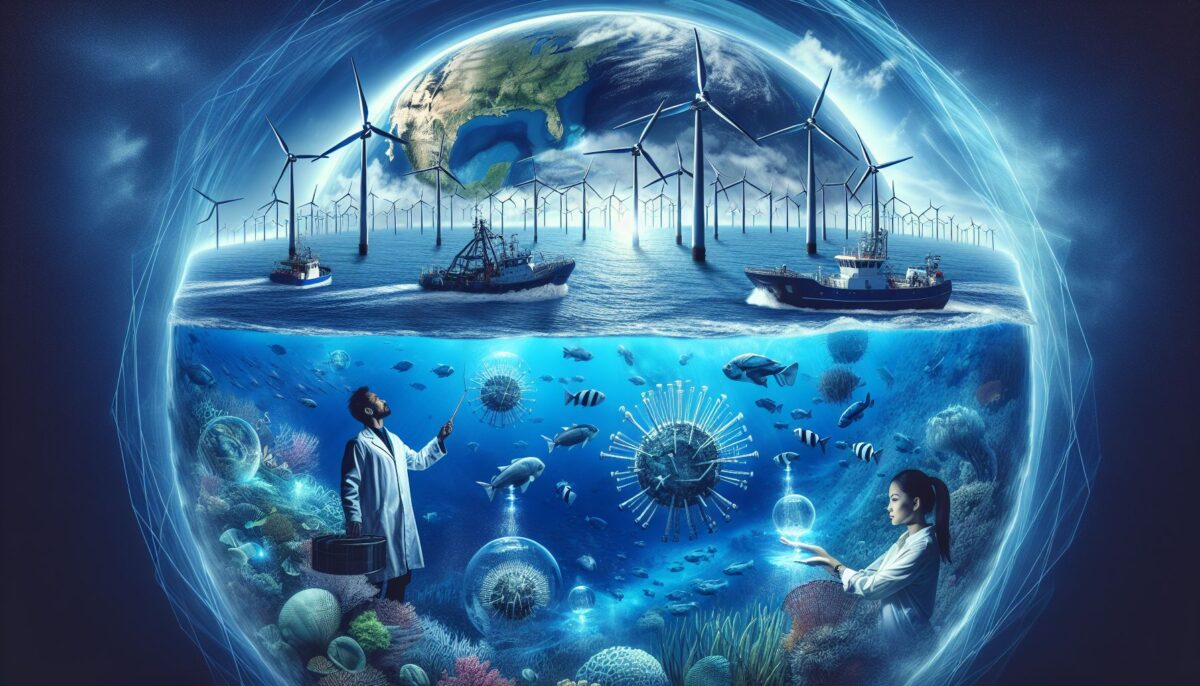
The vast expanse of oceans that blankets over 70% of our planet is more than just a mesmerizing blue vista; it’s a critical engine of the world’s economy. ‘Blue Economy’ is a term that encapsulates the sustainable use of ocean resources for economic growth, improved livelihoods, and jobs while preserving the health of ocean ecosystems. With a surge in awareness about the importance of ocean conservation, now more than anything else, is the time to dive deep into understanding and promoting the concept of the Blue Economy.
Understanding the Blue Economy
The concept of the Blue Economy is a broad one, encompassing a range of economic sectors and activities, including fisheries, aquaculture, tourism, transport, shipbuilding, offshore renewables, biotechnology, and underwater mining, among others. The World Bank defines the Blue Economy as the “sustainable use of ocean resources for economic growth, improved livelihoods and jobs, and ocean ecosystem health.”
The Pillars of the Blue Economy
Sustainable Fisheries and Aquaculture: This pillar focuses on maximizing the sustainable yield of fisheries and the growth of aquaculture to meet global seafood demand without compromising the marine environment.
Marine Renewable Energy: Tidal and wave energy are promising renewable sources that can contribute significantly to our energy mix without the carbon footprint associated with fossil fuels.
Maritime Transport and Trade: Shipping is the backbone of globalization and international trade, but it needs to become cleaner and more efficient to reduce its environmental impact.
Coastal and Marine Tourism: Coastal and marine tourism, including ecotourism, relies on healthy ecosystems to thrive and can be a force for conservation if managed responsibly.
Marine Biotechnology: The ocean is a treasure trove of biodiversity, and research into marine organisms can lead to breakthroughs in medicine, industry, and environmental remediation.
Blue Carbon: Coastal and marine ecosystems like mangroves, salt marshes, and seagrasses capture and store more carbon per unit area than terrestrial forests. Conservation of these blue carbon ecosystems can be a critical strategy in combating climate change.
The Economic Potential of the Blue Economy
The Blue Economy is monumental in scope. The OECD estimates that the ocean economy will double in size to $3 trillion by 2030, providing millions of jobs. For coastal and island countries, the ocean is a key economic asset. Fisheries provide primary protein sources for billions of people, and marine tourism can be a significant source of revenue.
Fisheries and Aquaculture
According to the Food and Agriculture Organization (FAO), fisheries and aquaculture support the livelihood of around 10-12% of the world’s population. Sustainable fishing practices and innovative aquaculture techniques can ensure this remains a viable source of food without depleting marine stocks.
Renewable Energy
Harnessing the power of waves and tides, marine renewable energy offers a solution to reduce our reliance on fossil fuels. The International Renewable Energy Agency (IRENA) points out that tidal and wave energy could meet 10% of the EU’s current electricity demand by 2050.
Shipping and Trade
Maritime trade is the cornerstone of the global economy. The International Maritime Organization (IMO) is working towards reducing greenhouse gas emissions from ships by at least 50% by 2050 compared to 2008 levels.
Marine Bioprospecting and Pharmaceuticals
The ocean’s rich biological diversity is a source of novel compounds that can be used in pharmaceuticals. New medicines derived from marine organisms are emerging for treating ailments like cancer, pain, bacterial infections, and inflammation.
The Environmental Imperative
The Blue Economy is not just about economic potential; it’s about balancing environmental sustainability with economic growth. There is a range of environmental considerations that need to be addressed.
Ocean Acidification and Coral Bleaching
The absorption of excess CO2 by oceans is leading to ocean acidification, which affects the health of marine organisms, particularly corals. Coral bleaching events — which occur when corals are stressed by changes in conditions such as temperature — are becoming more frequent.
Overfishing and Biodiversity Loss
Unsustainable fishing practices are leading to the collapse of fish stocks and the destruction of marine habitats. This not just impacts marine biodiversity but also the millions of people who rely on these resources for food and income.
Pollution and Marine Debris
Marine pollution from land-based sources, including plastic debris, agricultural runoff, and untreated wastewater, is a major threat to ocean health. Microplastics are now pervasive throughout the marine environment and can enter the food chain.
Policy and Management
The implementation of the Blue Economy requires effective policy and management frameworks that balance economic development with conservation.
Marine Protected Areas (MPAs)
MPAs are essential for conserving marine biodiversity and can help sustain fish populations by creating no-take zones where fishing is prohibited.
Ocean Governance
International cooperation is key to managing the oceans, which do not adhere to national boundaries. Agreements such as the United Nations Convention on the Law of the Sea (UNCLOS) govern the use of the ocean’s resources.
Sustainable Coastal Development
Coastal development must be planned with the protection of fragile ecosystems in mind. This includes preventing habitat destruction and ensuring the resilience of coastal communities to challenges like sea-level rise.
Moving Forward with the Blue Economy
Transitioning to a Blue Economy requires investment, innovation, and collaboration. Governments, industry, academia, and civil society must work together to harness the ocean’s potential in a responsible manner.
Investing in Ocean Science
Research and monitoring are crucial to understanding and managing marine ecosystems. Investment in ocean science can lead to innovations that drive sustainable practices across the Blue Economy sectors.
Fostering Public-Private Partnerships
Public-private partnerships can play a pivotal role in developing the infrastructure and technology required to exploit ocean resources sustainably.
Education and Capacity Building
Educating current and future generations about the importance of the ocean and the value of sustainable practices is vital to ensuring the stewardship of our marine resources.
Conclusion
The Blue Economy is an understanding and manifestation of our need to harness the ocean’s resources responsibly for the benefit of humanity and the planet. With the right policies, careful stewardship, and international cooperation, we can achieve economic growth that is not only sustainable but also regenerative, helping to restore the health of our oceans.
Sources
- World Bank. (2017). What is the Blue Economy? https://www.worldbank.org/en/news/infographic/2017/06/06/what-is-the-blue-economy
- Food and Agriculture Organization of the United Nations. (FAO). The State of World Fisheries and Aquaculture. http://www.fao.org/3/ca9229en/ca9229en.pdf
- International Renewable Energy Agency. (IRENA). Ocean Energy. https://www.irena.org/ocean
- International Maritime Organization. (IMO). Reducing greenhouse gas emissions from ships. [http://www.imo.org/en/MediaCentre/HotTopics/G
