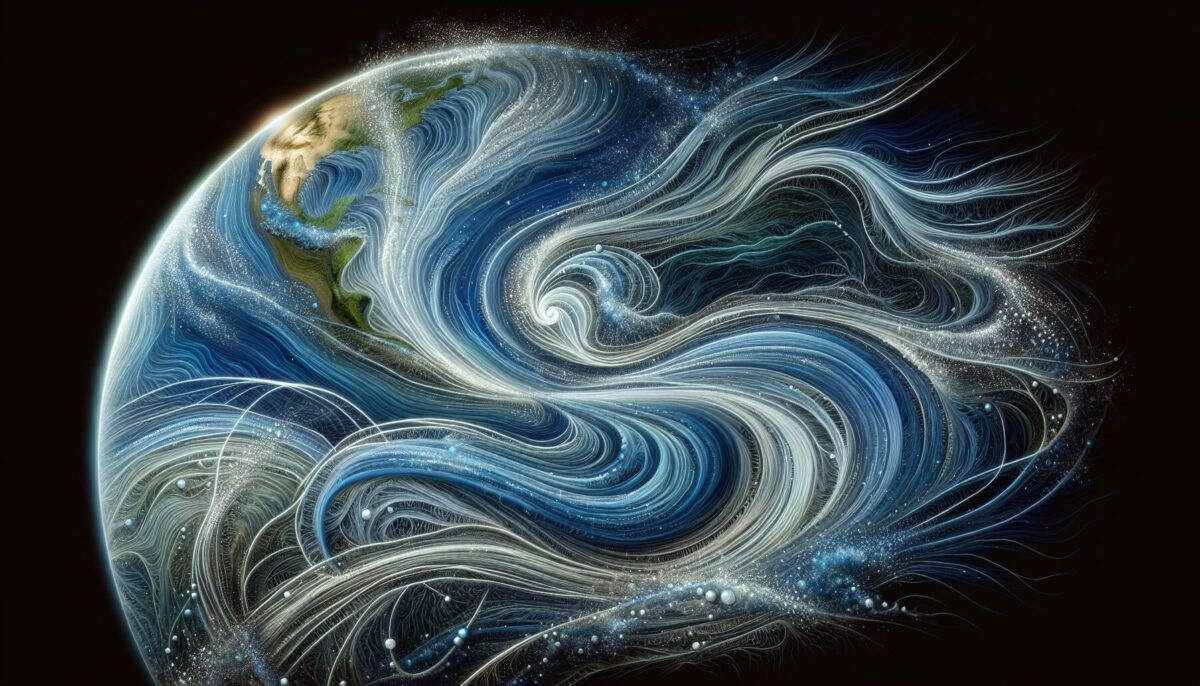
The ocean is not a still and stagnant body but a dynamic matrix of currents that course through vast basins, connecting distant shores, regulating climate, and supporting a rich diversity of marine life. Ocean currents, the great conveyors of the seas, act like a circulatory system for our planet, distributing heat, nutrients, and gases across the globe. From the surface to the deep, these underwater highways provide a continuous flow of water, creating unseen pathways that have a profound effect on life above and below the waterline.
In this article, we’ll delve into the world of ocean currents: how they’re formed, their different types, their ecological and climatic significance, as well as the challenges they face due to human activity.
The Formation of Ocean Currents
Ocean currents are primarily driven by two main factors: wind and the density differences in water masses caused by variations in temperature and salinity, known as thermohaline circulation.
Wind-Driven Currents
Surface currents make up about 10% of the water in the ocean. These currents are primarily driven by the global wind patterns dictated by Earth’s rotation and its atmospheric circulation. The Coriolis effect, a result of the planet’s rotation, causes these winds to curve, imparting a similar curvature upon the currents.
The most well-known wind-driven current systems are the oceanic gyres, giant circular systems found in each of the ocean’s basins. The North Atlantic Gyre, for example, includes the Gulf Stream, which is known for its strong, warm current along the eastern coast of the United States and Canada.
Thermohaline Circulation
Beneath the influence of wind, thermohaline circulation (often referred to as the “global conveyor belt”) moves vast quantities of water around the world. As water at the surface becomes denser through cooling and increases in salinity due to evaporation or sea ice formation, it begins to sink. This creates deep-water currents that slowly meander across the ocean basins. One of the most famous components of thermohaline circulation is the North Atlantic Deep Water (NADW).
The Types of Ocean Currents
Ocean currents vary not only in their drivers but also in their characteristics and the locations where they are found:
Surface Currents
These are currents found in the upper 400 meters of the ocean. They are greatly influenced by wind and are usually warmer and less salty than deeper waters.
Deep Water Currents
These currents are driven by thermohaline forces and are found below the pycnocline, where there is a sharp change in water density with depth. They are slow-moving but carry an enormous volume of water.
Coastal Currents
These are found along the edges of continents. They can be wind-driven or due to differences in water density caused by freshwater inputs from rivers or rain.
Significance of Ocean Currents
The importance of ocean currents cannot be overstated. They play a crucial role in regulating Earth’s climate by distributing thermal energy from the equator to the poles. This is critical in tempering the extremes of our climate, making certain regions more habitable than they would be otherwise.
Ecological Importance
Ocean currents also transport nutrients and small marine organisms across vast distances, supporting rich marine ecosystems. Fisheries that sustain millions of people worldwide are dependent on these current-driven nutrient upwellings.
Climate Regulation
Beyond local weather patterns, ocean currents impact global climate systems. For example, the El Niño-Southern Oscillation (ENSO) is significantly influenced by the Pacific Ocean currents and can cause weather extremes across the globe.
Threats to Ocean Currents
Despite their might, ocean currents face threats from human activity:
Climate Change
As greenhouse gas emissions increase, ocean temperatures rise, which can alter the strength and direction of currents. This can have cascading effects on weather patterns, marine ecosystems, and sea levels.
Pollution
Marine pollution, including plastic debris, oil spills, and chemicals, can harm wildlife and ultimately disrupt the ecological balance critical for healthy current systems.
Melting Ice Caps
The influx of freshwater from melting ice caps due to global warming can decrease salinity in certain areas, potentially impacting the thermohilane circulation.
Preserving the Flow
To protect these critical components of Earth’s natural system, international cooperation and conservation measures are essential:
Marine Protected Areas
Establishing and enforcing marine protected areas can help preserve the integrity of ecosystems that depend on current systems.
Reducing Emissions
Mitigating climate change by reducing greenhouse gas emissions is paramount in preserving the equilibrium of ocean current patterns.
Combatting Pollution
Efforts to reduce pollutants reaching the ocean can help maintain the health of marine life that thrives within current flows.
Research and Monitoring
Furthering oceanographic research and implementing monitoring systems can aid in predicting changes and identifying areas of concern.
Conclusion
The ballet of ocean currents is a complex, beautiful, yet delicate dance. These unseen forces shape our world’s climate, sustain life, and connect distant shores throughout the globe. Their perturbation due to human-induced climate change stands as an existential threat to this balance. However, through understanding, stewardship, and action, there is hope for preserving the elegant choreography of the ocean’s vital currents.
To delve deeper into the intricate world of ocean currents, here are a few recommended sources:
- National Oceanic and Atmospheric Administration (NOAA)
- Intergovernmental Oceanographic Commission (IOC)
- World Ocean Review on Marine Currents
The flow of the ocean currents is a testament to the interconnectedness of our global ecosystems. By recognizing the fragility and significance of these currents, we can work towards a future where both humanity and marine life can thrive alongside the rhythmic pulse of our planet’s ocean currents.
