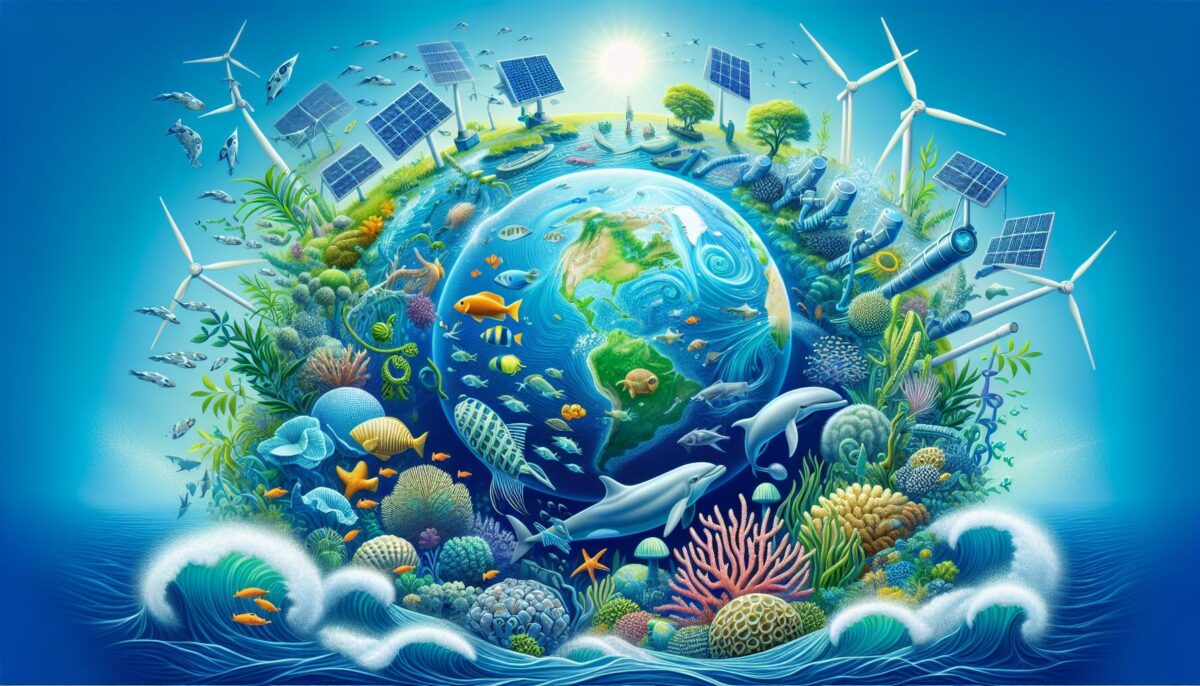
In recent years, the term “Blue Economy” has emerged as a significant concept that highlights the importance of the oceans, seas, and coastal areas to our global economy. This term encompasses not only the direct economic activities such as fisheries and shipping but also recognizes the environmental services provided by marine ecosystems. In this in-depth article, we will explore what the Blue Economy is, its components, challenges, and why it’s crucial for our sustainable future.
Understanding the Blue Economy
The Blue Economy refers to the sustainable use of ocean resources for economic growth, improved livelihoods, and jobs while preserving the health of ocean ecosystem. Its scope covers a wide array of sectors, including established industries like fisheries, tourism, and maritime transport, as well as emerging sectors like renewable energy, aquaculture, and biotechnology.
Fisheries and Aquaculture
Fisheries and aquaculture represent a significant part of the Blue Economy, providing food and nutrition, employment, and export revenue. According to the Food and Agriculture Organization (FAO), fisheries and aquaculture support the livelihoods of 10-12 percent of the world’s population [^1]. However, these sectors face significant challenges, such as overfishing, habitat destruction, and climate change impacts that threaten their sustainability.
Maritime Trade and Shipping
Maritime trade and shipping are the lifelines of the global economy, with over 90% of the world’s trade carried by sea [^2]. Ports, shipping lanes, and the related logistics form a vast network that connects markets, supports economic growth, and facilitates international trade. Managing this network efficiently while minimizing environmental impact is a key aspect of the Blue Economy.
Renewable Energy
Ocean-based renewable energy, including tidal and wave energy, holds vast potential for contributing to the world’s energy mix. The exploitation of these resources can lead to reductions in greenhouse gas emissions and provide sustainable energy solutions. Recently, significant technological advancements have been made in harnessing tidal and wave energy, although these technologies are still in the early stages of development compared to wind and solar.
Marine Biotechnology
The ocean is a rich source of biodiversity and genetic resources, many of which have yet to be discovered or utilized. Marine biotechnology explores these resources for various applications, including pharmaceuticals, enzymes, cosmetics, and nutraceuticals. This field has the potential to lead to breakthroughs in medicine and industry while also promoting conservation of marine biodiversity.
Tourism and Recreation
Coastal and marine tourism, which includes beach holidays, diving, boating, and marine wildlife watching, is one of the largest and fastest-growing areas of the Blue Economy. This sector can significantly contribute to the economic development of coastal communities while fostering conservation efforts. However, balancing tourism growth with environmental sustainability is a challenge that needs to be addressed through careful planning and management.
Challenges in the Blue Economy
While the Blue Economy presents opportunities, it also faces several challenges.
Marine Pollution
Marine pollution from various sources, including land-based runoff, plastics, and shipping, threatens marine life and habitats. It is estimated that 8 million tons of plastic enter the ocean each year, causing severe impacts on marine ecosystems and the economy [^3].
Ocean Acidification and Climate Change
As the concentration of carbon dioxide in the atmosphere increases, more is absorbed by the oceans, leading to ocean acidification. This process threatens marine organisms, especially calcifying organisms like corals and shellfish. Additionally, climate change is resulting in rising sea levels and altered ocean currents, which can have profound effects on marine ecosystems and coastal communities.
Overfishing and Habitat Destruction
Overfishing and destructive fishing practices have led to the depletion of many fish stocks and damage to crucial habitats such as coral reefs and mangroves. Sustainable fisheries management and the creation of marine protected areas are essential to ensure the long-term health and productivity of marine ecosystems.
Inequitable Development
There are disparities in how the benefits of the Blue Economy are distributed, often leaving local communities, small-scale fishermen, and indigenous peoples behind. Ensuring that the Blue Economy leads to inclusive and equitable development is a significant challenge that must be addressed through policy, governance, and community engagement.
Marine Protected Areas and Conservation
A critical component of the Blue Economy is the establishment and management of marine protected areas (MPAs). MPAs are essential in safeguarding marine biodiversity, protecting endangered species, and maintaining ecosystems that provide crucial services such as carbon sequestration and coastal protection. These areas also provide opportunities for scientific research, education, and ecotourism.
Moving Forward: Policy and Governance
To fully realize the potential of the Blue Economy, strong policy frameworks and governance are needed at the local, national, and international levels. This includes:
- Sustainable management of marine resources
- Equitable distribution of benefits
- Investment in marine science and technology
- Combating illegal, unreported, and unregulated (IUU) fishing
- Strengthening global cooperation on ocean governance
Conclusion
The Blue Economy is much more than just an economic concept—it is about ensuring the well-being of our planet and people. The oceans are a cornerstone of Earth’s life-support system, and by fostering a sustainable Blue Economy, we can unlock their potential while preserving their health for future generations.
[^1]: Food and Agriculture Organization of the United Nations (FAO): http://www.fao.org/fishery/en
[^2]: United Nations Conference on Trade and Development (UNCTAD): https://unctad.org/topic/transport-and-trade-logistics/maritime-transport
[^3]: Jambeck, Jenna R., et al. “Plastic waste inputs from land into the ocean.” Science 347.6223 (2015): 768-771.
