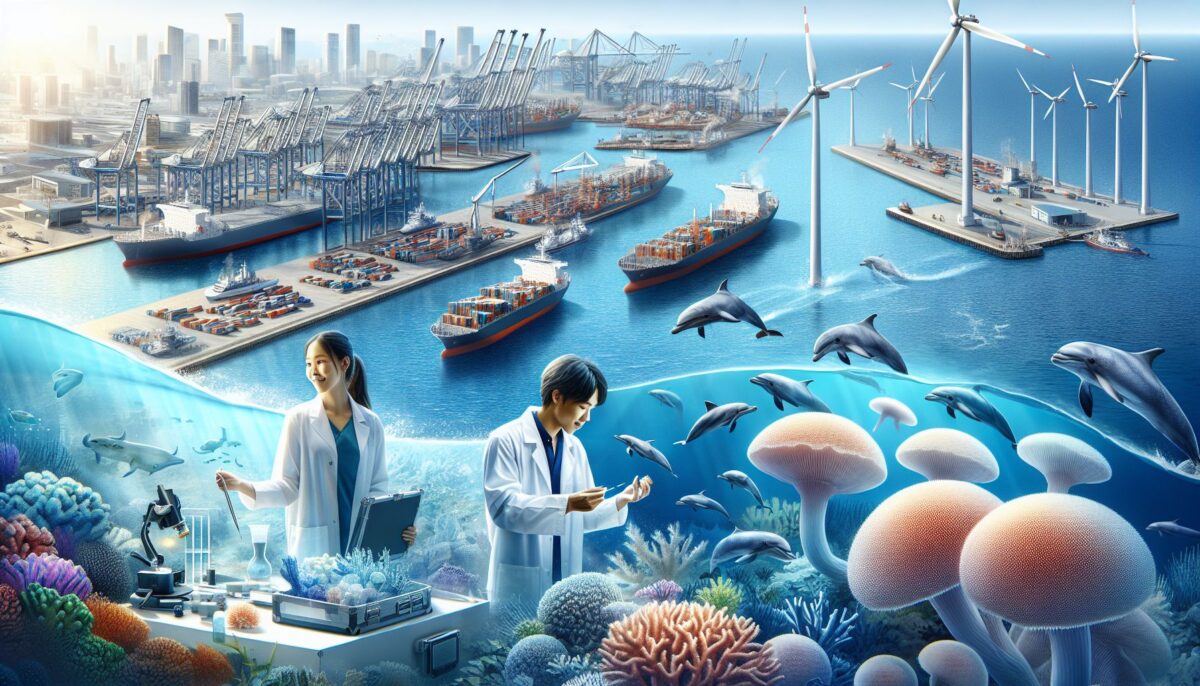
Our oceans cover over 70 percent of the Earth’s surface and are vital to the health of our planet. They regulate the climate, provide food and livelihoods to millions of people, and host an incredible array of biodiversity. Yet, despite their importance, the oceans are often the final frontier when thinking about economic development and sustainability. This is where the concept of the blue economy comes to the forefront as a crucial and sustainable approach.
The blue economy encompasses a diverse range of activities that include traditional sectors such as fisheries, tourism, and maritime transport, as well as emerging industries like offshore wind energy, marine biotechnology, and ocean mineral extraction. It also includes the essential ecosystem services the ocean provides, such as carbon sequestration and coastal protection.
Understanding the Blue Economy
The term “blue economy” was first coined to challenge the traditional concept of the “brown economy,” which fosters industrial development often without regard for environmental health or sustainability. In contrast, the blue economy seeks to promote economic growth, social inclusion, and the preservation or improvement of livelihoods while ensuring the environmental sustainability of oceans and coastal areas.
Economic Potential
The economic potential of the blue economy is vast. According to the World Bank, the value of the ocean’s riches rivals the size of the world economy. Fisheries and aquaculture directly or indirectly employ over 500 million people, mostly in developing countries. Tourism tied to the ocean generates billions of dollars annually, and shipping routes carry over 90 percent of international trade. The blue economy has the potential to be a major source of jobs, food, and economic growth, especially for small island developing states and coastal less-developed countries.
Sustainable Practices
A sustainable blue economy is founded on the careful management and use of ocean resources. Ocean resources must be used in ways that will regenerate, rather than deplete them. Responsible fishing practices, pollution control, habitat restoration, and the maintenance of marine biodiversity are all critical components. Investing in marine and coastal ecosystem services can offer economic benefits that far exceed those derived from unsustainable exploitation.
Innovation and Technology in the Blue Economy
Innovation and technology play a crucial role in unlocking the potential of the blue economy. Advancements in marine biotechnology could revolutionize the pharmaceutical industry with new medicines derived from sea life. Ocean thermal energy conversion (OTEC) and wave and tidal power offer renewable energy solutions that could mitigate climate change and provide power to millions. Furthermore, seabed mining for minerals such as cobalt, nickel, and other rare earth elements holds the potential to support the increasing demand for technology in a sustainable manner.
Maritime Trade and Shipping
Maritime trade and shipping are central components of the blue economy. The global shipping industry connects markets and supplies raw materials, goods, and energy. The challenge is to ensure that increased shipping does not lead to further environmental degradation through oil spills, shipwrecks, and the spread of invasive species via ballast water.
Ports and Harbors
Ports and harbors are cornerstones of the maritime trade and the blue economy. They serve as hubs for international trade, connecting the shipping routes to inland transportation. Sustainable port development and operations can reduce environmental impact and enhance efficiency.
Navigation and Hydrography
Navigation and hydrography are essential for the safety and efficiency of maritime trade. Advances in navigational technology, including precise GPS and electronic navigational charts, contribute to safer, cleaner shipping. Collaborative international hydrographic efforts map the seafloor to improve navigation, reveal potential resources, and support ocean governance.
Ocean and Marine Resources Management
Effective management is vital to ensure that ocean and marine resources are exploited sustainably. This includes:
Marine Protected Areas (MPAs)
MPAs are regions designated to protect and conserve marine environments and biodiversity. They can safeguard critical habitats, help fish stocks to recover, and ensure the preservation of valuable ecosystems.
Coastal Management and Marine Spatial Planning
Coastal management and marine spatial planning involve making informed decisions about the use of coastal and marine areas. These strategies account for the ecological, economic, social, and cultural importance of marine environments and aim to reduce conflicts between different uses.
Fisheries Management
Sustainable fisheries management is key to the health of the oceans. It includes setting quotas, reducing bycatch, eliminating illegal fishing, and protecting spawning and nursery areas.
Climate Change, Ocean Health, and the Blue Economy
Climate change presents significant challenges to the oceans and to the blue economy. Warming waters lead to coral bleaching, ocean acidification can disrupt marine food chains, and sea-level rise threatens low-lying coastal communities. The blue economy model recognizes that economic activities must be resilient to the impacts of climate change and, where possible, contribute to mitigation efforts.
Renewable Energy: Tidal and Wave Energy
In harnessing tidal and wave energy, the blue economy can contribute to a global shift toward renewable energy. These sources are abundant and consistent, making them attractive alternatives to fossil fuels.
Adapting to Sea-Level Rise and Coastal Erosion
Sea-level rise and coastal erosion are immediate threats to coastal communities and economic infrastructure. The blue economy emphasizes the importance of adapting to these changes through ecosystem-based approaches like mangrove restoration, which provide natural coastal defenses, or innovative engineering solutions.
Challenges and the Way Forward
While the blue economy offers a path toward sustainable economic growth, challenges remain. These include:
Overfishing and Resource Depletion
Overfishing and unsustainable practices can lead to resource depletion. Robust monitoring, control, and surveillance systems are essential to prevent over-exploitation.
Marine Pollution
Marine pollution from land-based sources, such as plastic waste and agricultural runoff, severely impacts marine life and human health. Better waste management and pollution control mechanisms are urgently needed.
Equity and Access
Ensuring that the benefits of the blue economy are shared equitably remains a challenge. It means providing access and opportunities to all stakeholders, particularly those in developing countries and indigenous communities.
Governance
Good governance is imperative to manage the resources of the oceans sustainably. This includes clear legal frameworks, effective enforcement, and international cooperation to tackle transboundary issues such as fishing rights, pollution, and the effects of climate change.
Conclusion
The blue economy can redefine our relationship with the oceans. By balancing development with sustainability, we can unlock immense economic potential while protecting the very ecosystems that life on Earth depends on. It requires international cooperation, robust governance, and a commitment to innovation and sustainability. As humanity faces the compounded challenges of climate change and resource scarcity, the blue economy offers not just an array of economic opportunities, but a beacon of hope for a sustainable future.
Sources
- World Bank. (2017). The Potential of the Blue Economy: Increasing Long-term Benefits of the Sustainable Use of Marine Resources for Small Island Developing States and Coastal Least Developed Countries. World Bank. https://www.worldbank.org/en/news/infographic/2017/06/06/blue-economy
-
European Commission. (2020). The blue economy. European Commission – Maritime Affairs. https://ec.europa.eu/maritimeaffairs/policy/blue_economy_en
