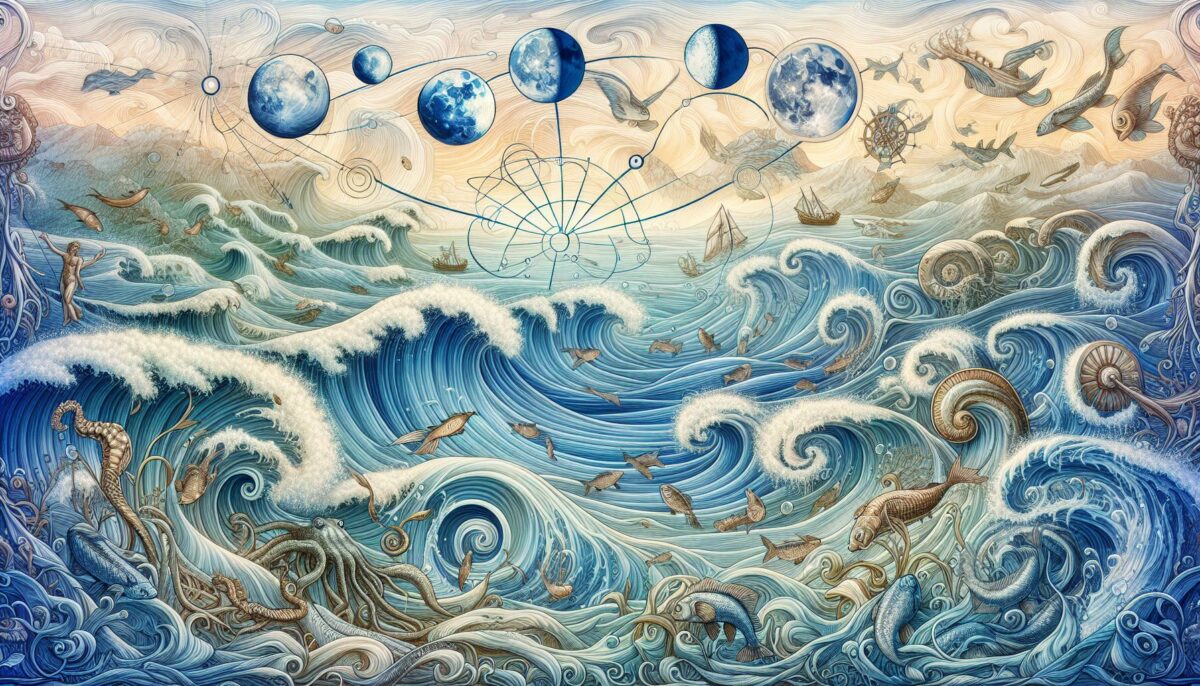
The ocean is a vast and enigmatic world, filled with wonders that both inspire and intimidate. Its rhythmic motion, governed by an intricate gravitational dance, shapes one of the most observable phenomena on Earth – the tides. Understanding the mechanisms behind tides is not only important for mariners and coastal residents but also for appreciating the broader influences on marine life and global ecosystems.
What Are Tides?
At the most fundamental level, tides are the rise and fall of sea levels caused by the gravitational pull of the Moon and the Sun on Earth’s oceans. This daily ebb and flow may seem simple, but the factors contributing to tidal movements create a complex system that has challenged and fascinated scientists for centuries.
The Gravitational Pull and Tidal Forces
The primary force behind tides is gravity. The Moon’s gravitational pull on Earth’s waters creates a bulge, known as the tidal force. Interestingly, there is also a bulge on the opposite side of Earth, due to the centrifugal force created as Earth and the Moon rotate around their common center of mass. Consequently, most coastal areas experience two high tides and two low tides within approximately 24 hours and 50 minutes – a lunar day.
The Role of the Sun
While the Moon is the chief architect of tides, the Sun also plays a significant role. When the Sun, Moon, and Earth align during full and new moons, the gravitational forces combine to create higher high tides and lower low tides, known as spring tides. Conversely, during the first and third quarters of the Moon, when Earth is at a right angle to the Sun and Moon, neap tides occur with less pronounced differences between high and low tides.
The Impact of Geography on Tides
Tides vary around the world, and their characteristics are deeply influenced by the geography of coastlines, ocean basins, and the seafloor. For instance, funnel-shaped bays and estuaries can amplify tides, leading to exceptionally high waters, as observed in the Bay of Fundy in Canada, where some of the highest tides on Earth occur.
Coastal Features and Resonance
Coastal features like bays, estuaries, and continental shelf widths also affect tidal ranges. In some cases, the natural period of oscillation of a bay or gulf can resonate with the frequency of the incoming tide, dramatically increasing the tidal range. This is known as tidal resonance.
Bathymetry’s Influence
The underwater topography, or bathymetry, can also affect tidal patterns. Generally, areas with steeply sloping seabeds or a rise in the seafloor see more significant tidal waves, while gradual slopes can result in diminished tides.
Tides and Marine Life
Marine life has adapted to the rhythm of the tides, and many species depend on tidal zones for feeding, mating, and spawning. Intertidal zones – areas between the high tide mark and the low tide mark – are particularly rich ecosystems that provide crucial habitats for a myriad of organisms.
The Tidal Life Cycle
Coastal creatures such as crabs, sea stars, and mollusks follow the tidal schedule to avoid predators and find food. Estuarine species often synchronize their life cycles with the tides, with events like the mass spawning of grunion fish taking place on specific tidal phases.
Migratory Pathways
Tides also create migratory pathways for fish and other marine animals. Salmon, for instance, use tidal currents to help them navigate and conserve energy on their journey to spawning grounds.
The Influence of Tides on Human Activity
Human civilization has long been tied to the rhythms of the tides. From ancient mariners to modern shipping industries, tides have been both a challenge to overcome and a resource to harness.
Navigation and Maritime Trade
Understanding tides is crucial for safe navigation and efficient maritime trade. Ports and harbors are often built considering local tidal conditions to ensure accessibility and safety for shipping traffic.
Tidal Energy
In recent years, tides have gained attention as a source of renewable energy. Tidal energy harnesses the kinetic energy of tidal currents or the potential energy of the difference in height between high and low tides. Prototypes and operational tidal power stations are being tested and implemented in various parts of the world, showing promise as an environmentally-friendly energy source.
The Future of Tides in a Changing World
Climate change and sea-level rise are altering tides and their associated ecosystems. As sea levels rise, tidal ranges and the intensity of tidal currents may change, impacting coastal communities and marine environments.
Coastal Erosion and Flooding
Rising sea levels can exacerbate coastal erosion and increase the risk of flooding during high tides, known as king tides. Low-lying areas are particularly vulnerable to these changes, prompting a need for adaptive coastal management strategies.
Effect on Estuaries and Wetlands
The delicate balance of estuaries and wetlands is also at risk from changing tidal patterns. These ecosystems serve as buffers against storms and as vital nurseries for marine species, so any disruption can have cascading effects on biodiversity and coastal resilience.
Conclusion
The tides are a reflection of the grand cosmic ballet that Earth, the Moon, and the Sun perform. They influence every aspect of life in and around the ocean, from the smallest plankton to the largest maritime trade routes. As we continue to grow and develop along our coasts, it is more important than ever to understand and respect the power and subtleties of these oceanic movements.
Sources
- National Oceanic and Atmospheric Administration (NOAA). “Tides and Water Levels.” https://oceanservice.noaa.gov/education/tutorial_tides/welcome.html
- United States Geological Survey (USGS). “Tides and Water Levels.” https://www.usgs.gov/special-topic/water-science-school/science/tides-and-water-levels?qt-science_center_objects=0#qt-science_center_objects
- International Renewable Energy Agency (IRENA). “Tidal Energy.” https://www.irena.org/ocean/Tidal-Energy
