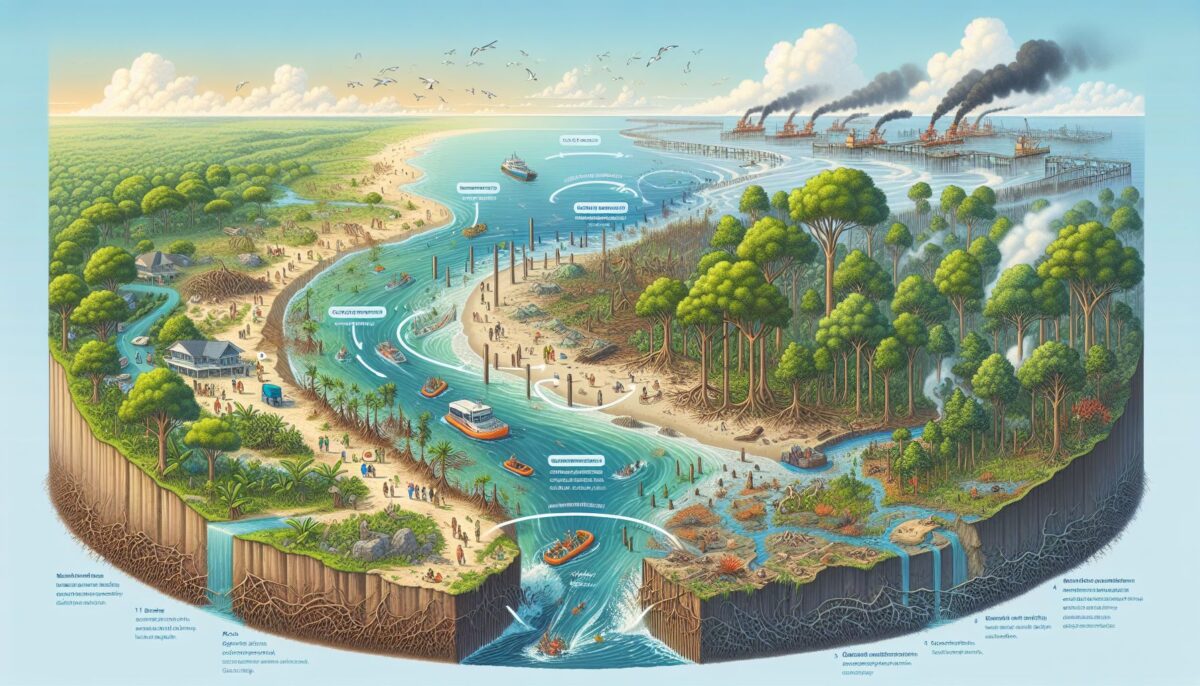
Coastal erosion is a natural process where wind, water, and other environmental factors wear away coastal land. While it has always been a dynamic force in shaping coastlines, it has gained increasing importance due to the exacerbated effects of climate change, human activities, and sea level rise. As homes, businesses, and ecosystems face the consequences of erosion, understanding and mitigating its impacts has never been more crucial.
What is Coastal Erosion?
Coastal erosion is the removal and redistribution of soil or rock along coastlines by fluid mechanisms, primarily the action of waves, currents, and tides. This unstoppable natural system can sculpt beautiful landscapes but also possesses the power to destructively encroach upon human development and natural habitats.
The Science Behind the Process
Waves and Tides: Waves generated by the wind create a relentless pounding force against the shoreline. The energy and frequency of these waves can cause significant erosion, especially during storms. Tides, the periodic rise and fall of sea levels, also contribute to erosion by influencing the amount of water that slams into the coast.
Currents: These are continuous, directed movements of seawater generated by various factors, including wind, salinity differences, and the Coriolis effect. They can lead to coastal erosion by moving sand and rocks away from one part of the shore to another.
Sea Level Rise: With the increasing temperatures owing to global warming, sea levels are rising due to the melting of ice caps and the thermal expansion of water. Higher sea levels mean more powerful wave action and a higher potential for coastal erosion.
Human Activities: Coastal development, deforestation near the coastline, and alterations in coastal hydrology can exacerbate erosion. Structures like seawalls and jetties may protect certain areas but can also encourage erosion elsewhere by interrupting natural sediment flows.
Impact of Coastal Erosion
The effects of coastal erosion have far-reaching consequences. Here are some of its major impacts:
- Loss of Land: Coastal erosion can lead to the loss of valuable land, often causing damage to properties and infrastructure.
- Habitat Destruction: Natural habitats such as wetlands and sandy beaches can be devastated by erosion, impacting the species that rely on these places for survival.
- Economic Toll: Tourism, real estate, and fishing industries can suffer economic losses due to the diminishing coastline.
- Cultural Impact: Heritage sites and other cultural landmarks near the coast can be damaged or lost due to erosion.
Mitigation Strategies
Addressing coastal erosion requires a combination of soft and hard engineering strategies, along with policy and community involvement.
Soft Engineering Solutions
- Beach Nourishment: This involves the addition of sand or sediment to beaches to combat erosion. It is often preferred because it maintains the natural appearance of the coastline.
- Dune Regeneration: Enhancing the growth of dunes through vegetation plantation can help in stabilizing the sand and providing a barrier to erosion.
- Wetland Restoration: Restoring wetlands can provide natural protection against the force of waves and help in absorbing storm surges.
Hard Engineering Solutions
- Seawalls: These are structures constructed parallel to the shore to defend the coast from the direct impact of incoming waves.
- Groynes: Installed perpendicular to the shore, groynes intercept the flow of sediments, preventing them from washing away.
- Breakwaters: Often built offshore, breakwaters absorb the energy of waves, reducing erosion and protecting the coastline.
Policy and Community Measures
- Integrated Coastal Zone Management (ICZM): Adapting ICZM can ensure the sustainable use of coastal resources while minimizing erosion.
- Enforcement of Building Codes: Implementing and enforcing strict building codes in coastal areas can reduce damage from erosion.
- Public Education: Increasing community awareness about erosion and its consequences can foster better public support for mitigation strategies.
Challenges in Managing Coastal Erosion
Despite the existence of various strategies to deal with coastal erosion, several challenges persist:
- Funding: Erosion mitigation projects can be expensive and may lack sufficient funding.
- Lack of Comprehensive Data: Understanding coastal dynamics requires extensive research, which can be hampered by inadequate data.
- Balancing Ecology and Economics: Sometimes environmental concerns must be weighed against economic interests, leading to difficult decision-making processes.
- Climate Change: As climate change accelerates, so does the challenge to manage the associated increase in coastal erosion rates.
The Way Forward
The key to tackling coastal erosion effectively lies in adaptability and integrated management. Developing dynamic strategies that respond to changing coastal environments while ensuring active community and policy engagement could pave the way for a sustainable future for our coastlines.
Sources
- Masselink, G., & Hughes, M. G. (2003). “Introduction to Coastal Processes and Geomorphology.” Hodder Arnold. https://books.google.com/
- “Coastal Erosion.” (n.d.). United States Geological Survey. https://www.usgs.gov/
- “Understanding and Managing Shoreline Erosion.” (n.d.). California Coastal Commission. https://www.coastal.ca.gov/
Understanding and combatting coastal erosion is not just a matter of preserving our shorelines; it’s about protecting communities, economies, and ecosystems for future generations. Through diligent research, strategic planning, and thoughtful implementation of both engineering and natural solutions, we can work to sustain the beauty and utility of our coastal environments while adapting to the natural and human-induced changes they face.
