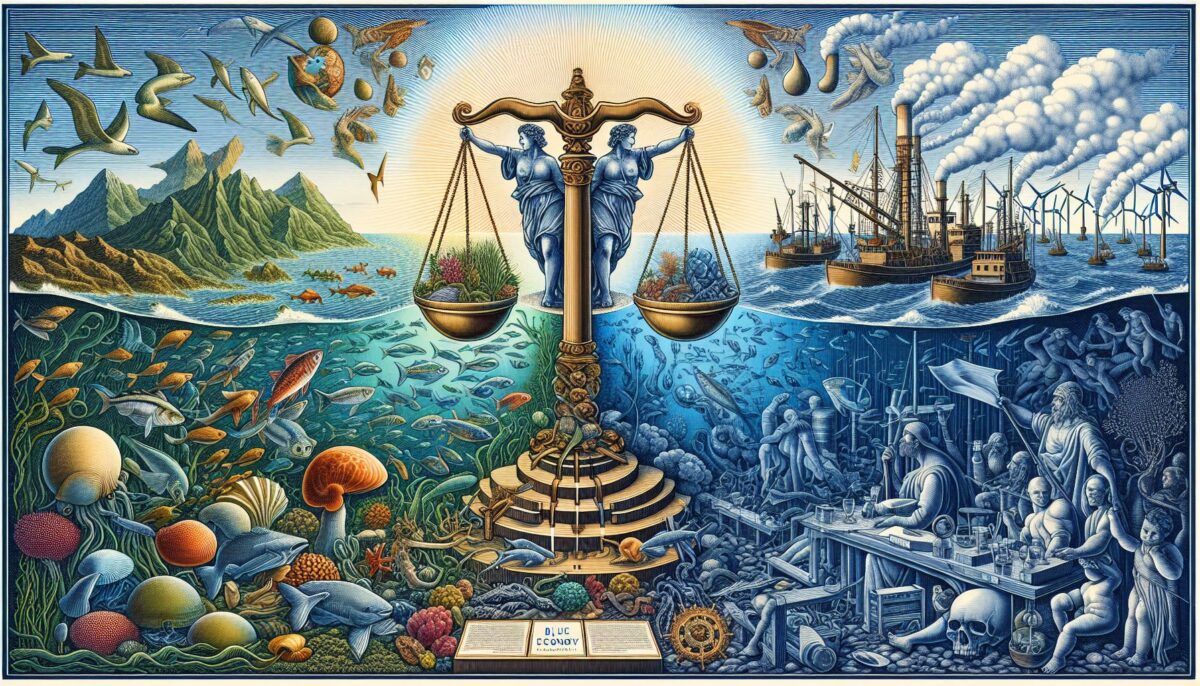
The world’s oceans cover more than 70% of our planet’s surface, yet their vast potential is only beginning to be tapped by what is known as the ‘Blue Economy.’ The term encapsulates the sustainable use of ocean resources for economic growth, improved livelihoods, and jobs while preserving the health of ocean ecosystems. From fisheries to tourism, shipping to renewable energy, the economic activities encompassed by the Blue Economy are diverse and far-reaching.
Understanding the Blue Economy
The concept of the Blue Economy emerged from the 2012 United Nations Conference on Sustainable Development (Rio+20). It seeks to promote economic growth, social inclusion, and the preservation or improvement of livelihoods while at the same time ensuring environmental sustainability of the oceans and coastal areas.
Key Sectors of the Blue Economy
- Sustainable Marine Resources: Including sustainable fisheries, aquaculture, and seaweed farming.
- Marine Renewable Energy: Exploiting wave energy, tidal energy, and offshore wind.
- Maritime Trade and Shipping: Efficient and environmentally friendly sea transportation.
- Coastal Tourism: Leveraging the beauty of coastal and marine environments in a sustainable manner.
- Marine Biotechnology: Exploring the ocean for natural compounds that could benefit health and industry.
The Pillars of Sustainability
To realize its full potential, the Blue Economy should be built on the principles of sustainability, which include:
- Environmental Stewardship: Ensuring human activities at sea are well managed and do not harm ocean health.
- Social Inclusion: Creating jobs and ensuring equitable access to the resources and benefits provided by the oceans.
- Economic Diversity: Encouraging a range of sectors and activities that can help to spread risk and promote resilience.
Fisheries: Balancing Harvest and Habitat
Fish provide a vital source of protein to billions of people, but overfishing threatens many species and can damage marine habitats. Sustainable fisheries management is central to the Blue Economy. By implementing quotas, promoting sustainable aquaculture, and using less damaging fishing gear, we can protect marine biodiversity while ensuring a steady supply of fish.
Aquaculture: The Future of Fish Production?
Aquaculture, or fish farming, is the fastest-growing food sector and offers great potential for the Blue Economy. Done sustainably, it could provide a solution to overfishing and meet the growing global demand for seafood.
Renewable Ocean Energy: Powering the Future
The oceans are a massive untapped source of renewable energy. Harnessing this energy through wind, tidal, and wave technologies provides an opportunity to reduce dependency on fossil fuels and cut greenhouse gas emissions.
- Wave and Tidal Energy: These energy sources are predictable and have the potential to supply a significant amount of electricity. They can also create jobs and foster innovation and technology development.
- Offshore Wind Farms: Have already gained considerable traction in some parts of the world, offering a cleaner alternative to traditional energy sources.
Sustainable Shipping
Shipping is the lifeblood of global trade but also a significant source of pollution. The Blue Economy encourages the development of more efficient shipping lanes, cleaner fuel options, and better waste management on ships to reduce marine pollution and greenhouse gas emissions.
Coastal Tourism: Protecting Our Natural Capital
Coastal and marine tourism attract millions of visitors each year and are major components of the Blue Economy. The challenge is to manage these activities in a way that is environmentally sustainable, supports local communities, and conserves the cultural heritage.
Marine Biotechnology: Innovating for a Better World
The oceans host a vast array of life, much of which is yet to be discovered. Marine biotechnology involves exploring the ocean for organisms that can be used in pharmaceuticals, food, and industry. Proper regulation ensures this exploration does not harm ecosystems, while bioprospecting can provide income for coastal communities.
The Challenges Ahead
Despite its promise, the Blue Economy also faces significant challenges that must be addressed:
- Marine Pollution: This includes plastic debris, oil spills, and other contaminants that threaten marine life and ecosystems.
- Ocean Acidification: Caused by the absorption of CO2 from the atmosphere, acidification poses a serious threat to calcifying organisms like corals and shellfish.
- Climate Change: Results in sea-level rise and extreme weather events that can have devastating impacts on coastal communities.
The Role of Governance
Effective governance is critical to the success of the Blue Economy. This involves national, regional, and international bodies working together to create policies that balance economic lust with ecological longevity. Marine Spatial Planning (MSP) is one tool that can help manage the multiple uses of ocean space effectively.
Case Studies of Success
There are numerous examples around the world where principles of the Blue Economy are being successfully applied:
- Seychelles’ Debt-for-Nature Swap: In 2018, Seychelles traded part of its national debt for a commitment to protect nearly one-third of its ocean territory.
- Norwegian Sustainable Fisheries: With one of the most modern and sustainable fishing fleets globally, Norway provides a model for balancing industry and environmental health.
- The Coral Triangle Initiative: A multilateral partnership that aims to protect marine biodiversity in a region that is considered the global center of marine life.
Encouraging Innovation and Investment
Innovation and investment are crucial to transitioning traditional ocean industries and creating new ones within the Blue Economy framework. This can include:
- Start-Up Incubators: To encourage the development of new technologies and businesses focused on sustainability.
- Green Bonds and Funds: To help finance projects that contribute to the health of the oceans and coastal economies.
- Public-Private Partnerships (PPPs): To leverage both government and private-sector expertise and capital.
Conclusion
The Blue Economy represents a bold vision for the future, one where we harness the wealth of the oceans in a way that supports sustainable development, improves livelihoods, and protects the very ecosystems that our economies are built upon. It’s an approach that encourages us to look at the oceans not just as a means of extracting resources but as a critical part of a sustainable future for our planet.
As we work to foster a harmonious relationship between economies and the ecosystems they rely upon, the Blue Economy has the potential to provide solutions to some of our most pressing environmental and economic challenges. With careful planning, governance, and a commitment to sustainability, the Blue Economy can bring prosperity and well-being without sacrificing the health of the world’s most crucial natural resource – our oceans.
Sources
- United Nations. (2012). The Future We Want. Rio de Janeiro: United Nations Conference on Sustainable Development (Rio+20).
- The World Bank. (2017). What is the Blue Economy? Retrieved from: http://www.worldbank.org/en/news/infographic/2017/06/06/blue-economy
- FAO. (2018). The State of World Fisheries and Aquaculture 2018 – Meeting the sustainable development goals. Rome: Food and Agriculture Organization of the United Nations.
