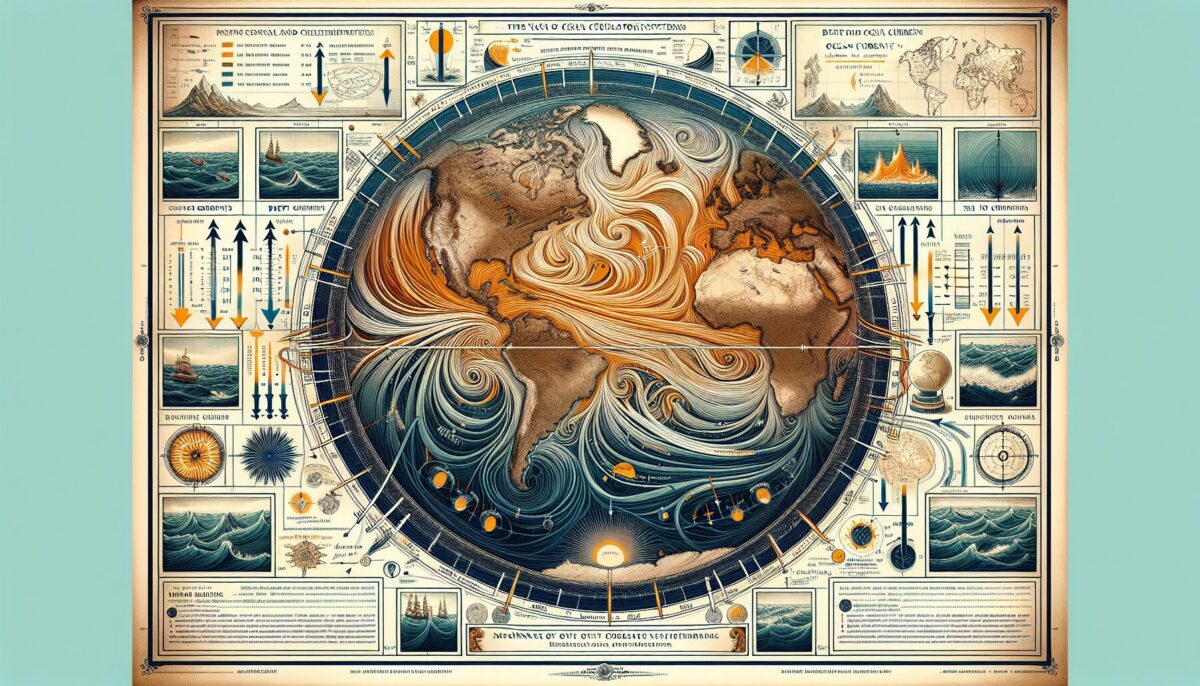
The ocean is a vast, dynamic place, teeming with life, and pulsating with the constant movement of water. Among the many fascinating characteristics of this blue expanse, ocean currents hold a special place due to their crucial role in regulating climate, supporting marine ecosystems, and shaping the patterns of navigation and trade. In this article, we’ll dive deep into the world of ocean currents, exploring their causes, their types, and their effects on our planet.
Understanding Ocean Currents
Ocean currents are continuous, directed movements of sea water generated by a number of forces acting upon the water, including wind, the Earth’s rotation, changes in temperature and salinity, and tides, among others. These currents can flow for thousands of kilometers and are paramount in determining the climate of many of the Earth’s regions, notably including coastal areas.
The Forces Behind Ocean Currents
The primary forces that drive ocean currents include:
- Wind: Wind blowing over the surface of the sea produces friction and forces the water to move. This motion, called wind-driven circulation, creates currents that are primarily horizontal, such as the Gulf Stream in the North Atlantic.
- The Coriolis Effect: Earth’s rotation causes moving objects, including ocean currents, to follow curved paths—an effect known as the Coriolis force. In the northern hemisphere, currents are deflected to the right, while in the southern hemisphere, they are deflected to the left.
- Thermohaline Circulation: Variations in water density affected by temperature (thermo) and salinity (haline) also generate currents. Cold, salty water is denser and sinks, creating deep ocean currents that are mostly vertical and slow-moving.
- Tides: Gravitational forces from the moon and the sun also contribute to ocean currents. These forces interact with the shape of the ocean basins to produce tidal currents, which can be very strong in confined areas such as bays and estuaries.
Types of Ocean Currents
Ocean currents are generally classified into two main types:
- Surface Currents: Comprising about 10% of water in the ocean, these are primarily driven by wind and typically extend to depths of 400 meters. They are most easily observed and have a direct impact on weather and climate.
- Deep Water Currents: Making up the other 90% of the ocean, these are driven by density differences arising from variations in temperature and salinity. They flow beneath the surface and play a vital role in global heat transfer and the carbon cycle.
Ocean Current Systems
Renowned ocean current systems include:
- The Gulf Stream: Part of the North Atlantic Gyre, it transports warm water from the Caribbean Sea northwards to the North Atlantic.
- The Antarctic Circumpolar Current: Encircling Antarctica, this current moves water around the globe in an easterly direction and affects the climate of the entire Southern Hemisphere.
- The California Current: Flowing southward along the western coast of North America, this current brings cool, moist air and heavily influences the climate of the Pacific coast.
The Crucial Role of Currents
Ocean currents play several critical roles in our world:
- Climate Regulation: Currents distribute heat around the globe, which influences the Earth’s climate. The transfer of warm and cold water helps maintain a balance in global temperatures.
- Marine Life: Nutrients carried by currents are vital for marine ecosystems. Upwelling currents bring nutrients from the depths to the surface, which supports large populations of phytoplankton, the foundation of the marine food web.
- Navigation: For centuries, mariners have used ocean currents to aid in navigation and shipping. Understanding currents allows for more efficient travel between ports and can save time and fuel.
- Pollution Dispersal: Unfortunately, currents also distribute pollutants like plastics and oil spills across the oceans. Understanding currents is essential for mitigating and responding to environmental disasters.
The Impact of Global Warming on Ocean Currents
As the planet warms, there is mounting evidence that ocean currents are changing. Melting polar ice alters the salinity and density of ocean waters, which can disrupt thermohilane circulation patterns. This might lead to significant changes in climate, particularly in regions heavily influenced by currents such as Western Europe, which benefits from the warmth of the Gulf Stream.
Navigating the Future with Ocean Current Knowledge
Understanding and monitoring ocean currents is essential not just for navigation and climate prediction but also for managing fisheries and protecting marine life. Satellite technology and floating sensors can now provide real-time data on current pathways and strengths, enabling better models and more accurate forecasting.
Current Research and Technology
Satellites like the Copernicus Sentinel series provide a wealth of information on ocean currents by measuring sea surface height, temperature, and even color. Autonomous underwater vehicles (AUVs) and floating buoys collect data from beneath the surface, offering insights into how deep water currents change over time.
The Potential of Renewable Energy from Ocean Currents
Harnessing ocean currents for renewable energy is a promising area of development. Devices such as underwater turbines can be deployed in areas with strong tidal or ocean currents to generate electricity, although this technology is still in its infancy and faces environmental and economic challenges.
Preservation and Ocean Currents
To mitigate the impact of human activities on ocean currents and the overall health of marine environments, Marine Protected Areas (MPAs) have been established worldwide. Ocean currents do not recognize human-imposed boundaries, so international cooperation is necessary to effectively manage these protected zones.
Ocean Currents and Our Blue Economy
The “blue economy” refers to the sustainable use of ocean resources for economic growth, improved livelihoods, and jobs while preserving the health of ocean ecosystems. Responsible management of ocean currents and the associated ecosystems contributes significantly to sectors such as tourism, fisheries, and biotechnology.
Facing Challenges and Embracing Opportunities
As human activities increasingly impact the oceans, understanding currents is more important than ever. Challenges such as overfishing, pollution, and marine habitat destruction all intersect with the movement of ocean currents, highlighting the interconnectedness of human and oceanic systems.
In conclusion, the study of ocean currents is an ever-evolving field that sits at the intersection of marine science, environmental conservation, and economic development. By revealing the complex mechanisms behind these watery highways, we can better protect our oceans, leverage their resources wisely, and secure a sustainable future for all the creatures that depend on this vital part of our planet.
Sources:
- National Oceanic and Atmospheric Administration (NOAA) – Ocean Currents and Climate
- National Geographic – Ocean Currents, Explained
- Intergovernmental Oceanographic Commission (IOC) of UNESCO – Ocean Currents and Climate Change
Markdown was used to format this document with headings, bold text, and numbered lists to improve readability and structure. Links to sources provide additional information and credibility.
