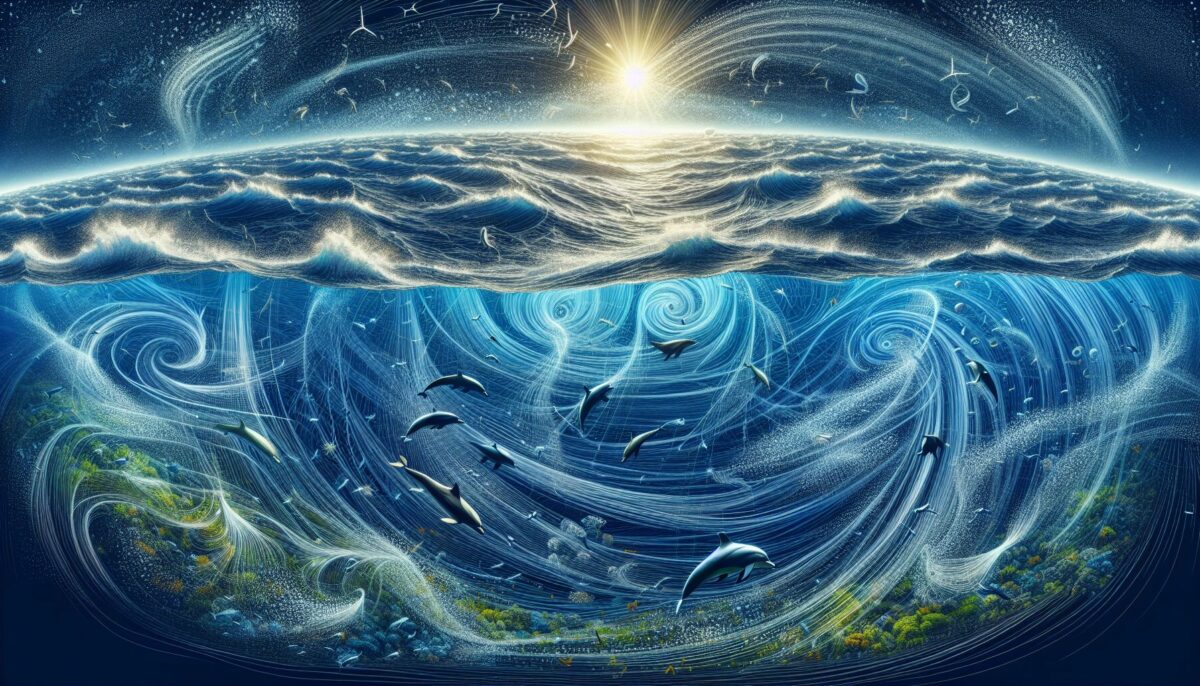
When you think of the ocean, what immediately comes to mind? The vast expanse of blue stretching to the horizon, the calm or rough waves that break upon the shore, or perhaps the abundant and diverse forms of marine life that dwell beneath the surface? While all these features are integral to our conception of the ocean, there is an underlying dynamism that is often overlooked: ocean currents.
Ocean currents are continuous, directed movements of seawater that flow in the Earth’s oceans. These currents are generated by various factors, including wind, water density differences, and the Coriolis effect resulting from the Earth’s rotation. They play a crucial role in regulating the Earth’s climate, distributing heat across the planet, and influencing weather patterns. Moreover, currents are vital for marine life, providing essential nutrients and facilitating the migration and habitats of various species.
Understanding Ocean Currents
To appreciate the role that currents play in our global ecosystem, it’s essential to understand their mechanisms and classifications. There are two main types of currents: surface currents and deep-water currents. Surface currents make up about 10% of all the water in the ocean and are primarily driven by the wind. Deep-water currents, or thermohaline circulation, are more about variations in water density caused by different temperatures and salinity levels.
Surface Currents
Surface currents are generally found in the upper 400 meters of the ocean. The most well-known system of surface currents is called the “global conveyor belt,” which includes the Gulf Stream in the North Atlantic, a powerful current responsible for warming the climate of Northern Europe. Another important surface current is the North Pacific Gyre, which dominates the Pacific Ocean and is, unfortunately, also responsible for the accumulation of plastics in what is known as the Great Pacific Garbage Patch.
Deep-Water Currents
Deep-water currents move around the ocean basins due to differences in the water density, which is affected by the temperature (thermo) and salinity (haline). This process, also known as thermohilane circulation, is responsible for the large-scale circulation of the ocean and contributes significantly to the mixing of deep and surface waters.
The Impact on Climate
One of the most critical roles of ocean currents is their impact on climate. The global distribution of heat that currents facilitate is essential in maintaining a climate balance. For example, warm water from the equator is transported towards the poles, while cold, nutrient-rich water is carried towards the equator. This helps regulate and stabilize temperatures globally, preventing extreme conditions in certain areas.
Marine Life and Ecosystems
Ocean currents also play a vital role in supporting rich marine ecosystems. These moving waters transport nutrients that are essential for the growth of phytoplankton, which form the base of the marine food web. In turn, these microorganisms support a diverse array of sea life, from small fish to large marine mammals.
Navigation and Maritime Trade
Historically, ocean currents have played a significant role in navigation and maritime trade. Mariners have long utilized currents to assist in their journeys. The knowledge of currents allows ships to sail more efficiently, reducing fuel consumption and travel time.
The Threats to Ocean Currents
Despite their significance, ocean currents face several threats from human activities and climate change. The alteration of Earth’s climate by the emission of greenhouse gases can impact the temperature and salinity of the ocean waters, potentially disrupting the delicate balance of the currents.
Another threat is plastic pollution in our oceans, which can affect both surface and deep-water currents. The accumulation of plastics can not only disrupt the flow of currents but also poses a severe risk to marine life and ecosystems.
Climate Change
The most profound long-term threat to ocean currents comes from climate change. As global temperatures rise, the increase in surface water temperatures can slow down or even alter the pattern of currents, affecting everything from weather systems to marine ecosystems. For example, scientists are monitoring the Atlantic Meridional Overturning Circulation (AMOC), a key component of Earth’s climate system, for signs of weakening due to climate change.
Pollution
Ocean currents can carry pollutants, such as plastics, chemicals, and other debris over large distances. The impact of this pollution can be devastating to marine life and habitats. Plastic debris can entangle marine animals or be ingested, while chemical pollutants can poison marine organisms and disrupt the food chain.
Preserving Ocean Currents
To ensure the continued flow and health of ocean currents, comprehensive efforts must be made globally. Reductions in greenhouse gas emissions to mitigate climate change is one of the most crucial steps. Additionally, improving waste management and reducing plastic use can lessen the burden of pollution in our oceans.
International Agreements and Marine Protected Areas
International agreements like the Paris Agreement aim to tackle global warming, consequently preserving ocean currents. Marine protected areas (MPAs) and other conservation efforts help safeguard marine ecosystems, maintaining the health of ocean currents and the creatures that depend on them.
Research and Monitoring
Ongoing research and monitoring are also vital to understand the changes occurring in ocean currents better. Organizations such as the Intergovernmental Oceanographic Commission (IOC) of UNESCO and the National Oceanic and Atmospheric Administration (NOAA) are actively involved in studying ocean currents, predicting changes, and proposing solutions.
Sustainable Practices
Sustainable practices in fisheries and reduction of chemical pollutants can also diminish the adverse effects on ocean currents. Supporting sustainable seafood and reducing chemical runoff from agriculture and industries can significantly impact the health of ocean currents.
Conclusion
Ocean currents are the arteries of our planet, circulating life-sustaining nutrients and regulating climate. As intangible as they may seem, they profoundly affect our environment, economies, and the biodiversity of the marine world. The threats that these currents face due to human actions are a call to action for individuals, industries, and governments worldwide to engage in more sustainable practices.
In conclusion, it’s imperative that we continue to deepen our understanding of ocean currents and engage in concerted efforts to preserve them. For this, education on the importance of currents, alongside investment in research and responsible policies, are vital. We must remember that the currents that move beneath the surface are not just part of the ocean; they’re an essential component of the global system that supports all life on our planet.
Sources
- National Oceanic and Atmospheric Administration (NOAA): https://www.noaa.gov/
- World Wildlife Fund (WWF): Ocean Currents and Climate: https://www.worldwildlife.org/
- Intergovernmental Oceanographic Commission (IOC) of UNESCO: https://ioc.unesco.org/
By understanding and safeguarding our ocean currents, we ensure the preservation of the magnificent entity that is our Earth’s ocean, along with all the life it sustains and the human lives it profoundly affects.
