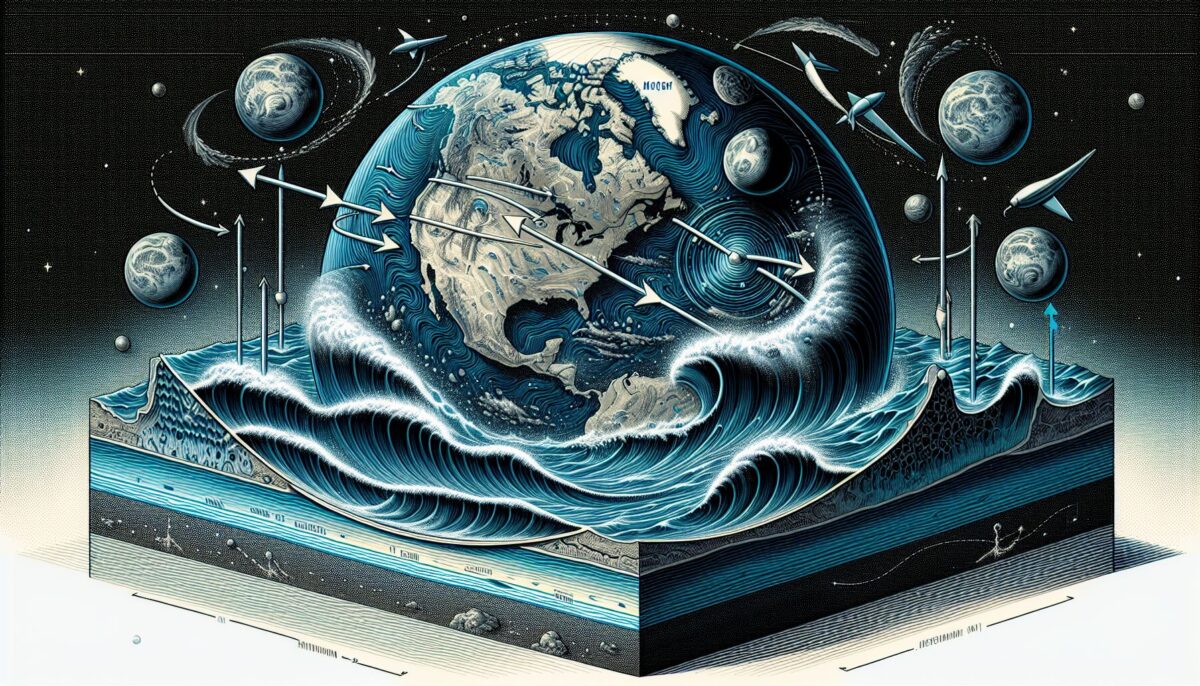
The ocean is a vast and mystical place, filled with wonders and phenomena that have fascinated humanity for millennia. Among these phenomena, perhaps none is more regular and more intriguing than tides. Tides are the rise and fall of sea levels caused by the combined effects of the gravitational forces exerted by the Moon and the Sun and the rotation of Earth. In this expansive exploration into the world of tides, we will delve into what causes tides, their types, their effects on human life and activities, and the future challenges they present.
What Are Tides and What Causes Them?
To truly understand tides, we must start at the celestial dance between Earth and the Moon. Tides are a direct result of the gravitational pull that the Moon and the Sun have on Earth’s surface waters.
Gravitational Pull and Tidal Forces
Every object with mass in the universe exerts a gravitational pull on other objects. This fact is at the heart of tidal movements. The gravitational pull of the Moon is stronger on the side of Earth nearest to the Moon and weaker on the opposite side. This differential creates two bulges of water: one on the side facing the Moon and the other on the opposite side. These bulges are what we perceive as the high tides.
Earth’s Rotation and Tidal Cycles
The Earth rotates on its axis, causing the high and low tide bulges to move around the planet. A point on Earth’s surface will pass through both of these bulges each day, resulting in two high tides and two low tides roughly every 24 hours – this is the semidiurnal tide cycle experienced in most locations around the world.
The Sun’s Role in Tides
The Sun, despite being much further away than the Moon, also has a significant impact on tides. When the Earth, Moon, and Sun align (during full or new moons), the gravitational forces combine to produce higher than normal tides, called spring tides. Conversely, when the Sun and Moon are at right angles to each other (during the quarter moon phases), we experience neap tides, which are lower.
Types of Tides
Diurnal Tides
In some areas of the world, like the Gulf of Mexico, we see diurnal tides, which is one high and one low tide each day.
Semidiurnal Tides
This pattern includes two high tides and two low tides each day, and it is commonly observed along the East Coast of the United States.
Mixed Semidiurnal Tides
Areas like the West Coast of the United States experience mixed semidiurnal tides, where the difference in height between successive high and low tides varies.
How Tides Affect Our World
Tides impact the world in many profound ways, influencing navigation, marine life, and even renewable energy prospects.
Navigation and Shipping
The rise and fall of tides are crucial for maritime navigation. “Pilots must understand the timing and extent of tides to avoid running aground or becoming stranded in low tide,” says the National Ocean Service.
Marine Life
Tides play an essential role in the health of marine ecosystems by providing nutrient-rich waters that promote plankton growth, which in turn supports the entire marine food web.
Renewable Energy: The Promise of Tidal Power
Tidal energy represents a potential source of renewable energy. Areas with strong tidal movements, such as the Bay of Fundy in Canada, can harness the kinetic energy to generate electricity.
The Challenges of Tides
Tides can present challenges, especially in the context of a changing climate.
Coastal Erosion
Tides contribute to coastal erosion, an issue exacerbated by rising sea levels due to climate change. As the tides encroach further inland, they can cause significant damage to ecosystems and infrastructure.
Storm Surges and Flooding
During storms, tides can push massive amounts of water onshore, leading to storm surges and severe flooding. This risk is increasing as climate change results in more intense and frequent storms.
The Future of Tides and Human Interaction
Sea Level Rise and Tidal Changes
As our planet warms, sea levels rise, which could alter tidal patterns and the extent of tides’ reach. This would have profound implications for coastal communities, ecosystems, and maritime activities.
Tidal Energy: A Sustainable Future?
Despite its potential, tidal energy is not yet widely used. Technological and environmental challenges need to be overcome to harness this power source effectively.
Stewardship and Management
Coastal management will become increasingly critical as we adapt to changing tidal behaviors. Effective stewardship of our coastlines will help mitigate the impact of tides on human life and biodiversity.
Conclusion
Tides are a natural phenomenon that affect every aspect of coastal and marine life. By understanding tides, their causes, and their effects, we can work towards a future where we live in harmony with these rhythmic seas. As we face the challenges presented by climate change and sea-level rise, it is crucial that we continue to study and respect the power of tides.
Sources
- National Ocean Service. “Tides and Water Levels.” https://oceanservice.noaa.gov/education/tutorial_tides/welcome.html
- United States Geological Survey. “Coastal Erosion.” https://www.usgs.gov/special-topics/water-science-school/science/coastal-erosion
- Marine Renewable Energy Guides. “Wave and Tidal Energy.” https://www.marinerenewables.com/tidal-energy-guide/
This exploration into the world of tides is a starting point for anyone interested in the dynamics of our oceans and coasts. With greater knowledge comes a deeper appreciation and a stronger impetus for conservation and sustainable interaction with these incredible natural cycles.
