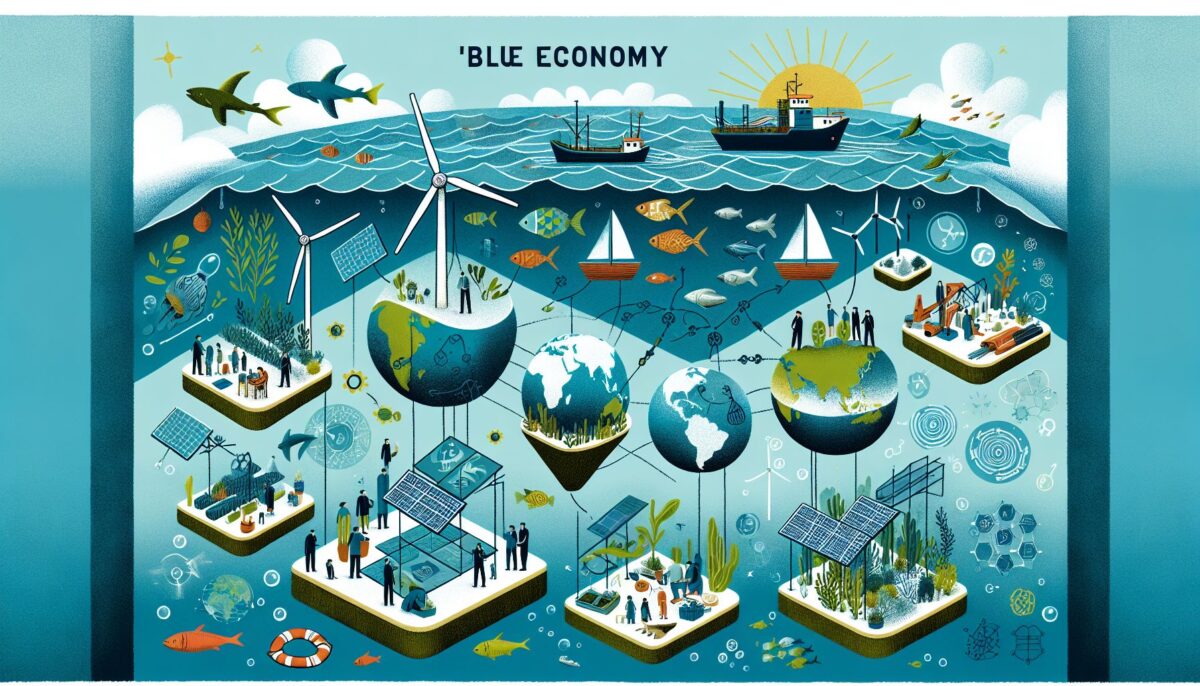
The blue economy represents the sustainable use of ocean resources for economic growth, improved livelihoods and jobs, and ocean ecosystem health. It encompasses various sectors, including but not limited to, coastal and marine extraction activities, fisheries, aquaculture, tourism, energy, bioprospecting, and marine transport. Despite facing critical challenges such as climate change impacts and marine pollution, the blue economy can be harnessed for unprecedented opportunities that contribute to the overall monetary and social prosperity without compromising the long-term health of our ocean ecosystems. This article delves into the concept of the blue economy, its significance, challenges faced, and the integrative approach needed for its development.
Understanding the Blue Economy
What is the Blue Economy?
The term “blue economy” emphasizes the vast and diverse economic opportunities presented by the ocean and the coastal zones. Specifically, it encourages better stewardship of our ocean or “blue” resources. While traditional maritime industry sectors are essential to the blue economy, emerging industries such as marine biotechnology, ocean energy, and seafloor mining play an increasingly significant role (United Nations World Ocean Assessment). When managed sustainably, activities under the blue economy can promote the well-being of our environment and offer a potent source of renewable energy, food, and jobs.
Importance of the Blue Economy
The blue economy is critical to global economic development. Over three billion people rely on the ocean for their livelihood, with many economies dependent on their coastal and marine resources. Sectors like fisheries and aquaculture feed millions and provide income to coastal communities. Additionally, the transportation of more than 80% of the world’s goods by volume is done by sea, showcasing the paramount importance of maritime trade. Protecting these resources and ensuring their sustainable management is not only crucial for environmental reasons but also for global socio-economic stability.
Sectors Involved in the Blue Economy
Fisheries and Aquaculture
Fisheries and aquaculture constitute a major part of the blue economy. They are a source of food, nutrition, income, and livelihoods for hundreds of millions of people around the globe (FAO – Fisheries and Aquaculture Department).
Marine Renewable Energy
The untapped potential of tidal and wave energy presents a promising sustainable energy source, reducing reliance on fossil fuels and contributing to global energy security.
Marine Biotechnology
Exploitation of marine bio-resources for pharmaceuticals, cosmetics, and nutraceuticals also falls under the blue economy. These can offer new medical solutions and prompt innovation.
Shipping and Port Facilities
Shipping remains the most effective way to transport goods globally. Modern, efficient port facilities that comply with environmental standards are a critical component of a sustainable blue economy.
Tourism
Coastal and marine tourism, when managed sustainably, can have significant positive economic and social effects on local and national economies.
Challenges Facing the Blue Economy
Despite the potential, the blue economy confronts numerous challenges.
Climate Change
Climate change brings about sea level rise, ocean acidification, coral bleaching, and extreme weather events, all of which can severely impact marine and coastal ecosystems that underpin the blue economy.
Marine Pollution
Marine pollution, including oil spills, marine debris (notably plastics), and nutrients causing algal blooms, greatly affects biodiversity and the productivity of the oceans.
Unsustainable Fishing Practices
Overfishing and destructive fishing practices damage the marine environment and reduce fish stocks to unsustainable levels, threatening food security and livelihoods.
Habitat Destruction
Coastal development, pollution, and certain fishing techniques can lead to the loss of critical habitats such as mangroves, wetlands, reefs, and seagrass beds.
Equity, Governance, and Capacity Issues
Ensuring equitable sharing of blue economy benefits, especially for small island developing states and least developed countries, poses challenges. There is also a need for improved governance and capacity in many sectors of the blue economy.
An Integrative Approach to Blue Economy Development
For the blue economy to be sustainable, an integrated approach that crosses disciplinary and geographic boundaries is necessary. This approach should focus on:
Marine Spatial Planning
Creating spatial plans for marine areas helps balance the demands for different uses while preserving critical ecosystems.
Sustainable Fisheries Management
Implementing quota systems, enforcing legal frameworks, and engaging local communities in the management of fisheries can help ensure sustainable stocks.
Cleaner Maritime Technologies
Reducing pollution from shipping by embracing cleaner technologies and alternative fuels is essential for decreasing the environmental impact of this vital sector.
Marine Protected Areas
Establishing and properly managing marine protected areas can conserve biodiversity, enhance fisheries, and safeguard important ecosystem services.
Monitoring and Research
Investing in oceanographic research, monitoring, and observation systems is crucial for better understanding the state of marine environments and the efficacy of policies.
Education and Capacity Building
Upskilling and educating stakeholders about the blue economy and its opportunities is key to fostering innovation and sustainability.
Innovation and Investment in Emerging Sectors
As new technologies emerge, investments and innovation in sectors like deep-sea mining, ocean energy, and marine biotechnology need to be encouraged in a way that respects ocean health.
Inclusive Governance and Policy Coordination
Strong governance structures that promote transparent and inclusive decision-making, and international policy coordination are vital to the success of the blue economy.
Concluding Thoughts
The blue economy has the potential to be a major source of wealth and prosperity for the world while fostering the health of our ocean ecosystems. It presents a holistic way of thinking about the ocean’s role in our lives, emphasizing conservation, sustainable use, and equitable benefits. Through dedicated efforts across sectors and geographies, we can harness the potential of the blue economy to deliver long-term economic benefits and ensure the health and productivity of our oceans for future generations.
Sources:
- United Nations World Ocean Assessment: https://www.un.org/regularprocess/woa1
- FAO – Fisheries and Aquaculture Department: http://www.fao.org/fishery/en
- World Bank – Overview of the Blue Economy: https://www.worldbank.org/en/news/infographic/2017/06/06/blue-economy
