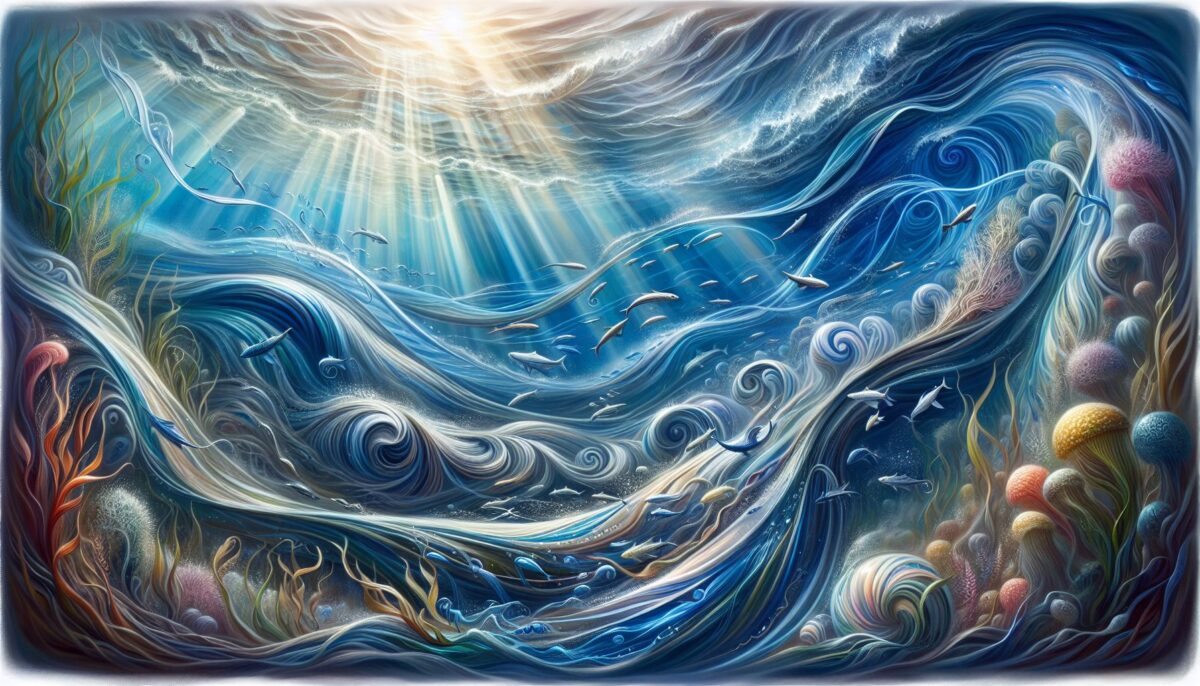
The oceans of our planet are vast, covering over 70% of the Earth’s surface, shaping climates, connecting countries, and enriching life both in and out of the water. Hidden beneath their surfaces lies a complex network that powers the Earth’s ecosystems and impacts our daily activities: ocean currents. These unseen highways of the sea are crucial to global navigation, marine biodiversity, climate regulation, fisheries, and even the weather systems that bring rain to farmlands or clear skies to our vacation spots.
In this deep dive, we’ll explore what ocean currents are, how they function, and why they are so vital to life on Earth, both in the sea and on land. We’ll also glance at the challenges they face in a changing climate and what that could mean for the future of our blue planet.
Understanding Ocean Currents
Ocean currents are large-scale flows of water that move through the world’s seas and oceans. They are typically driven by several factors, including wind, the Earth’s rotation, differences in water temperature and salinity, and the shape of the ocean basins.
Wind-Driven Circulation
The most familiar currents are those driven by the wind. Prevailing winds, such as the trade winds and the westerlies, create surface currents as they blow over the ocean’s surface. These surface currents can be warm or cold, depending on their origin. For instance, the Gulf Stream is a warm current carrying water from the Gulf of Mexico up the eastern coast of the United States and across the Atlantic towards Europe.
Thermohaline Circulation: The Global Conveyor Belt
However, not all currents are confined to the surface. Deep beneath the waves, the thermohaline circulation, often referred to as the “global conveyor belt,” is at work. This network of deep-water currents is driven by differences in water density, which is affected by temperature (thermo) and salinity (haline). Cold, salty water is dense and sinks to the ocean floor, creating a flow that connects the world’s oceans in a slow-moving circulation that can take a thousand years to complete a single cycle.
The Coriolis Effect
The Earth’s rotation also plays a role in the movement of ocean currents through the Coriolis effect. This force causes moving objects, including air and water, to be deflected to the right in the Northern Hemisphere and to the left in the Southern Hemisphere. This deflection influences the direction of ocean currents and helps shape their circular patterns, creating gyres that dominate our ocean basins.
The Role of Ocean Currents in Marine Life and Ecosystems
Ocean currents are the lifeblood of the ocean, bringing nutrients, distributing heat, and transporting organisms across vast distances.
Nutrient Distribution
Currents like upwellings, where deep, nutrient-rich waters are brought to the surface, are particularly important for marine ecosystems. These nutrients support the growth of phytoplankton, which form the base of the marine food web. Without currents to distribute these vital nutrients, primary productivity would plummet, and marine life would suffer.
Heat Distribution and Climate
Currents also play a critical role in regulating climate by distributing heat around the globe. Warm currents, for example, can raise temperatures in regions that would otherwise be much cooler, while cold currents can have a cooling effect. This heat exchange helps to moderate the Earth’s climate, making it more hospitable for life.
Marine Biodiversity
Ocean currents also contribute to the biodiversity of the marine environment. They shape marine habitats and influence the distribution of organisms, from the smallest plankton to the largest of the whales. By moving larvae and juvenile stages of various species, currents help maintain genetic diversity and support the resilience of marine ecosystems.
Navigating Ocean Currents: Human Endeavors and Challenges
For centuries, ocean currents have been highways for exploration, trade, and military endeavors. Mariners learned to use these invisible pathways for more efficient and predictable voyages. Even today, global shipping relies on an understanding of currents to save fuel and time.
Fishing and Fisheries
Fisheries are another human enterprise deeply entwined with ocean currents. The movement of currents aligns with the migratory patterns of many fish species. As such, knowing the intricate dance of these underwater rivers is essential for sustainable fishing practices.
The Blue Economy
The concept of the blue economy has emerged in recent years, focusing on the sustainable use of ocean resources for economic growth, improved livelihoods, and jobs while preserving the health of ocean ecosystems. It includes activities such as fisheries, maritime trade, and renewable energy—particularly the emerging technologies of wave and tidal energy which directly harness the power of currents and tides.
Confronting the Challenges: Climate Change and Ocean Currents
Ocean currents are not immune to the effects of climate change. The melting of polar ice, changes in salinity, and alterations in wind patterns due to global warming all have the potential to disrupt ocean currents. The consequences could be far-reaching, affecting weather patterns, sea level rise, and marine ecosystems worldwide.
The Threat to Thermohaline Circulation
One of the most significant concerns is the potential slowing or even shutdown of the thermohaline circulation. If this were to happen, the results could be catastrophic: Western Europe might experience a significant drop in temperature, while regions in the Southern Hemisphere could become much warmer.
Ocean Acidification and Biodiversity Loss
Moreover, higher CO2 levels lead to ocean acidification, which threatens marine life, especially organisms with calcareous shells or skeletons, such as mollusks and corals. The loss of these species would have a domino effect on the entire oceanic food chain.
Preserving Ocean Health: Marine Protected Areas and Conservation Efforts
Despite the challenges, there are efforts in place to protect and conserve our oceans. Marine protected areas (MPAs) are established to safeguard critical habitats and biodiversity. These MPAs, if properly designed and managed, can provide refuges for species and ecosystems, helping them to recover and thrive.
International Cooperation for Sustainable Seas
Achieving a healthy balance between human activities and ocean health calls for international cooperation. Treaties and agreements such as the United Nations Convention on the Law of the Sea (UNCLOS) seek to guide responsible behavior in the marine environment.
Monitoring and Research
Scientific research is also key to understanding and managing ocean currents and their myriad influences. Institutes and initiatives like the Scripps Institution of Oceanography, NOAA, and the Intergovernmental Oceanographic Commission of UNESCO work to monitor and study the oceans, providing vital data for policymakers and stakeholders.
Conclusion
Ocean currents are the dynamic forces shaping our planet’s oceans and influencing life on Earth in countless ways. From driving global climate patterns to nurturing rich marine ecosystems, these currents are a testament to the complexity and interconnectedness of our natural world.
As we face the challenges posed by climate change, protecting and understanding these vital marine highways becomes more crucial than ever. Through concerted efforts in conservation, sustainable management of ocean resources, and international collaboration, we can ensure that the currents continue their ancient dance, supporting life both above and below the sea surface.
Sources
- National Oceanic and Atmospheric Administration (NOAA) – [noaa.gov](https://www
