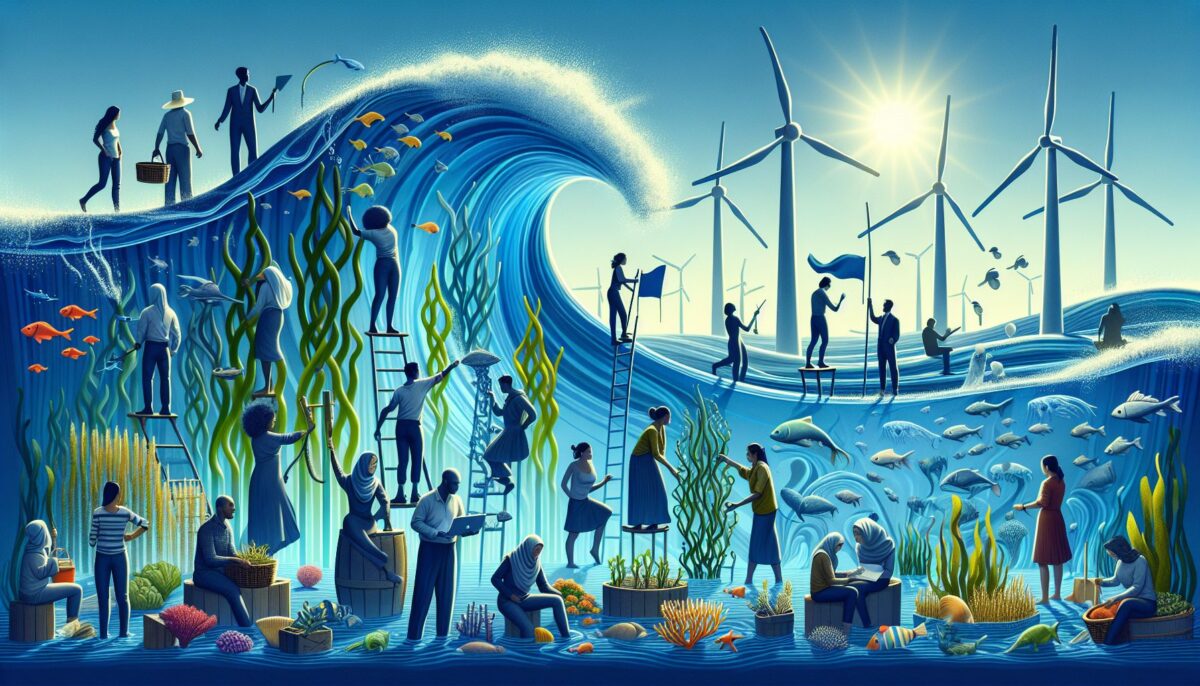
The ocean is the cradle of life on Earth, a vast expanse that has long captured the human imagination with its mysteries and resources. Covering more than 70% of the planet’s surface, the ocean plays a critical role in climate regulation, provides essential ecosystem services, and supports a diverse array of marine life. However, its value extends far beyond ecological contributions. As the world deals with the increasing challenges of climate change, resource depletion, and economic inequality, the concept of the “Blue Economy” has emerged as a sustainable model for exploiting, managing, and nurturing ocean resources. In this comprehensive guide, we delve into the multifaceted blue economy, exploring how it operates, its benefits, the challenges it faces, and its prospects for the future.
What is the Blue Economy?
The term “Blue Economy” refers to the sustainable use of oceanic resources for economic growth, improved livelihoods, and jobs, while preserving the health of the ocean ecosystem. It encompasses a wide range of economic sectors and related policies that together can promote oceanic health and yield financial benefits. The concept is rooted in the principles of circular economy, sustainability, and social inclusivity, ensuring that the ocean’s riches are harnessed in a way that does not compromise the needs of future generations.
Key Sectors of the Blue Economy
-
Sustainable Fisheries and Aquaculture: The sustainable harvesting of fish and seafood to ensure food security and livelihoods without depleting marine populations.
-
Maritime Trade and Shipping: Efficient and environmentally friendly global trade routes and shipping practices.
-
Renewable Energy: Harnessing wind, wave, and tidal energy to provide clean, sustainable power.
-
Coastal Tourism: Eco-friendly tourism that helps conserve and sustainably use oceanic and coastal ecosystems.
-
Marine Biotechnology: Novel uses of marine resources for pharmaceuticals, cosmetics, and other bio-products.
-
Ocean Mining and Extraction: The responsible extraction of minerals and genetic resources, taking care to prevent environmental damage.
The Benefits of the Blue Economy
1. Economic Growth: The ocean economy is vast and significantly underexploited. If harnessed sustainably, it has the potential to stimulate jobs and economic growth, particularly in small island developing states and coastal countries.
2. Food Security: Through sustainable fishing practices and aquaculture, the oceans can continuously provide a significant source of protein and nutrients for billions worldwide.
3. Energy Security: With the decreasing cost of offshore renewable technologies, ocean energy can offer a stable and abundant source of clean energy.
4. Environmental Conservation: A well-managed blue economy promotes the conservation of marine environments and can help tackle global issues such as climate change and biodiversity loss.
Global Examples and Success Stories
Case Study: Green Shipping in Norway
Norway has committed to electrifying its fleet and developing green fuels for maritime transport, reducing greenhouse gas emissions, and setting a global example for sustainable shipping.
Case Study: Offshore Wind in the United Kingdom
The UK is a leader in offshore wind energy, with numerous wind farms around its coasts. This move toward renewable energy has helped reduce the country’s carbon footprint and created thousands of jobs.
Case Study: Marine Protected Areas in Palau
Palau has established one of the world’s largest marine protected areas, effectively balancing marine biodiversity conservation with eco-friendly tourism and fisheries management.
Challenges Facing the Blue Economy
Despite the promising opportunities, the blue economy faces several challenges:
-
Overfishing: Reconciling the need for food and the sustainability of marine life populations is an ongoing challenge.
-
Pollution: Marine plastics, oil spills, and land-based pollution threaten ocean ecosystems and related economies.
-
Climate Change: Rising sea levels, ocean acidification, and coral bleaching are altering marine environments, impacting biodiversity, and livelihoods.
-
Social Equity: Ensuring that blue economy benefits are broadly distributed and support coastal communities is a key challenge.
Navigating the Future
To fully realize the benefits of the blue economy, the global community must embrace a collaborative and integrated approach to ocean management. This means:
-
International Cooperation: Sharing best practices, technology transfer, and creating common frameworks for sustainability.
-
Strong Governance: Robust legal and policy frameworks that support sustainable development and protect ocean resources.
-
Innovation: Continued research and development in marine technology, biotechnology, and renewable energy.
-
Stakeholder Engagement: Involving local communities, indigenous peoples, enterprises, and civil society in decision-making processes.
Conclusion
The blue economy holds the promise of a sustainable future where economic development is harmoniously balanced with the health of our oceans. Through collective effort, innovation, and sound governance, it is possible to harness the full potential of the ocean without sacrificing the environment. Our very survival may depend not just on how we treat the land beneath our feet, but also on how we steward the vast blue frontier that lies beyond the shore.
Sources
- “The Blue Economy: Growth, Opportunity and a Sustainable Ocean Economy.” The World Bank, https://www.worldbank.org/en/news/infographic/2017/06/06/blue-economy
- “Sustainable Development Goals.” United Nations, https://www.un.org/sustainabledevelopment/
- “The Potentials and Risks of the Blue Economy.” United Nations Conference on Trade and Development (UNCTAD), https://unctad.org/webflyer/potentials-and-risks-blue-economy
