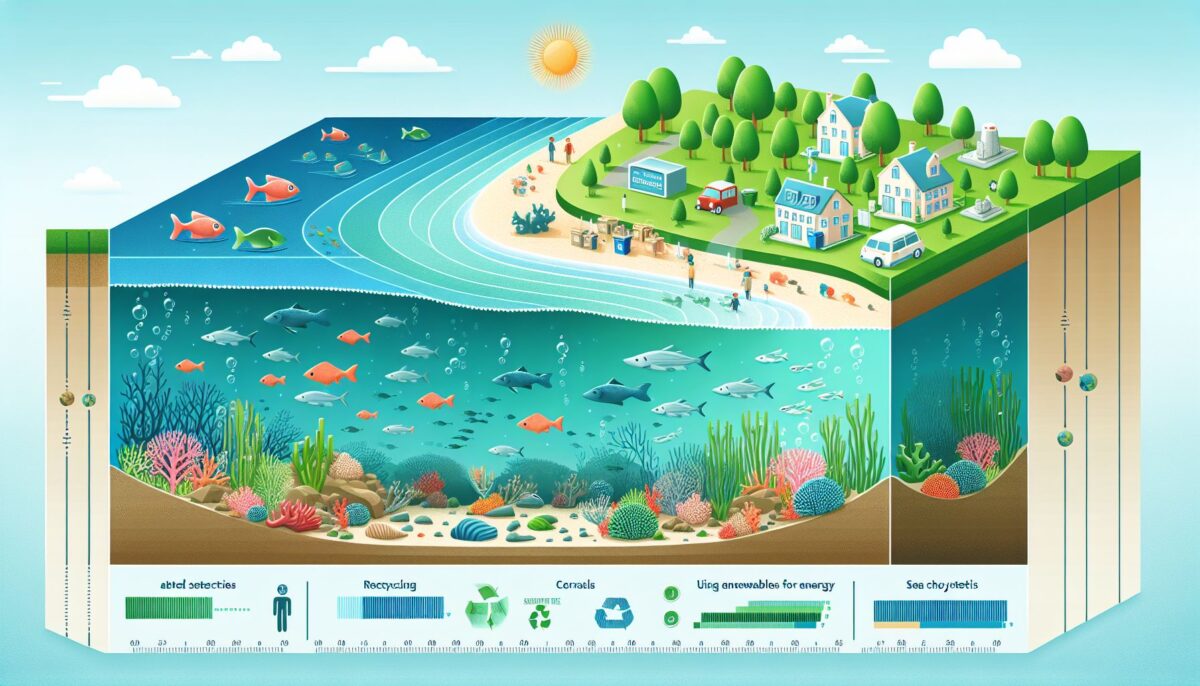
The oceans, which cover more than 70% of the Earth’s surface, are a fundamental part of our planet’s ecosystem and human existence. They regulate climate, provide food, and offer a host of recreational opportunities, along with sustaining marine biodiversity. However, it’s not just the natural benefits of the oceans that are vital; the concept of the “Blue Economy” is now becoming increasingly prominent as a way of understanding and harnessing the potential of our oceans and coasts for sustainable economic development. In this article, we will explore what the Blue Economy entails, its significance, and the challenges it faces.
What is the Blue Economy?
The Blue Economy refers to the sustainable use of ocean resources for economic growth, improved livelihoods, and jobs while preserving the health of ocean ecosystems. It includes a wide range of economic sectors and related policies that together can drive a more resource-efficient, sustainable, and equitable world.
Economic Sectors in the Blue Economy
The Blue Economy encompasses various sectors such as:
-
Sustainable fisheries and aquaculture: Balancing the demand for seafood with practices that can maintain fish stocks and marine ecosystems.
-
Marine renewable energy: Harnessing wind, wave, and tidal energy to produce clean power.
-
Shipping and ports: Managing transportation and logistics to minimize environmental impacts and improve efficiency.
-
Coastal tourism: Promoting eco-friendly tours and activities that boost local economies without harming the environment.
-
Desalination: Finding energy-efficient methods to convert saltwater into fresh water.
-
Biotechnology: Exploring the myriad marine organisms for new medicines, biofuels, and other products.
-
Ocean mining and drilling: Extracting mineral and energy resources with due consideration to environmental implications.
-
Maritime trade: Conducting business over waterways in a manner that reduces carbon footprints and supports global economies.
The Importance of the Blue Economy
Supporting Livelihoods
According to the World Bank, the Blue Economy has the potential to be a major source of wealth and prosperity for many countries. It supports millions of jobs in fishing, shipping, and tourism. For example, the fishing industry alone provides a primary livelihood for about 60 million people globally.[^1]
Economic Growth
Oceans contribute significantly to the global economy, with an estimated gross marine product of USD $1.5 trillion per year. Harnessing ocean resources holds the potential for further economic expansion, particularly for coastal and island countries.[^2]
Environmental Sustainability
The Blue Economy promotes the sustainable use of ocean resources while preserving marine ecosystems that are vital for combating climate change, such as mangroves and coral reefs.
Innovation and Technology
It fosters innovation by encouraging sectors like marine biotechnology and renewable energy, which can lead to new economic opportunities and a more diversified economy.
Challenges Facing the Blue Economy
As much as the Blue Economy offers opportunities, there are significant challenges that need to be addressed to ensure its sustainability.
Overexploitation of Resources
The risk of overfishing, habitat destruction, and depletion of marine species is a serious concern that threatens the long-term viability of ocean resources.
Pollution and Marine Debris
The oceans are under constant threat from pollutants such as plastic waste, oil spills, and agricultural runoff, which severely impact marine life and ecosystems.
Climate Change
Rising sea levels, ocean acidification, and coral bleaching are just a few of the impacts of climate change that not only pose a threat to marine biodiversity but also to the economic activities that depend on healthy oceans.
Governance and Legal Frameworks
Many aspects of ocean governance are fragmented or lack enforcement, making it difficult to manage the Blue Economy in an integrated and sustainable way.
Way Forward: Promoting a Sustainable Blue Economy
Strengthening Ocean Governance
It’s imperative that institutions and legal frameworks be strengthened to facilitate coordinated management of ocean resources. Policies need to evolve to address cross-sectoral linkages and support sustainable practices.
Investing in Marine Science and Research
Increasing investments in marine science can lead to better understanding of marine ecosystems, thus contributing to more informed decision-making and sustainable management.
Innovation and Tech Advancements
Technological progress, such as improvements in fishing gear design, cleaner shipping technologies, and advancements in marine renewable energy, can mitigate environmental impacts and boost economic returns.
Community Engagement and Education
Local communities must be involved in the management of coastal resources, and education plays a key role in raising awareness of the importance of sustainable ocean use.
Creating Marine Protected Areas
Establishing protected areas helps conserve marine biodiversity, allowing ecosystems to function optimally and providing benefits that ripple out to adjacent areas.
Addressing Climate Change
Taking ambitious global action to reduce greenhouse gas emissions is crucial to protect the world’s oceans from the worst effects of climate change.
Conclusion
The Blue Economy presents a holistic approach to understand and manage the diversity of ocean resources. It’s a promising concept but requires a concerted effort by governments, businesses, communities, and individuals. By navigating the challenges and optimizing the opportunities, the Blue Economy has the potential to provide a sustainable future for our planet — where economic growth and the health of ocean ecosystems can coexist and flourish.
The sustainable development of the Blue Economy is not optional; it’s an imperative for the continued well-being of our planet and future generations.
[^1]: World Bank. (2017). The Sunken Billions Revisited: Progress and Challenges in Global Marine Fisheries. https://www.worldbank.org/
[^2]: OECD. (2016). The Ocean Economy in 2030. https://www.oecd.org/
