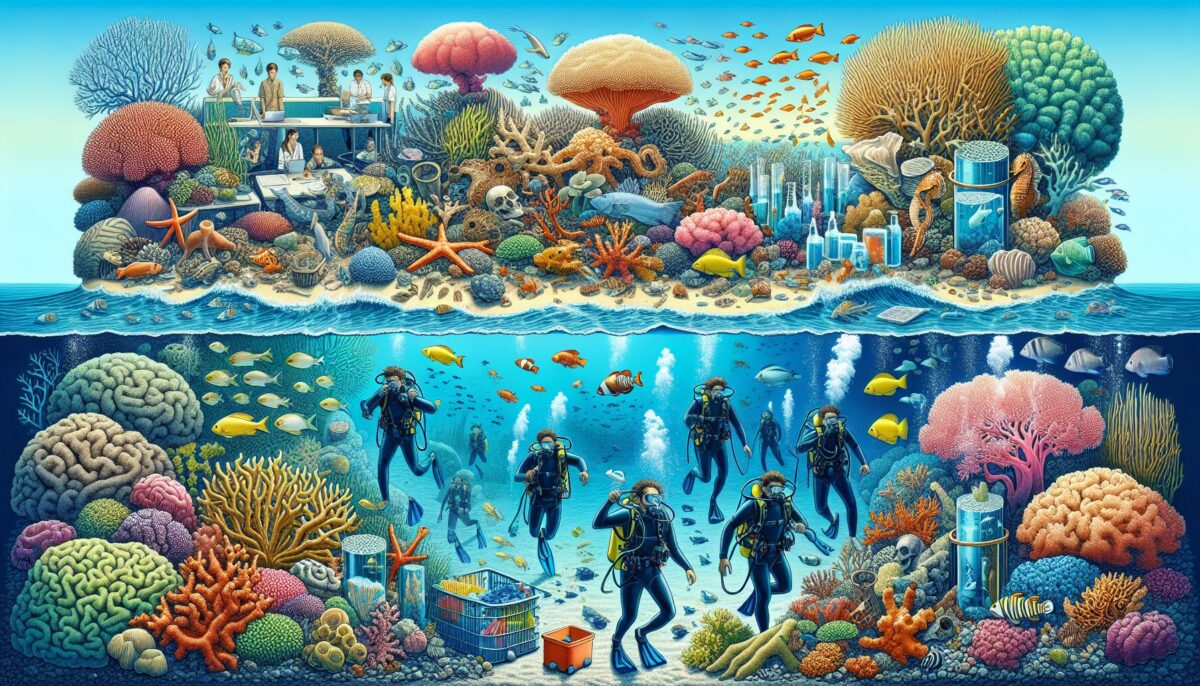
The ocean, a vast and seemingly boundless space, encompasses more than 70% of Earth’s surface. Within this expanse lies a universe that is both alien and familiar, mysterious yet critically influential on human existence. Among its many marvels, coral ecosystems stand out as one of the most complex, diverse, and ecologically significant components. This article delves into the magical world of coral reefs, their importance to marine biodiversity and human society, the threats they face, and ongoing conservation efforts.
Understanding Coral Ecosystems
Coral ecosystems, commonly known as coral reefs, are underwater structures made from calcium carbonate secreted by corals. Corals are marine invertebrates within the class Anthozoa of the phylum Cnidaria. They typically live in compact colonies of many identical individual polyps.
Biological Composition and Formation
Coral reefs are not just mere rocks; they are bustling neighborhoods teeming with life. The fundamental building blocks of these ecosystems are the coral polyps, which form a symbiotic relationship with a type of microscopic algae called zooxanthellae. This symbiosis is the engine that drives the growth and productivity of coral reefs.
The zooxanthellae live within the coral tissues, providing the corals with essential nutrients via photosynthesis in exchange for a protected environment and compounds they need to survive. This relationship not only fuels the growth of the corals but also contributes to the vibrant colors that are characteristic of many coral species.
Different Types of Coral Reefs
The variety in coral reefs is astounding. The major types include:
- Fringing reefs: These are directly attached to the shoreline of an island or continent.
- Barrier reefs: These run parallel to the coast but are separated from the shore by deeper, wider lagoons.
- Atolls: These are ring-shaped coral reefs that form when an island surrounded by a fringing reef subsides, leaving a lagoon surrounded by the reef.
- Patch reefs: These are smaller, isolated reefs that often grow up within the lagoon of an atoll or barrier reef.
Why Coral Reefs Are Important
Support for Marine Biodiversity
Coral reefs are often dubbed “rainforests of the sea” due to their impressive biodiversity. They are home to more than a quarter of all marine fish species, making them vital habitats for spawning, breeding, and feeding. The complexity of these ecosystems provides numerous niches for different species, fostering an incredible variety of fish, invertebrates, mammals, and seaweed.
Economic Value
Reefs provide numerous economic benefits to humans. They are crucial for:
- Fisheries: Many commercially important fish species depend on coral reefs at some point in their life cycle.
- Tourism: Reefs are a magnet for snorkelers and divers, contributing significantly to the tourism industries of many tropical countries.
- Coastal protection: The physical structure of reefs provides protection to shorelines by absorbing wave energy, thus reducing the erosion and damage from storms.
- Medicine: Many species found on reefs produce chemical compounds that have potential for new medicines.
Cultural Significance
Many indigenous cultures have deep connections with coral reefs, which are embedded in their history, traditions, and livelihoods. These ecosystems are not only sources of food but also constitute sacred places and play roles in local folklore and customs.
Threats to Coral Reefs
Despite their importance, coral reefs face numerous threats:
- Climate Change: Increasing sea temperatures can lead to coral bleaching, where corals expel the algae living in their tissues, causing them to turn white and if prolonged, leading to their death.
- Ocean Acidification: CO2 emissions absorbed by the ocean lower the pH levels, making it more acidic and reducing the ability of corals to build their skeletons.
- Overfishing: Extractive fishing practices can deplete fish populations and disrupt the balance of the reef ecosystem.
- Coastal Development: Construction along coastlines can lead to sedimentation and pollution, which can smother corals.
- Marine Pollution: Plastics, chemicals, and other pollutants can be toxic to coral and marine life.
Conservation and Restoration Efforts
Conservation of coral reefs involves local, national, and international strategies and policies.
Marine Protected Areas (MPAs)
By restricting human activities, MPAs can help conserve and recover coral ecosystems. They are designed to preserve biodiversity, fish stocks, and critical habitats.
Coral Farming and Restoration
Projects around the world actively grow corals in nurseries to replant in degraded areas, a process that has seen some success in restoring reef structures and local biodiversity.
Reducing Carbon Footprint
Tackling climate change by reducing greenhouse gas emissions is crucial to lower the overall stress on coral reefs. Efforts including transitioning to renewable energy, improving energy efficiency, and promoting sustainable transportation, are vital components in protecting reefs from global threats such as ocean acidification and global warming.
Sustainable Fishing Practices
Implementing and enforcing sustainable fishing regulations helps in the recovery of fish populations and the overall health of coral reef ecosystems.
Public Education and Research
Educating local communities and the global public on the value of reefs and the threats they face can foster support for conservation. Ongoing research expands our understanding of reef dynamics, restoration techniques, and adaptive management practices in the face of changing environmental conditions.
Conclusion
Coral reefs are much more than underwater landscapes; they are pillars of marine biodiversity, custodians of shoreline integrity, and benefactors to the human economy and culture. The continued existence of coral ecosystems is not just an environmental issue, it’s a necessity for the sustained health of our planet and human society. Protecting and preserving these natural wonders is a collective responsibility, one that requires immediate and persistent action.
Sources
- “Coral Reefs: Importance.” NOAA’s National Ocean Service, https://oceanservice.noaa.gov/facts/coralreef-climate.html.
- “Threats to Coral Reefs.” WWF, https://www.worldwildlife.org/threats-to-coral-reefs.
- “Coral Reefs Conservation and Management.” UNESCO, https://en.unesco.org/themes/protecting-our-ocean-and-coasts/coral-reefs.
