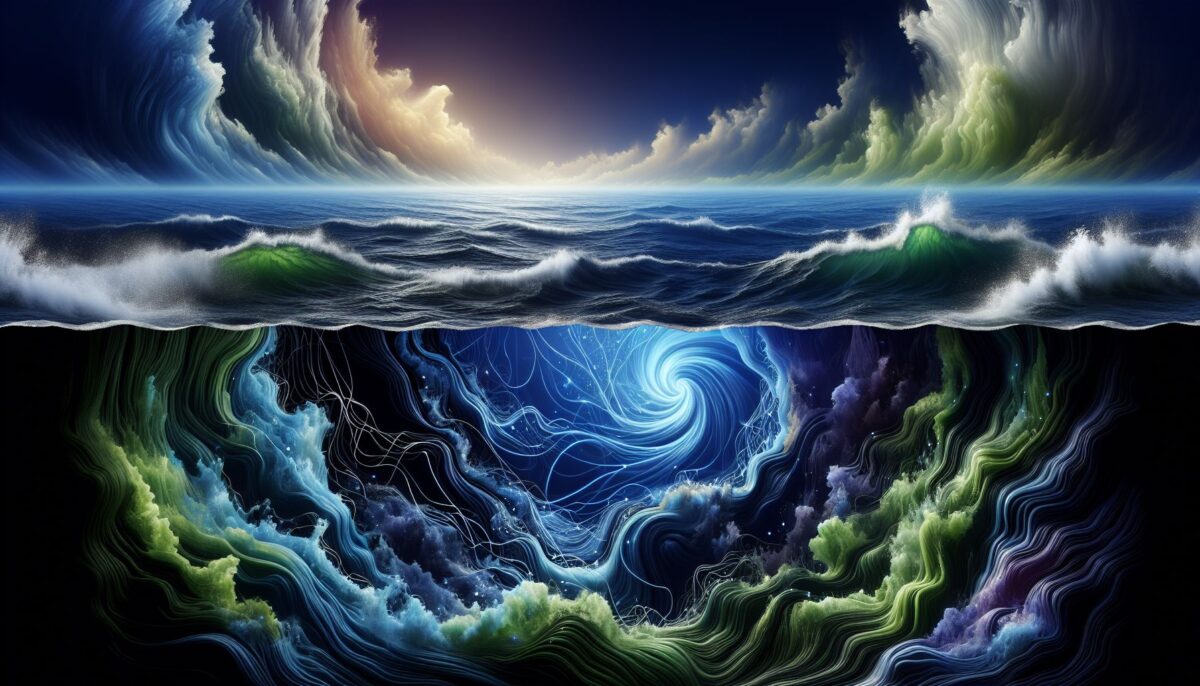
The ocean is a vast and dynamic realm that has captivated humanity for millennia. While its surface enchants us with rhythmic waves and instills a sense of both serenity and awe, the true movement occurs beneath, hidden from the naked eye. The currents of the ocean are a complex and essential component of Earth’s climate system, marine ecosystems, and human activity. This article delves deep into the nature of ocean currents, their types, their influence on global climate, their role in sustaining marine life, and how human activities are impacting these currents.
The Driving Forces: Types of Ocean Currents
To comprehend how ocean currents shape our world, it is crucial to understand what they are and how they’re formed. Ocean currents are continuous, directed movements of seawater generated by various forces acting upon the water, including wind, Coriolis effect, gravitational forces from the sun and moon, temperature, and water salinity.
Surface Currents: The Wind-Driven Waters
Surface currents make up about 10% of all the water in the ocean. These currents are primarily driven by the wind that skims across the surface of the water. The Earth’s rotation also influences these currents, causing them to curve, a phenomenon known as the Coriolis effect.
These wind-driven currents play a pivotal role in weather patterns and marine ecosystems. They regulate climate by transporting heat from the equator to the poles and vice versa. The Gulf Stream in the North Atlantic, for example, is a well-known warm surface current that significantly affects the climate of Europe, making it more temperate than other regions at the same latitude.
Thermohaline Circulation: The Global Conveyor Belt
Below the ocean’s surface, deeper currents move with the pull of temperature and salinity gradients in a process known as thermohaline circulation. This is often referred to as the ‘Global Conveyor Belt’ and is crucial in distributing heat and nutrients around the globe. These currents are slower-moving but immense in volume, affecting the ocean’s overall chemical composition and temperature distribution.
The most significant impact of thermohaline circulation is its regulation of the Earth’s climate. It ensures that the polar regions do not become too cold while the equator remains warm, maintaining a global balance that supports life as we know it.
The Climate Connection: How Currents Shape Our Weather
Ocean currents are integral to the Earth’s climate system. They distribute tropical warmth to higher latitudes and bring polar cold to tropical and subtropical regions. Currents like the North Atlantic Deep Water (NADW) and the Antarctic Circumpolar Current (ACC) are vital components of Earth’s thermoregulatory network. The movement and energy exchange that take place between the ocean and the atmosphere can affect weather and climate patterns, such as El Niño and La Niña, which have significant global impacts.
Marine Ecosystems: A Flow of Life
Ocean currents contribute to the diversity and health of marine ecosystems by transporting nutrients, oxygen, and organisms across vast distances. They support plankton growth in surface waters and the deep-sea creatures that depend on the organic matter raining down from above. Currents can carry larvae and juvenile stages of marine species to new habitats, aiding in their distribution and survival.
Coral reefs, some of the most diverse ecosystems on the planet, owe their existence to the clear, nutrient-rich waters that currents provide. Reefs are also sensitive to changes in water temperature, and currents that deviate from their natural paths due to climate change can cause widespread coral bleaching, threatening these rich habitats.
Human Interactions with Ocean Currents
Human societies have long utilized ocean currents for navigation and maritime trade. Ancient mariners understood the power of these natural pathways, which significantly reduced travel time and energy expenditure across the open seas.
Today, ocean currents are also central to the fishing industry. Fisheries rely on currents to bring nutrient-rich waters to fishing grounds, supporting abundant marine life.
Current Challenges: The Human Impact
However, human activity is affecting ocean currents in several ways. Climate change, primarily driven by the increased greenhouse gas emissions, is causing shifts in wind patterns and altering the temperature and salinity of ocean waters, which can disrupt the delicate balance of thermohaline circulation. As currents change, they can lead to more extreme weather events, alter marine ecosystems, and impact food security by moving fish stocks.
Another significant consequence of human interference is ocean pollution. Marine debris, particularly plastics, can get caught in gyres, creating vast areas of polluted water like the Great Pacific Garbage Patch. Marine species often ingest these plastics, mistaking them for food, with deadly results.
The Future Flow: Conservation and Sustainable Use
To address the challenges facing ocean currents and the broader marine environment, marine protected areas (MPAs) and coastal management practices are being implemented around the world. These restricted areas aim to conserve marine biodiversity and mitigate the effects of human activities.
Additionally, there’s a growing interest in harnessing ocean currents for renewable energy. Tidal and wave energy projects are being developed to capture the kinetic power of the moving ocean waters as a clean, sustainable energy source.
Conclusion
The currents of the ocean, with their immense influence on our environment, economy, and day-to-day weather, are a testament to the interconnected nature of our planet. As our understanding of these complex systems deepens, so does our recognition of the urgency to protect them.
As we continue to navigate the depths of ocean science and its implications for our changing planet, it is imperative that we approach our interactions with the seas with respect and awareness, ensuring that the currents of change lead us to a sustainable and harmonious future with the natural world.
Sources
- National Oceanic and Atmospheric Administration (NOAA) – Currents: https://oceanservice.noaa.gov/education/tutorial_currents/
- United Nations Division for Ocean Affairs and the Law of the Sea – Climate Change: Ocean and Climate Change: https://www.un.org/depts/los/climatechange/climate_change.htm
- International Renewable Energy Agency (IRENA) – Ocean Energy: https://www.irena.org/ocean
