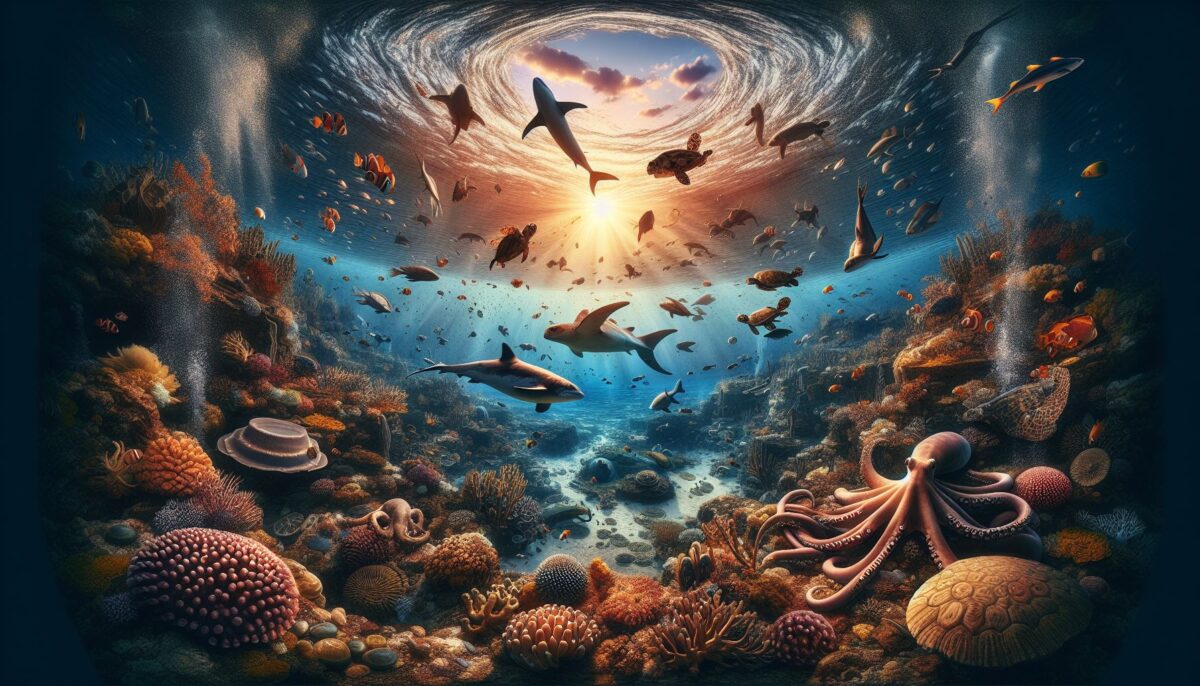
The ocean is not just water. It is a vast, living tapestry woven with a myriad of marine life forms that range from the microscopic plankton to the colossal blue whale. The marine ecosystem is so extensive and varied that it hosts an estimated 50-80% of all life on Earth, with millions of species yet to be discovered. This article dives into the depths of marine life, exploring its wonders, the threats it faces, and the steps we can take to protect this vital component of the planet’s biosphere.
The Marvels of Marine Life
Marine life is not just a crucial part of the ocean’s ecosystem; it also significantly contributes to human life. It offers food, medicines, and raw materials, besides regulating the global climate and the water cycle.
Biodiversity in the Depths
The ocean harbors a mind-boggling array of creatures, each adapted to their unique marine habitat. From the sunlit surface waters where photosynthesizing plankton and algae reside, to the twilight zone where bizarre and elusive creatures swim, down to the abyssal plains housing organisms in extreme conditions — the ocean is a place of endless discovery.
Coral Reefs: Rainforests of the Sea
Coral reefs are one of the most prominent examples of marine biodiversity. These underwater structures, formed over thousands of years by the accumulation of coral skeletons, are not just beautiful; they are bustling with life, acting like the metropolises of the seas. Reefs provide habitat to approximately 25% of all marine species, making them vital for ocean health (World Wildlife Fund).
The Role of Marine Flora
Marine plants, such as mangroves, sea grasses, and algae, are the unsung heroes of the ocean. These primary producers churn out oxygen through photosynthesis, which we depend on for survival. They also form the basis of the marine food web, provide coastal defense against erosion, and sequester large amounts of carbon, helping to mitigate climate change.
Threats Facing Marine Life
Marine life is facing monumental challenges due to human activities. Overfishing, climate change, pollution, and habitat destruction are creating stress on marine ecosystems, threatening their existence.
Overfishing: Emptying Our Seas
The demand for seafood has led to overfishing — catching fish faster than they can reproduce. Destructive fishing methods, such as trawling, destroy seabed habitats and catch non-target species, known as bycatch, which can harm marine populations (FAO).
Climate Change: Heating Up the Waters
Rising temperatures due to climate change are causing ocean acidification and coral bleaching. Warmer waters hold less oxygen, which can suffocate marine life and alter migration patterns, while rising sea levels threaten coastal habitats.
Coral Bleaching: The Whitening of the Seas
Coral bleaching occurs when corals, stressed by warm water temperatures, expel the symbiotic algae living in their tissues, causing them to turn white. Without the algae, the corals lose their major source of food and are more susceptible to disease and death.
Pollution: The Ocean’s Poison
Marine pollution takes many forms, from plastic debris to chemical contaminants. Plastic waste, which can take hundreds of years to degrade, is particularly insidious, as marine animals often ingest it or become entangled in it.
Oil Spills: Black Death
Oil spills can devastate marine environments. The toxins released from oil spills smother marine life, poison the water, and destroy habitats. Even after the spill is contained, the impacts can last for decades.
Conservation Efforts for Marine Life
The protection and preservation of marine life are imperative. International agreements, marine protected areas, sustainable fishing practices, and local conservation efforts are all part of the solution.
Marine Protected Areas: Sanctuaries in the Sea
Marine protected areas (MPAs) are regions where human activity is restricted to protect biodiversity and influence wider conservation goals. MPAs have proven to be effective in helping marine life recover (Marine Conservation Institute).
Sustainable Fisheries: Balancing Demand with Nature
Implementing sustainable fishing practices, such as setting catch limits and restricting harmful fishing gear, can help ensure that fish populations remain healthy. Consumer choices, such as opting for sustainably sourced seafood, can also drive change.
Pollution Prevention: Keeping the Seas Clean
Strategies to combat marine pollution include reducing single-use plastics, improving waste management, and implementing stronger regulations on pollutants. Recycling and participating in beach clean-ups can play a part in reducing ocean pollution.
Combating Climate Change: A Global Effort
Mitigating the effects of climate change involves global cooperation to reduce greenhouse gas emissions, transition to renewable energy, and protect carbon sinks like mangroves, which can absorb and store carbon dioxide from the atmosphere.
Public Awareness and Education
Educating the public about the importance of marine life and how to protect it is crucial. Awareness campaigns, community involvement, and marine science education can inspire people to act in favor of marine conservation.
Conclusion
Marine life represents an irreplaceable treasure that is integral to the health of our planet. It provides numerous benefits to humanity and supports a diverse ecosystem that is still largely unexplored. However, exponential pressures such as overfishing, pollution, and climate change are casting dark shadows on the future of our oceans. By understanding the challenges and taking concerted action to address them, we can work towards a sustainable and thriving ocean.
The plight of marine life is a call to action for all of us. From making responsible seafood choices to supporting conservation policies, everyone has a role to play. It is a responsibility that we must embrace for the sake of the oceans, our planet, and future generations. The time to act is now, for once marine life diminishes beyond a certain point, the consequences may be irreversible. Let’s commit to being stewards of the deep, safeguarding the magnificent marine life that still holds countless mysteries beneath the waves.
