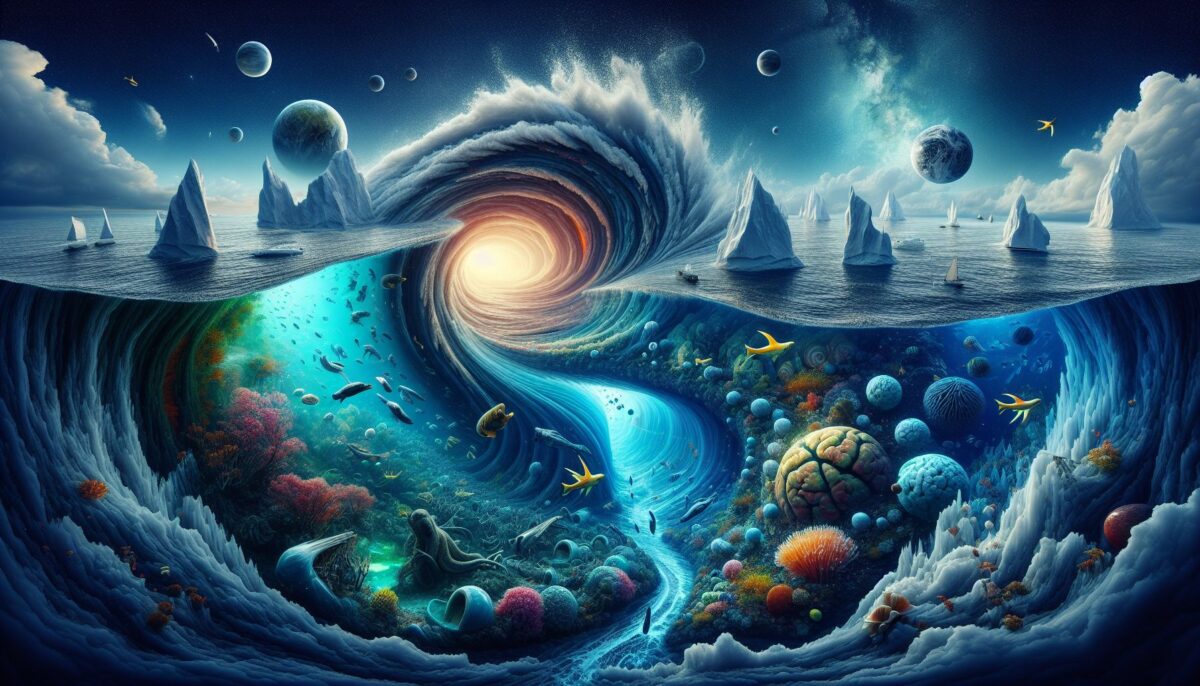
The ocean, our planet’s lifeblood, is a complex and vast body of water that covers more than 70% of the Earth’s surface. It shelters an immense diversity of life, influences our weather patterns, and provides us with vital resources. Oceanography is the science that unravels the countless mysteries the ocean holds, using multidisciplinary approaches to understand its processes, from the shoreline to the abyss of the deepest trench. In this article, we will dive into the fascinating realm of oceanography, exploring its disciplines, discoveries, and the challenges it seeks to address.
The Scope of Oceanography
Oceanography is an integrative science that comprises several branches, including biological, chemical, geological, and physical oceanography, each unveiling a particular aspect of the marine environment.
Biological Oceanography
This branch focuses on the life in our oceans, studying the diversity of marine organisms, their ecosystems, and the ecological processes that sustain them. Scientists delve into the complexities of food webs, from the tiny plankton to the colossal blue whale, and research the impact of human activities on marine ecosystems.
Chemical Oceanography
Chemical oceanographers examine the composition of seawater and the chemical processes occurring within it. Their studies are paramount to understanding the ocean’s role in global cycles such as carbon and nitrogen and the impact of pollutants and ocean acidification on marine life.
Geological Oceanography
Geological oceanographers explore the seafloor, studying the plate tectonics, undersea volcanoes, and the creation of geological features such as trenches, ridges, and islands. This discipline provides insights into Earth’s history and helps predict future geological events.
Physical Oceanography
Physical oceanographers investigate the physical properties and dynamic processes of the oceans, such as currents, waves, and tides. Their research aids in understanding climate variability, weather prediction, and the ocean’s role in Earth’s climate system.
Milestones in Oceanography
Throughout history, oceanographic research has made substantial strides, enhancing our comprehension of the underwater world:
- The Challenger Expedition (1872-1876): Considered the birth of modern oceanography, this expedition marked the first systematic attempt to study the ocean’s depths, mapping out vast areas, collecting thousands of samples, and discovering new species.
- The Theory of Plate Tectonics (1960s): This transformative theory explained the movement of Earth’s lithospheric plates, leading to a new understanding of the formation of oceanic features and revolutionizing geological oceanography.
- The Argo Program: An international collaboration deploying thousands of floating sensors (Argo floats) throughout the world’s oceans, providing real-time data on temperature, salinity, and ocean circulation.
Ocean Exploration Technologies
Technological advancements have exponentially propelled our capacity to explore and study the oceans:
- Research Vessels: Equipped with a multitude of instruments, research vessels are indispensable for gathering marine data and samples.
- Submersibles and ROVs: These underwater vehicles allow scientists to observe and study ocean depths that are otherwise inaccessible to humans.
- Satellite Observations: Satellites equipped with sensors offer a synoptic view of the ocean’s surface, enabling the study of large-scale phenomena such as El Niño and ocean surface temperatures.
- Acoustic Technology: From mapping the seafloor to tracking marine life, acoustic devices such as sonar are essential tools in oceanography.
The Impact of Human Activities
The profound impact of human activities on the oceans has become a critical area of study in oceanography:
Marine Pollution
Marine pollution from plastic debris, oil spills, and chemicals has turned the focus toward understanding its sources, effects, and potential solutions to this escalating problem.
Climate Change
The ocean plays a major role in mitigating climate change by absorbing excess heat and CO2. However, this comes at the cost of increasing ocean acidification and temperature, leading to coral bleaching and changes in marine life distributions.
Overfishing and Unsustainable Practices
Oceanographers study the effects of overfishing and unsustainable exploitation of marine resources, emphasizing the need for effective management and conservation measures.
Ocean Conservation Efforts
Marine scientists are at the forefront of advocating for ocean conservation:
- Marine Protected Areas (MPAs): Establishing MPAs aims to preserve biodiversity and manage fish stocks sustainably.
- International Regulations: Developing regulations such as the United Nations Convention on the Law of the Sea (UNCLOS) to govern maritime practices and protect the marine environment.
Oceanography in the 21st Century
Today’s oceanographers are addressing challenges such as:
- Predicting and mitigating the impacts of natural disasters like tsunamis and hurricanes.
- Advancing our understanding of the deep sea and the living resources it harbors.
- Transforming our economy into a sustainable “Blue Economy” that benefits from the ocean without harming it.
The Future of Oceanographic Discovery
Looking forward, oceanography promises to further our understanding of this vast blue frontier:
- Deep-sea Mining: Balancing the exploitation of mineral resources with the preservation of deep-sea ecosystems.
- Renewable Ocean Energy: Harnessing wave and tidal energy as sustainable power sources.
- Continuing Education and Outreach: Engaging the public and fostering the next generation of marine scientists.
Conclusion
The study of oceanography is more crucial than ever as we face environmental challenges and strive for sustainable use of our ocean resources. By continuing to explore and understand the complexities of the world’s oceans, we protect not only the marine environment but also the very fabric of life on Earth.
Sources
- National Oceanic and Atmospheric Administration (NOAA) – Ocean
- Woods Hole Oceanographic Institution – Oceanography
- Intergovernmental Oceanographic Commission (IOC) of UNESCO – Oceanographic Data and Information
