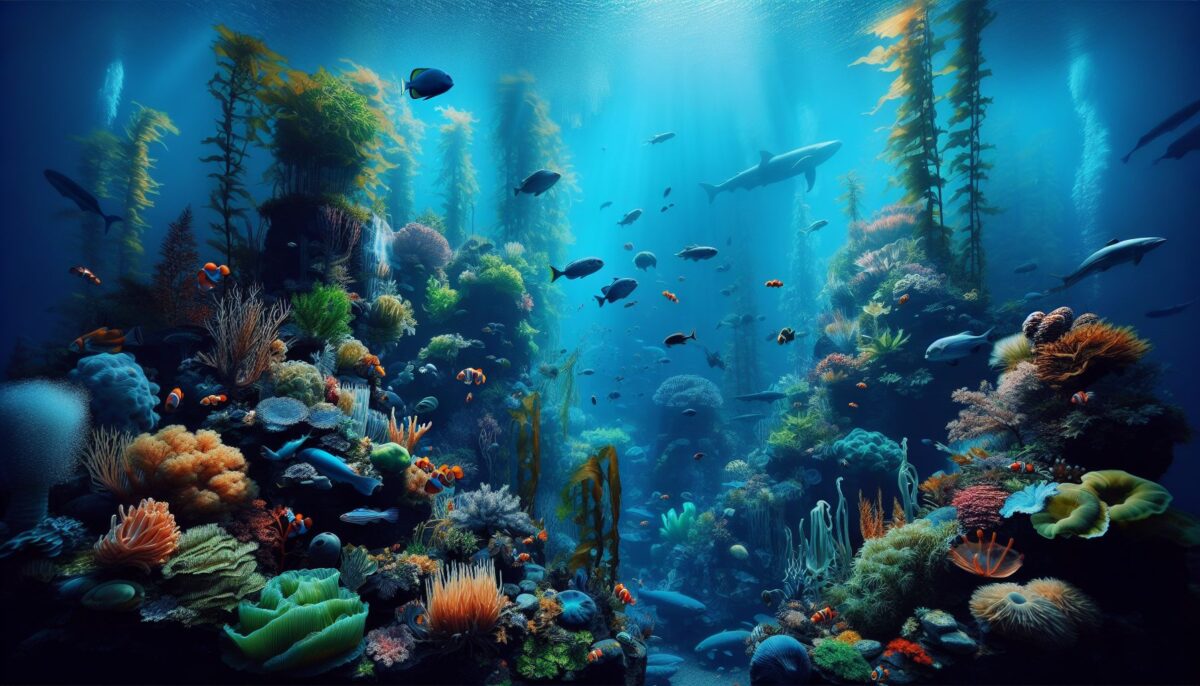
Marine life is as broad and varied as the expansive oceans themselves. From the tiniest plankton to the most enormous whales, marine life, also known as marine fauna and flora, is an integral part of our planet’s ecosystem. This article is all set to embark on a fascinating, intricate journey into the captivating universe below the water’s surface-the world of marine life.
The Concept of Marine Life
By definition, marine life comprises all living organisms found in saltwater bodies such as oceans, seas, and bays. This includes not only the fish and mammals that we commonly associate with marine life, but also birds, reptiles, insects, fungi, bacteria, and viruses that live or spend a significant part of their life in marine habitats.
Understanding the Oceanic Layers
The oceans are structured into different layers, each with unique challenges and resident creatures. The topmost layer, known as the Epipelagic or Sunlit zone, is bustling with life due to ample sunlight that encourages photosynthesis. The vast majority of known marine species dwell in this warm, bright layer.
Beneath the Epipelagic layer is the Mesopelagic or Twilight Zone, bathed in weak light and inhabited by deep-sea creatures like the swordfish and squid. Further down lies the dark Aphotic zone, consisting of the Bathypelagic (Midnight), Abyssopelagic (Abyss), and Hadopelagic (Trench) zones, where conditions are harsh and life is surprisingly resilient. Find more about these zones here.
Remarkable Biodiversity
Marine life is astoundingly diverse, with scientists estimating millions of undiscovered species still lurking in the ocean’s depths. Let’s explore the most common classifications of marine life.
Marine Animals
Marine animals encompass a vast range of species, from the ray-finned fishes, cartilaginous fishes like sharks and rays, to marine mammals like whales, dolphins, and seals. There are marine reptiles such as sea turtles and saltwater crocodiles, and countless invertebrates like shellfish, squids, octopuses, and jellyfish.
Marine Birds and Insects
While most bird species live on land, some like penguins, albatrosses, and puffins are considered marine birds due to their dependency on the sea. Additionally, several insect species have adapted to marine environments, such as the marine skater, a type of water strider.
Marine Plants and Algae
Marine plants, including seagrasses and mangroves, form crucial ecosystems, providing nurseries to various marine species. Algae, the most plentiful type of marine plant life, plays a significant role in oxygen production and forms the base of many food chains. Read more about marine plants and algae here.
The Importance of Marine Life
Marine life is essential for the earth’s health and human survival. Here’s why:
-
Biodiversity: Marine ecosystems hold incredible biodiversity, sheltering many more species than terrestrial ecosystems. This diversity is crucial for the globe’s health and stability.
-
Climate Regulation: Oceans absorb about 30% of CO2 emissions, mitigating the effects of global warming. Plus, they regulate the weather and generate most of the oxygen we breathe.
-
Economy: It supports industries like fishing, tourism, and marine biotechnology, significantly contributing to the global economy.
-
Research and Medicines: The sea is a treasure trove of potential scientific discoveries and medicinal breakthroughs. Many marine organisms produce unique compounds used in medicines and treatments.
Threats Facing Marine Life
Sadly, marine life is encountering serious threats due to human activities. Overfishing, climate change, plastic pollution, oil spills, and habitat destruction are rapidly causing extinction and the deterioration of marine ecosystems.
Conclusion
Marine life is an enthralling world full of beauty, diversity, and mystery. As we advance towards the future, it’s crucial to recognize the economic, scientific, and environmental relevance of our oceans and their inhabitants. Conserving and protecting marine life should be a shared global responsibility for ensuring the continuity of this magnificent underwater realm and the planet at large.
Through knowledge, awareness, and commitment, we can make a difference. The ocean’s song is a call to humanity – a plea for respect, care, and preservation. It beckons us to delve deeper, learn more, and ensure that the colorful symphony of its waters continues for generations to enjoy and admire.
