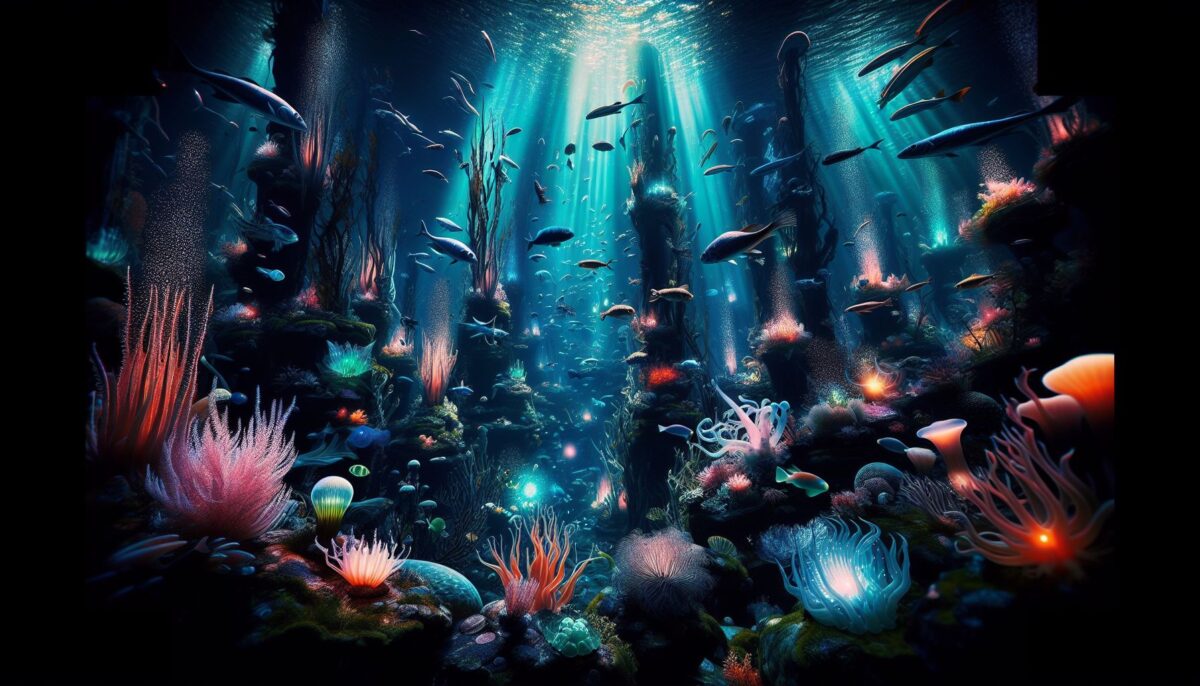
The ocean, that vast and incomprehensibly deep swath of blue that covers more than two-thirds of our planet, has always held a deep allure for mankind. Its depths contain untold secrets, its waves sing songs of far-off places, and its inhabitants add splashes of vibrant colour to the world beneath the waves.
There exists a unique connection between mankind and the ocean. We stand at the shore, staring out into the expanse knowing that beneath the serene or stormy facade, there lies a world as diverse, vibrant, and complex as our own. It’s a world, however, we know so little about. Scientists have mapped much less of the ocean floor than the surface of the moon or Mars. The ocean’s depths are home to the highest mountains, deepest valleys, and the vastest plains on earth, and yet so much of it has yet to be seen by human eyes.
Exploring the Chronicles of The Deep
But what do we know about this underwater world, and how have we discovered what we do know? The science of oceanography is the answer to that.
Oceanography encompasses a broad range of topics, including marine life and ecosystems, ocean currents, wave dynamics, plate tectonics and the geology of the seafloor, and fluxes of various chemical substances and physical properties within the ocean and across its boundaries with the atmosphere, seafloor, and ice. Studying these processes and marine phenomena gives us a deeper understanding of our planet.
The Teeming Life Below
The diverse and numerous organisms that live in the sea have evolved over billions of years. Marine biodiversity is a critical aspect of the planet’s health and well-being. From the smallest plankton to the largest whale, every creature plays a significant role in how our planet operates and functions.
Plankton, the near-microscopic creatures that float in the water column, produce half of the world’s oxygen through photosynthesis. They form the basis of the marine food web, being consumed by everything from tiny krill to gigantic whales. In a sense, without plankton, life as we know it would cease to exist.
Whales, the giants of the sea, are equally as fascinating. The Blue Whale, the largest creature to have ever existed, can grow up to 100 feet long and weigh as much as 200 tons. These behemoths consume krill, a small shrimp-like creature, by the thousands, inadvertently playing a significant role in carbon sequestration, helping our planet regulate its climate.
An Imminent Crisis: Ocean Acidification and Coral Bleaching
In our discussions about climate change, we often forget to mention one of its most disastrous effects – ocean acidification. As we pump more carbon dioxide into the atmosphere, the ocean absorbs a significant part of it. This process reduces the pH of the water, making it more acidic. Ocean acidification is starting to have severe implications for marine life, some of which build their shells and skeletons from the minerals in seawater.
Coral reefs, often labeled as the ‘rainforests of the sea,’ are home to a quarter of all marine species. They are at significant risk due to the warming of the ocean caused by climate change. When sea temperatures rise, corals become stressed and expel the algae living in their tissues, causing a phenomenon known as coral bleaching.
The Blue Economy: An Untapped Potential
Despite the challenges, our ocean holds immense untapped potential – a fact now being recognized via the concept of the Blue Economy. The Blue Economy entails using the ocean resources for economic growth, improved livelihoods, and jobs while preserving the health of the ocean ecosystem.
It includes various sectors, from traditional occupations such as fisheries, tourism, and maritime transport to new and emerging ones like renewable energy (offshore wind, wave, tidal), seabed extraction, marine biotechnology, and aquaculture.
As we move towards a sustainable future, understanding our oceans is more important than ever. By increasing our knowledge and appreciation of the underwater world, we can better protect it and access the countless resources and benefits it has to offer.
In conclusion, our oceans are an incredibly important aspect of the world. They account for over two-thirds of the earth’s surface, are home to a diverse range of marine life, play a crucial role in regulating our climate and hold significant economic potential. If we are to create a more sustainable and equitable future, we must ensure that our oceans are given the respect and protection they truly deserve.
