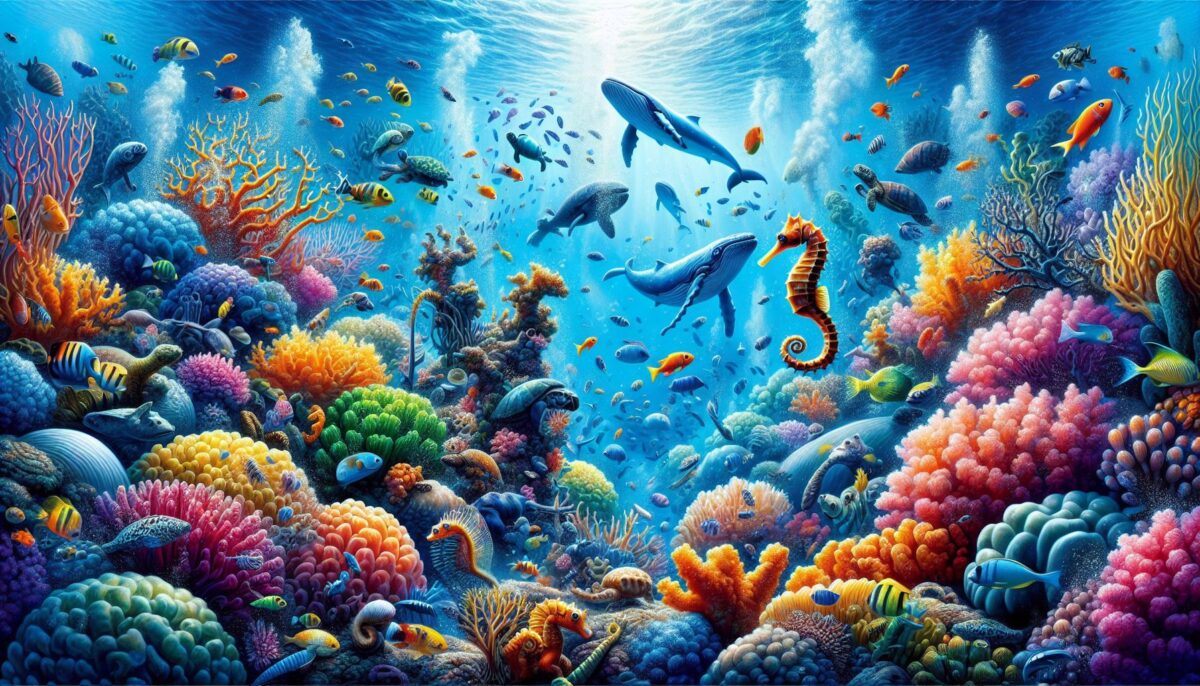
The vast ocean covers over 70% of our planet’s surface and is home to an incredible array of marine life. From the smallest plankton to the largest whales, the ocean’s biodiversity is both vital and awe-inspiring. Marine life not only supports a rich ecosystem but also plays a fundamental role in maintaining the health of our planet by regulating the climate and providing resources for humans. In this article, we’ll dive into the depths of the ocean to explore the complexity of marine life and the factors that impact it. This journey will take us from the colorful coral reefs to the mysterious deep-sea creatures, underscoring the necessity of protecting this precious and dynamic environment.
The Ocean’s Layers and Habitats
The Sunlit Zone
At the very top is the epipelagic or sunlit zone, which extends from the surface down to about 200 meters. This is where light penetrates, and photosynthesis can occur, allowing plant-like organisms, such as phytoplankton, to thrive. This zone is bustling with life, including most of the fish and marine mammals we are familiar with.
The Twilight Zone
Beneath the epipelagic is the mesopelagic or twilight zone, ranging from 200 to 1,000 meters. Light starts to fade in this layer, and the marine life here has adapted to the darker conditions. Bioluminescent organisms, such as certain species of jellyfish and squid, can generate their own light in this dim environment.
The Midnight Zone
Further down, between 1,000 and 4,000 meters, is the bathypelagic or midnight zone. Here, in perpetual darkness, the water pressure rises, and the temperature drops. Despite such extreme conditions, life still persists. Strange and fascinating creatures like the anglerfish and the giant squid call this depth home.
The Abyssal Plain
Lying between 4,000 and 6,000 meters, the abyssal plain covers the seafloor with fine sediment. Organisms here include various species of worms, sea cucumbers, and other creatures that have adapted to the intense pressure and lack of light.
The Hadal Zone
The deepest parts of the ocean are in the hadal zone, which begins at around 6,000 meters in oceanic trenches. The most renowned of these is the Mariana Trench, where only specialized equipment and few organisms, such as the snailfish, can withstand the extremities.
A Kaleidoscope of Marine Life
Coral Reefs: Cities of the Sea
Coral reefs, often dubbed as “rainforests of the sea,” are some of the most diverse ecosystems on Earth. They are structures formed by the calcium carbonate skeletons secreted by coral polyps and are essential habitats for a multitude of marine organisms. Coral reefs support more species per unit area than any other marine environment, including over 4,000 species of fish and 800 species of coral.
Open Ocean Wanderers
The open ocean, or pelagic zone, is home to nomadic creatures like the mighty blue whale, the largest animal to have ever existed. Marvels of evolution such as the sailfish, the fastest fish in the ocean, and the great white shark, apex predator of the seas, roam this vast expanse.
The Deep Sea’s Mysterious Inhabitants
The abyssal and hadal zones are full of mysterious life forms. The deep-sea dragonfish, with its jaw full of needle-like teeth, and the hagfish, known for its slime-producing capabilities, are just two examples of the bizarre adaptability found in the deep.
Coastal Nursery Grounds
Closer to shore, estuaries and bays serve as nurseries for many marine species. Juvenile fish and invertebrates take refuge in these sheltered waters where salinity mixes and food is plentiful, increasing their chances of survival and growth.
Threats to Marine Life
Overfishing
Human activity poses significant threats to marine life, with overfishing being one of the most pressing concerns. The Food and Agriculture Organization (FAO) reports that 34.2% of fish stocks are fished at biologically unsustainable levels. Overfishing disrupts the balance of marine ecosystems, leading to the decline of certain species and impacting the larger food web.
Pollution
Pollution is another critical threat to marine life. Plastic debris, chemicals, and oil spills can be devastating to both marine creatures and their habitats. These pollutants can be ingested by animals, leading to injury, illness, or death.
Climate Change
Climate change has far-reaching effects on the ocean, causing shifts in ocean currents, increasing sea temperatures, and leading to ocean acidification. These changes can alter habitats, force species to migrate, and result in coral bleaching, where corals lose their symbiotic algae, turning white and making them susceptible to disease.
Habitat Destruction
Habitat destruction, whether through coastal development, bottom trawling, or destructive fishing practices like the use of dynamite or cyanide, can cause irreversible damage to marine ecosystems. These practices strip the ocean of its complex habitats, which are crucial for the survival of many species.
The Importance of Conservation
Marine Protected Areas (MPAs)
To mitigate threats, Marine Protected Areas (MPAs) have been established globally. These areas are critical for the conservation of biodiversity, helping to protect marine life from overfishing and habitat destruction.
Sustainable Fisheries
Sustainable fisheries management seeks to allow fish populations to replenish and maintain their ecological role. Tools such as fishing quotas, gear restrictions, and enforcement of no-take zones can assist in this endeavor.
Pollution Control
Efforts to control pollution include regulations on the use of plastic, proper waste management, and initiatives to clean up marine debris. Reducing the input of pollutants into the ocean is vital for the health of marine life.
Climate Action
Combatting climate change requires global cooperation to reduce greenhouse gas emissions. Actions such as moving towards renewable energy resources, protecting and restoring blue carbon ecosystems like mangroves, and reducing individual carbon footprints all contribute to safeguarding the marine environment.
Conclusion: A Call to Action
The majesty of marine life is not just a spectacle for us to observe—it’s a critical component of our world that demands our respect and protection. We must act on multiple fronts: combatting climate change, enforcing sustainable fishing practices, reducing pollution, and supporting conservation initiatives. Each of us has a role to play in preserving the diversity and beauty of marine life. Together, we can ensure that the rich tapestry of the ocean continues to flourish for generations to come.
Sources
- Food and Agriculture Organization of the United Nations. (2020). The State of World Fisheries and Aquaculture 2020. [online] Available at: http://www.fao.org/state-of-fisheries-aquaculture
- National Oceanic and Atmospheric Administration. (n.d.). Coral Reef Conservation Program. [online] Available at: https://www.coris.noaa.gov/
- World Wildlife Fund. (2020). Marine: Ocean and Coasts. [online] Available at: https://www.worldwildlife.org/initiatives/oceans
