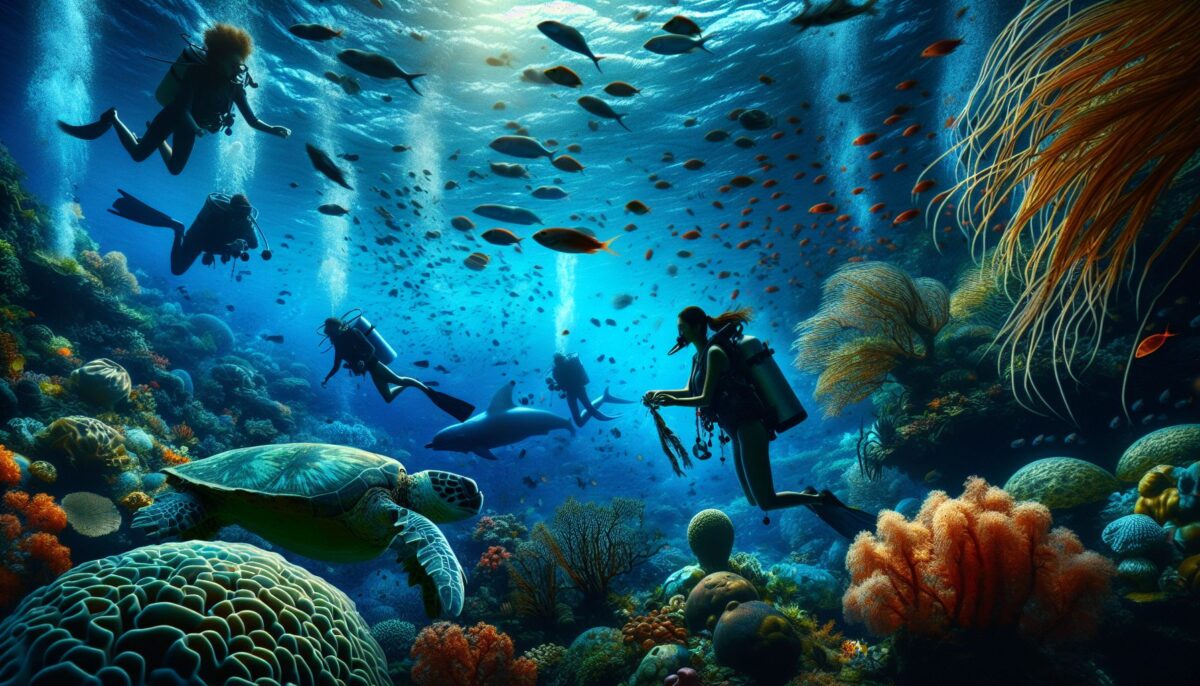
According to the National Aeronautics and Space Administration (NASA), about 95 percent of the world’s oceans are still unexplored. We know more about the surface of Mars than we do about our own underwater world. The ocean is a mysterious and captivating place, full of marvels, dangers, and wonders beyond our wildest imagination.
The Vital Role of our Oceans
The ocean plays a critical role in sustaining life on earth. It is responsible for regulating our planet’s climate and weather patterns, and it serves as a source of food, medicine, and economic opportunity for billions of people. In fact, the ocean generates more than half of the world’s oxygen and absorbs more carbon dioxide than our atmosphere. More at: Oceanic Institute.
Life as we know it would be impossible without our oceans. Yet, despite its immense size and importance, we have only just begun to understand its enormous complexity and intricacy.
The Rich Diversity of Marine Life
Life in the ocean is incredibly diverse. From the smallest plankton to the largest blue whale, the ocean’s inhabitants range in size from almost invisible to the largest animals ever to have lived on the planet. Experts estimate that there could be millions of species inhabiting the ocean, most of which remain undiscovered.
The well-known marine animals, such as sharks, dolphins, penguins, and whales, represent just a fraction of the ocean’s vast array of creatures. The majority of marine life is found in the polar and tropical waters, where conditions are best for the growth and survival of various species. Check more here.
Marvels Beneath the Waves: The Ocean Floor
The ocean floor, also called the seafloor, is home to a stunningly diverse array of habitats. From underwater mountains and valleys to deep-sea trenches and plains, the seafloor is a complex and varied landscape. Some parts of the ocean floor are over 7 miles (11 kilometers) deep.
Interesting features on the ocean floor include mid-ocean ridges, underwater mountains created by tectonic activity, deep-sea trenches, the deepest parts of the ocean, hydrothermal vents, underwater volcanoes that spew hot, mineral-rich water, and seamounts, which are underwater mountains that don’t reach the surface. More in-depth information can be found here.
Threats to the World’s Oceans
Unfortunately, human activities are causing significant harm to the world’s oceans. Overfishing is depleting fish populations faster than they can recover, while pollution is causing significant damage to marine ecosystems. Climate change is also causing oceans to warm and become more acidic, leading to coral bleaching and the death of many marine species.
Rising sea levels, caused by the melting of polar ice, are causing flooding and erosion along coastlines. Finally, destructive fishing practices, such as bottom trawling and the use of dynamite and cyanide, are decimating marine habitats.
The Need for Increased Conservation
Greater efforts are needed to conserve and protect our oceans. This includes establishing more marine protected areas, where fishing and other harmful activities are restricted. It also involves improving sustainable fishing practices, reducing pollution, and tackling climate change. Everyone has a role to play in protecting our oceans, from governments and businesses to individuals.
The Future of Ocean Exploration
Despite the challenges, there are reasons for optimism. Advances in technology are making it easier and more affordable to explore the ocean’s depths, and there is a growing appreciation of the ocean’s importance among the public and policymakers.
As we continue to explore the wonders of our oceans, we may discover new species, uncover the secrets of the deep, and learn more about how this vast and vital ecosystem works. The ocean, with its endless mystery and bounty, continues to beckon us to venture beneath its surface and explore its hidden depths.
“In every outthrust headland, in every curving beach, in every grain of sand there is the story of the earth.” – Rachel Carson
