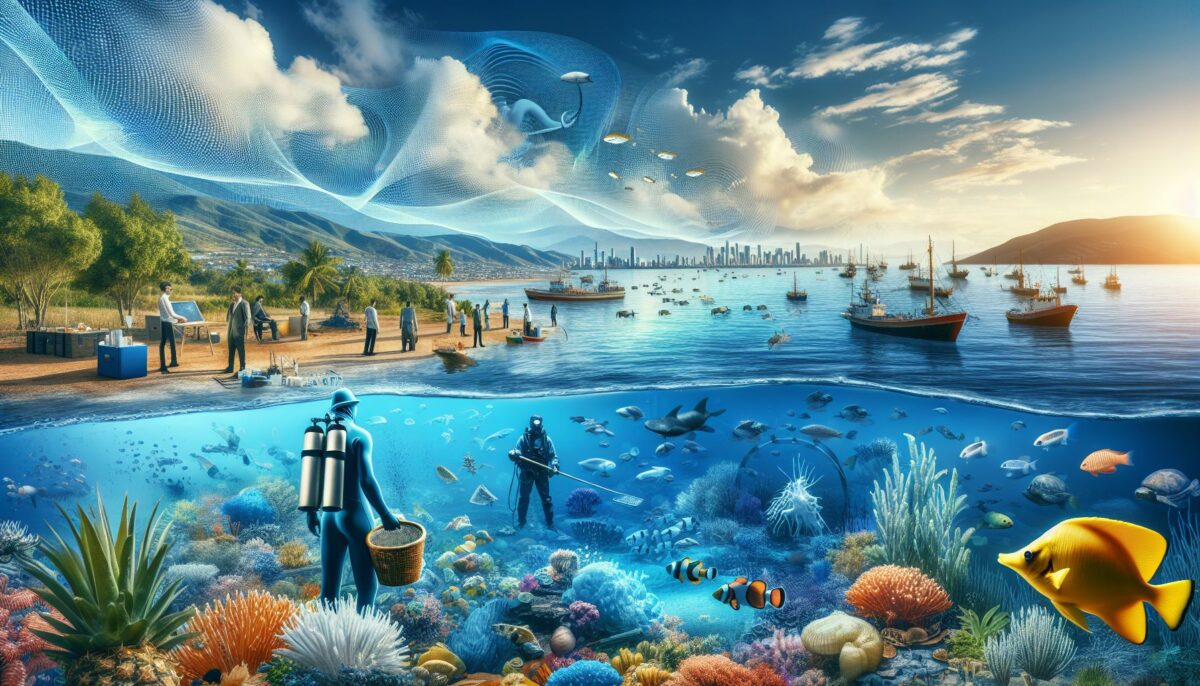
In the 21st century, as the world grapples with the twin challenges of economic development and environmental sustainability, one concept is increasingly capturing the attention of policy-makers, researchers, and environmental advocates alike: the blue economy. But what exactly is the blue economy, and why is it so critical to our future?
What is the Blue Economy?
The blue economy refers to the sustainable use of ocean resources for economic growth, improved livelihoods, and jobs while preserving the health of ocean ecosystems. It encompasses a wide range of activities, including fisheries, aquaculture, maritime transport, renewable energy, mineral resources, and tourism, all underpinned by the latest advances in oceanography and marine technology.
The Significance of Our Oceans
To truly appreciate the potential of the blue economy, one must first understand the role oceans play in our world. Occupying over 70% of the Earth’s surface, our oceans are the lifeblood of the planet, supporting a vast array of life forms and driving essential processes such as carbon cycling and climate regulation.
Oceans as Economic Drivers
Oceans are pivotal to global trade, with over 90% of the world’s trade transported by sea[^1]. They are the backbone of the shipping industry, making the movement of goods across continents possible. Furthermore, oceans abound in resources — from the rich biodiversity that sustains fisheries to the untapped reservoirs of oil, gas, and minerals lying on the seafloor.
Ecosystems Services
Beyond their economic value, oceans provide a host of ecosystem services that are crucial for survival. They produce over half of the world’s oxygen and absorb significant amounts of carbon dioxide, helping to temper the adverse effects of climate change.
Moreover, the biotechnological potential of marine organisms is largely unexplored, offering promising avenues for pharmaceuticals, food security, and even cosmetics. As such, preserving ocean health isn’t just an environmental imperative but a socioeconomic one as well.
Challenges Facing Our Oceans
Before delving into the benefits and opportunities of the blue economy, it is important to acknowledge the challenges.
Overfishing and Unsustainable Practices
Overfishing is depleting fish stocks faster than they can replenish, jeopardizing food security and the livelihoods of millions who depend on these resources. Aquaculture – the farming of fish and other marine life – can potentially alleviate some of this pressure but comes with its own set of challenges, such as habitat destruction and water pollution.
Pollution and Waste
Our oceans are the dumping ground for millions of tons of plastic waste each year, leading to the formation of vast “garbage patches.” Chemical runoffs, oil spills, and other contaminants severely impact marine life and ecosystem health.
Climate Change Impacts
Rising ocean temperatures are resulting in coral bleaching and altering marine biodiversity. Simultaneously, acidification from absorbed CO2 is changing the chemistry of seawater, impacting countless marine species.
Legal and Governance Issues
Managing and protecting the high seas is a complex international legal challenge. Exclusive economic zones (EEZs), maritime boundaries, and the regulatory frameworks governing international waters require careful negotiation and enforcement.
Unlocking the Potential of the Blue Economy
Despite the challenges, the blue economy offers a pathway to reconcile humanity’s need for economic development with the imperative of ecological sustainability.
Sustainable Fisheries and Aquaculture
By applying sustainable fishing techniques and responsible aquaculture practices, we can ensure a stable supply of seafood while conserving biodiversity. Ecosystem-based management and the development of science-informed policies are critical to this end.
Renewable Energy
The ocean can be harnessed for clean energy. Tidal and wave energy technologies are just beginning to tap into this immense potential, offering the prospect of significant carbon-free power generation[^2].
Biotechnology and Pharma
Marine organisms possess unique compounds that are not found on land, which have led to breakthroughs in medical research. The blue economy leverages the oceans’ untapped genetic resources, promising treatments for a myriad of diseases.
Maritime Transportation
Improving the efficiency of shipping routes and promoting cleaner fuels can drastically reduce the environmental impact of maritime transport, making it a cornerstone of the blue economy.
Eco-Tourism and Marine Conservation
Eco-tourism provides economic incentives for the preservation of marine environments. By coupling it with the establishment of marine protected areas, we can safeguard key habitats and species while still reaping economic benefits.
Science, Technology, and Innovation
Enhanced oceanographic research, innovative marine technologies, and broad data sharing are essential for enabling the sustainable management of ocean resources. Investing in these areas will underpin the growth of the blue economy.
International Collaboration and Policy Development
A strong international framework is required to manage the blue economy effectively. Global cooperation on issues like fish stock management, pollution control, and EEZ governance is critical for sustainable ocean use.
The Way Forward
For the blue economy to be truly transformative, it needs to be inclusive — benefiting small island nations and developing coastal communities just as much as wealthier, industrialized countries. This entails capacity building, technology transfer, and equitable policies that ensure the fair distribution of the blue economy’s gains.
Moreover, protecting the entire marine ecosystem, rather than focusing narrowly on economic resources, is paramount. Integrating the principles of marine conservation into economic planning is not just ethically sound, but also essential for the long-term sustainability of the blue economy.
Finally, public awareness and engagement play a fundamental role in advancing the blue economy. By fostering a global constituency that values and advocates for sustainable ocean management, we can ensure that the seas continue to be a source of life, livelihood, and wonder for generations to come.
Conclusion
Tapping into the blue economy offers a hopeful narrative for the future, one where economic growth and environmental stewardship go hand in hand. Recognizing that our fates are inextricably linked to the health of our oceans, it is time to act with resolve and imagination. The blue economy isn’t just an economic opportunity; it’s a call to resolutely chart a sustainable course for the entire planet.
[^1]: United Nations Conference on Trade and Development (UNCTAD). (2020). Review of Maritime Transport 2020. [online] Available at: https://unctad.org/webflyer/review-maritime-transport-2020
[^2]: European Marine Energy Centre. (n.d.). Wave & Tidal – Marine Energy. [online] Available at: http://www.emec.org.uk/marine-energy/
