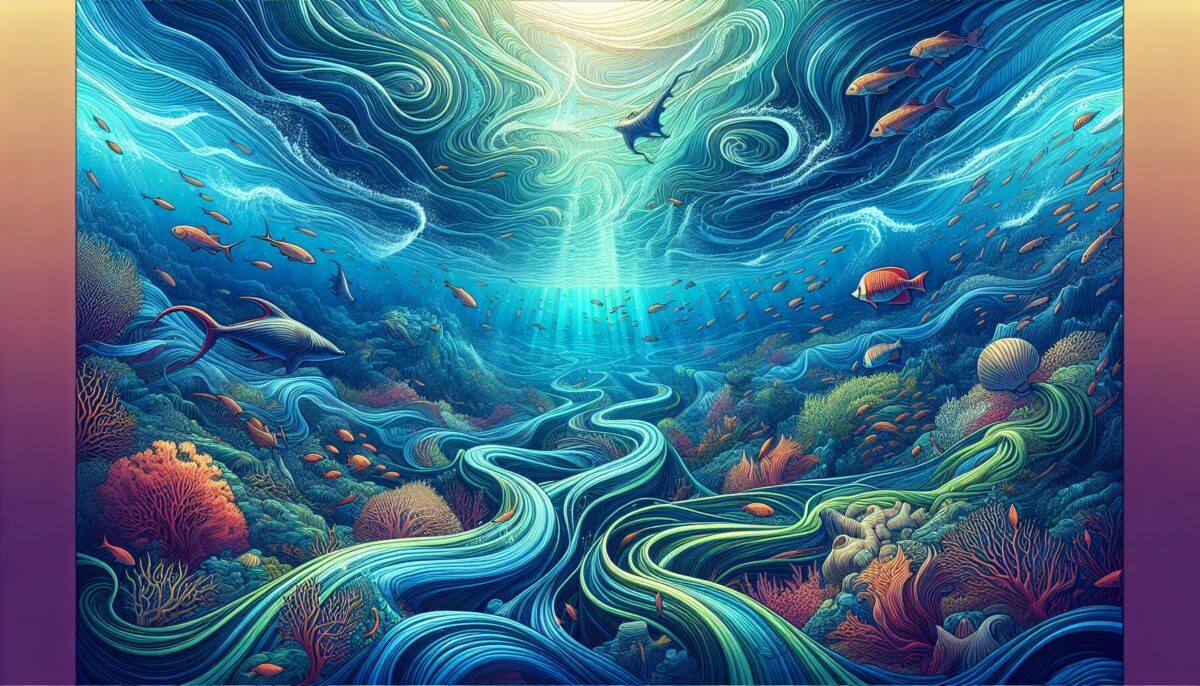
The ocean, that vast and mesmerizing expanse of saltwater, covers over 70% of the Earth’s surface and harbors a myriad of life forms and geological mysteries. While many are drawn to its surface beauty and the diverse marine life it supports, there is an invisible force at play beneath the waves that plays a crucial role in the functionality of our planet – the ocean currents. These continuous, directed movements of seawater are generated by a number of factors including wind, water density differences, and the Earth’s rotation. They govern climate patterns, transport nutrients, and serve as underwater highways for countless marine creatures. In this article, we will set sail to explore the depths of ocean currents and their immense impact on global ecosystems and human life.
What Are Ocean Currents?
Ocean currents are, in essence, the continuous, predictable, directional movement of seawater driven by several forces including wind, the Coriolis effect, salinity, the sun’s heat, and the rotation of the Earth. Currents can be classified into two main categories:
-
Surface Currents: These occur on the upper 400 meters of the ocean and mainly result from wind-driven forces. They are the most well-known currents, where winds such as the westerlies and trade winds play a significant role.
-
Deep Water Currents: Accounting for 90 percent of the ocean’s water, these currents are driven by thermohaline circulation, which means they are influenced by temperature (thermo) and salinity (haline) differences.
All these currents form a global conveyor belt, officially known as the “global oceanic thermohaline circulation.” This interconnected system of deep and shallow currents churns the oceans in a continuous loop around the globe.
The Engines Driving Ocean Currents
Wind:
Winds are generated due to the uneven heating of the planet’s surface by the sun. When winds blow across the ocean’s surface, they drag the water along, creating currents. This wind-driven motion is most visible in the movement of the top layer of the ocean.
Earth’s Rotation (The Coriolis Effect):
Due to the rotation of the Earth, moving objects such as currents are deflected to the right in the northern hemisphere and to the left in the southern hemisphere. This phenomenon is known as the Coriolis effect.
Salinity and Temperature:
The ocean’s salinity and temperature also affect its density. When the ocean water gets colder or more saline, it becomes denser and sinks, creating a vertical flow in the currents.
The Sun:
The sun plays a role by heating the equatorial waters, which then expand and raise slightly compared to the surrounding colder waters, creating a slight gradient that can influence current movement.
The Role of Ocean Currents
Ocean currents have far-reaching consequences on the health of our planet. Here are several roles they play:
1. Climate Regulation:
Currents act as the Earth’s thermostat, helping to regulate and stabilize the climate. Warm currents can temper colder regions, while cold currents might cool down some warmer areas.
2. Distribution of Nutrients:
Currents can move warm and cold water across the oceans. This upwelling and downwelling process brings nutrients from the deep ocean to the surface, feeding marine life.
3. Navigation and Marine Transportation:
Human navigation at sea has relied on the knowledge of ocean currents for centuries. By understanding these natural pathways, ships can save time and fuel.
4. Marine Biodiversity:
Currents allow for a wide distribution of sea life by transporting organisms along their routes. This contributes greatly to the biodiversity of different marine ecosystems.
Implications of Current Changes:
Changes in ocean currents due to global warming or other factors can have severe implications, including:
-
Climate Shifts: Alterations in ocean currents could change local weather patterns and have a global impact on climate.
-
Fisheries and Food Security: A change in currents might affect the distribution of fish stocks, which could threaten the livelihoods of those dependent on fishing industries.
-
Sea Level Rise: If currents slow down, they can contribute to rising sea levels, particularly along coastlines where the warm expanded water is pushed.
The Currents of Our Oceans
Here’s a snapshot of some of the major currents and how they influence our watery world:
-
The Gulf Stream: One of the most well-known currents, originating in the Gulf of Mexico and flowing towards Europe, the Gulf Stream warms the North Atlantic.
-
The Kuroshio Current: Also known as the Japan Current, it is comparable to the Gulf Stream and has significant effects on the climate of Japan and the North Pacific.
-
The Antarctic Circumpolar Current: This is the only current that circles the planet and connects the Atlantic, Pacific, and Indian Oceans.
-
The California Current: A Pacific current that influences the coastal climate of the western United States and supports a diverse ecosystem.
Challenges and The Future of Ocean Current Research
The study of ocean currents is essential, but it’s not without challenges. Continued research and advancements in technology such as satellite tracking, drifting buoys (like the Argo floats), and underwater rovers contribute to our understanding of these dynamic systems.
1. Monitoring and Prediction:
Improving monitoring systems to predict changes in ocean currents can enhance our preparedness for climate change impacts and natural disasters.
2. Sustainable Use:
Understanding how human activities like shipping and pollution affect ocean currents can help us minimize negative impacts on marine ecosystems.
3. Renewable Energy Potential:
Ocean currents hold immense potential for renewable energy, which scientists and engineers are just beginning to tap into with technologies like tidal and wave energy converters.
Conclusion
Ocean currents are the lifeline of our oceans; they are critical to sustaining marine ecosystems, regulating our climate, and enabling maritime trade. As we move towards a future impacted by climate change, it’s more crucial than ever to deepen our understanding of these currents and their global implications. Through the rigorous study and responsible management of our underwater highways, we can support the health of our oceans and the myriad of life they sustain.
Sources:
- National Oceanic and Atmospheric Administration (NOAA) – Ocean Currents
- Intergovernmental Panel on Climate Change (IPCC) – Climate Change and Ocean and Coastal Ecosystems
- National Geographic – Ocean Currents and Climate
With continued research and insight into ocean currents and their intricate interplay with the global environment, we can navigate towards a sustainable future for our blue planet and all its inhabitants.
