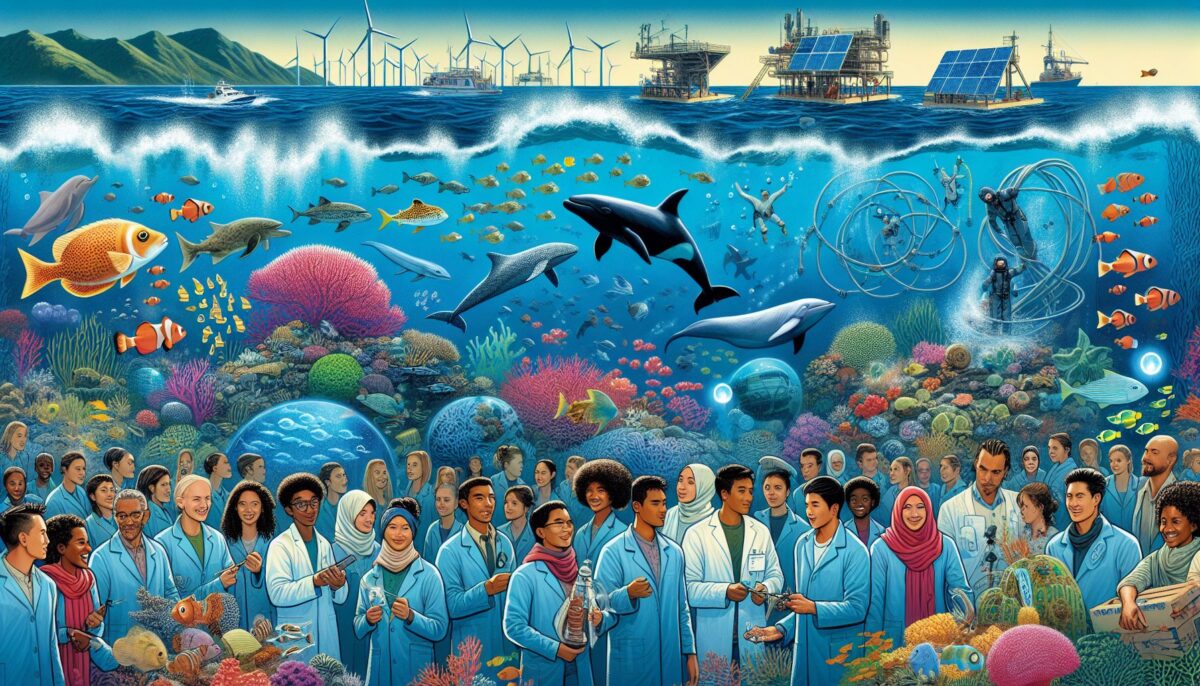
The vast expanse of the ocean has cradled Earth’s primordial life, shaped human history, and continues to be a cornerstone of modern civilization. As an interconnected global asset, it not only regulates our climate but also supports a wealth of biodiversity and provides resources crucial to human wellbeing. In recent times, the focus has shifted towards a sustainable, ecologically sound, and economically inclusive utilization of ocean resources referred to as the “Blue Economy.” This progressive approach aims to reconcile economic development with the long-term capacity of ocean ecosystems, ensuring that the ocean’s wealth sustains future generations.
What is the Blue Economy?
The Blue Economy encompasses diverse sectors including sustainable fishing, renewable energy, maritime transport, climate change mitigation, waste management, and marine biotechnology. It extends beyond the exploitation of these resources to include the intricate relationship between the ocean’s health and our societal and economic structures.
The World Bank defines the Blue Economy as the “sustainable use of ocean resources for economic growth, improved livelihoods, and jobs while preserving the health of ocean ecosystem” (World Bank, 2017). It highlights the inclusive economic potential that prioritizes environment-friendly practices, social inclusion, and the reduction of poverty.
Pillars of the Blue Economy
Sustainable Fisheries and Aquaculture
Sustainable management of fisheries and the development of responsible aquaculture are primary aspects of the Blue Economy. Globally, fish provide a significant portion of the protein intake for over a billion people, particularly in developing countries (FAO, 2020). Therefore, combating overfishing, enhancing fish stocks, and developing aquaculture with minimal ecological footprint are paramount for food security and livelihoods.
Renewable Marine Energy
The ocean’s winds, waves, and tides represent a vast, untapped reservoir of clean energy. The Blue Economy promotes the development of technologies to harness this energy, thereby reducing our dependency on fossil fuels and curbing greenhouse gas emissions. Innovations in tidal energy and wave energy offer promising pathways toward a sustainable energy future.
Climate Change and Carbon Sequestration
Oceans act as carbon sinks, absorbing a significant amount of the atmospheric carbon dioxide. Through the Blue Economy framework, initiatives like “blue carbon” habitats (mangroves, seagrasses, salt marshes) bolster climate change mitigation efforts. Additionally, it promotes adaptation strategies to address sea level rise, ocean acidification, and the resulting impacts on coastal communities.
Maritime Transportation
As the backbone of international trade, maritime transportation is another pillar of the Blue Economy. Investment in cleaner, more efficient shipping technologies, port infrastructure, and improved navigation systems are vital for reducing the maritime sector’s environmental footprint while supporting economic growth.
Marine Biotechnology and Biodiversity
The ocean harbors a remarkable diversity of life, many of which have unique biochemical compounds with potential applications in medicine, industry, and food. The Blue Economy champions bioprospecting done in harmony with conservation goals, ensuring biodiversity is preserved as we unlock the ocean’s biomedical treasures.
Challenges Facing the Blue Economy
While the Blue Economy offers a vision of sustainable use of ocean resources, it faces significant challenges:
Ocean Governance
Effective governance structures are essential to manage the complex mosaic of activities and stakeholders in the maritime domain. Striking a balance between national interests, international law, and the common heritage of humankind necessitates robust legal frameworks and proactive cooperation.
Marine Pollution
Oceans are beset by pollutants ranging from plastics to chemicals which disrupt ecosystems and enter food chains. Addressing this requires global cooperation and strategies that target pollution sources, including land-based run-offs, maritime activities, and irresponsible waste disposal.
Overexploitation of Resources
Fishing beyond sustainable yields, destructive aquaculture practices, and unregulated mineral extraction threaten the ocean’s capacity to regenerate. Remedying this involves enforcing strict quotas, adopting eco-friendly extraction methods, and enhancing marine protected areas.
Technology and Infrastructure
Developing nations often lack the technology and infrastructure needed to engage in the Blue Economy. Bridging this gap with international partnerships and investments can ensure equitable benefits while fostering global marine stewardship.
Blue Economy: A Beacon of Hope
Economic Potential
The Blue Economy harbors a significant economic potential. The ocean economy is estimated to be worth around $1.5 trillion per year and could double by 2030 (OECD, 2016). Decentralizing economic activities across the ocean industries can stimulate job creation, enhance food security, and propel economic diversification.
Conservation and Sustainable Use
Conserving the oceans goes hand-in-hand with sustainable economic exploitation. Creating marine protected areas, promoting eco-tourism, and investing in conservation-friendly technologies can protect marine biodiversity while supporting local economies.
Innovations and Partnerships
Fostering innovation and nurturing international partnerships will be crucial for advancing the Blue Economy. By sharing knowledge, skills, and resources, the global community can address collective challenges and develop solutions that are ecologically sound and economically viable.
Implementing the Blue Economy
Realizing the Blue Economy necessitates concerted efforts across sectors. Governments need to prioritize marine issues, businesses must adopt sustainable practices, and civil society should advocate for the protection and responsible use of the oceans.
Conclusion
The Blue Economy is not just a theoretical concept; it is an actionable strategy for sustainable development that recognizes the ocean’s immense value. By embracing the principles of the Blue Economy, we can ensure the preservation of marine ecosystems while fostering economic growth. As custodians of the planet, it is incumbent upon us to act judiciously, balancing human aspirations with the ocean’s finite resources.
For further exploration and information on the Blue Economy, consider these resources:
- World Bank. (2017). The “Blue Economy”: the “Next Frontier for the Global Economy”? Retrieved from http://documents.worldbank.org/curated/en/847041507803030402/The-blue-economy-the-next-frontier-for-the-global-economy
- Food and Agriculture Organization of the United Nations (FAO). (2020). The State of World Fisheries and Aquaculture. Retrieved from http://www.fao.org/state-of-fisheries-aquaculture
- Organisation for Economic Co-operation and Development (OECD). (2016). The Ocean Economy in 2030. Retrieved from http://www.oecd.org/ocean/oceans-economy-2030.htm
Embracing sustainable models like the Blue Economy is essential for safeguarding our ocean for present and future generations. It spells a narrative of hope, innovation, and inclusivity, where human prosperity and ocean conservation are mutually reinforcing outcomes. We must commit to this transformative journey, ensuring that as we ride the waves of economic progress, we do not lose sight of the deep blue sea that beneath lies the foundation of our very existence.
