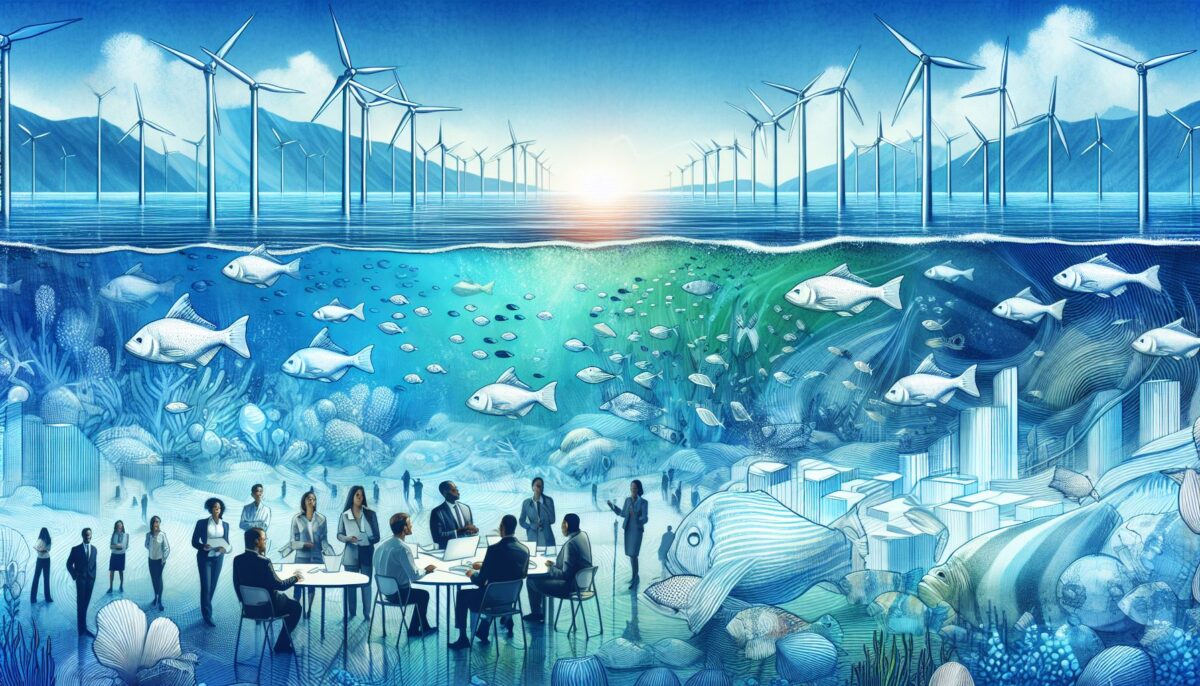
The Blue Economy has emerged as a term that encapsulates the sustainable use of ocean resources for economic growth, improved livelihoods, and jobs while preserving the health of marine and coastal ecosystems. It relates to a range of economic sectors and related policies that together can transform humankind’s relationship with the ocean.
In this article, we’ll delve into what the Blue Economy is, how it impacts global wealth, the integral sectors within the system, the challenges it faces, and how we can balance economic gain with ecological sustainability.
Understanding the Blue Economy
At the heart of the concept is the recognition that the well-being of our economies, environment, and societies relies heavily on the health of our oceans. The Blue Economy covers a broad array of activities, including fishery, aquaculture, tourism, energy, trade, marine biotechnology, and sea-bed mining.
Fisheries and Aquaculture
Fisheries and aquaculture are pillars of the Blue Economy. The global fish trade is reported to have more economic impact than all other traded food commodities combined. However, overfishing and unsustainable practices threaten fish populations and marine habitats.
Shipping and Trade
Ninety percent of the world’s commerce travels by sea. Shipping is, therefore, a vital component of the Blue Economy. However, it brings dangers such as oil spills, marine debris, and other forms of pollution.
Marine Biotechnology and Resources
The oceans are rich with biodiversity offering potential pharmaceutical and biotechnology applications. Exploring these further could lead to novel treatments for diseases and contribute to global health improvements.
Tourism
Coastal and marine tourism, a major area of the Blue Economy, taps on the aesthetic and recreational value of the oceans. It is dependent on clean beaches, healthy marine life, and well-preserved cultural heritage.
Energy
Renewable marine energy, like wave and tidal power, is an expanding field within the Blue Economy. Offshore wind farms, in particular, have shown immense potential.
Desalination
With freshwater scarcity becoming an alarming issue worldwide, desalination has become integral to the Blue Economy, providing essential drinking water in arid regions.
Challenges to the Blue Economy
Achieving the goals of the Blue Economy is fraught with challenges. These include environmental degradation, climate change, overfishing, and equity concerns.
Marine Pollution and Plastics
Marine pollution, particularly from plastics, is a significant issue, choking marine life and entering the human food chain. The Blue Economy advocates for circular economic practices to manage waste.
Climate Change
Increased carbon emissions lead to ocean acidification and coral bleaching, harming marine ecosystems. The Blue Economy supports a reduction in emissions and investment in carbon sequestration technologies.
Overfishing and Resource Management
Sustainable fisheries management and the fight against Illegal, Unreported, and Unregulated (IUU) fishing are crucial to the health of marine populations and ecosystems.
Equity Concerns
There’s a growing concern that wealth generated by ocean resources may not be distributed equitably. Many small-scale fishers and coastal communities could be marginalized if the Blue Economy becomes the domain of wealthier nations and big corporations.
Balancing Conservation and Economic Development
The Blue Economy must balance conservation efforts with economic development. This involves establishing Marine Protected Areas (MPAs), enforcing sustainable fishing practices, and investing in ecosystem restoration.
The Role of Policy and Governance
Effective governance structures are critical in harmonizing diverse Blue Economy sectors. Policies need to be inclusive, ensuring small-scale stakeholders have a say in resource management.
Promoting Research and Innovation
Continued research and innovation are fundamental for understanding ocean systems and developing sustainable practices. Oceanography, marine geology, and marine biodiversity science are some disciplines that provide essential knowledge to inform the Blue Economy.
Case Studies of Success
Several initiatives worldwide can serve as models:
Sustainable Fishing in the Pacific
Small Island Developing States in the Pacific have been pioneers in sustainably managing fish stocks and ensuring their fisheries contribute to local economies while preserving marine ecosystems.
Renewable Energy in Europe
Europe leads in offshore wind energy production, drastically cutting their carbon footprint while cementing the industry as a critical part of the Blue Economy.
Ecotourism Initiatives
Ecotourism around the world has been instrumental in preserving cultural heritage and biodiversity, particularly in coastal regions that have embraced conservation efforts as part of their marketing to ecologically conscious travelers.
Conclusion
The Blue Economy has the potential to be a major driver of economic progress and social development, providing jobs and bolstering global economies while ensuring the resilience and sustainability of ocean ecosystems. However, this potential can only be realized through responsible stewardship, creative policy-making, and a commitment to balancing human needs with the health of our planet’s greatest natural resource – the oceans.
Sources:
- “The Blue Economy: Growth, Opportunity, and a Sustainable Ocean Economy.” The World Bank Group. https://www.worldbank.org/en/news/infographic/2017/06/06/blue-economy
- “The potential of the blue economy: Increasing long-term benefits of the sustainable use of marine resources for small island developing states and coastal least developed countries.” United Nations Conference on Trade and Development (UNCTAD). https://unctad.org/topic/trade-and-environment/blue-economy
- “Ocean Renewable Energy Action Coalition report: The Power of Our Ocean as a Solution to Climate Change.” Global Wind Energy Council. https://gwec.net/ocean-renewable-energy-action-coalition-report/
